The best power banks for travel
Airlines measure power banks in watt-hours and sell them in milliamp-hours. Here is the conversion, and the limits that are actually enforced.
By Michael W. · Last updated September 7, 2026
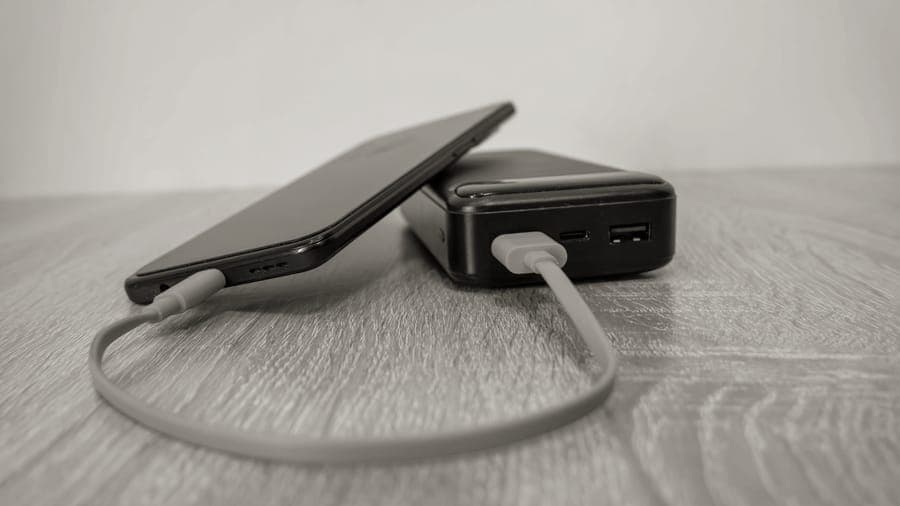
We earn a commission when you buy through our links, at no extra cost to you. It never changes what we pick or how we rank it. How we’re funded.
Power banks are the one piece of travel tech with a real regulatory limit attached, and the units do not match: airlines set limits in watt-hours (Wh), and power banks are sold in milliamp-hours (mAh). Nobody tells you the conversion on the packaging, which is why people arrive at a gate unsure whether theirs is allowed.
The conversion is straightforward: Wh = (mAh ÷ 1000) × 3.7. A 10,000 mAh bank is about 37 Wh. A 20,000 mAh bank is about 74 Wh. A 27,000 mAh bank is about 100 Wh, which is the threshold above which you need airline approval.
Carry-on only. Never in a checked bag.
Spare lithium batteries and power banks are prohibited in checked baggage and must travel in the cabin. This is the reverse of what many people assume, and it catches anyone who gate-checks a bag with the power bank still inside. Take it out first.
Quick picks
The short list. Tap any row for the full write-up, including what each one is bad at.
| # | Product | Best for | Price |
|---|---|---|---|
| 1 | 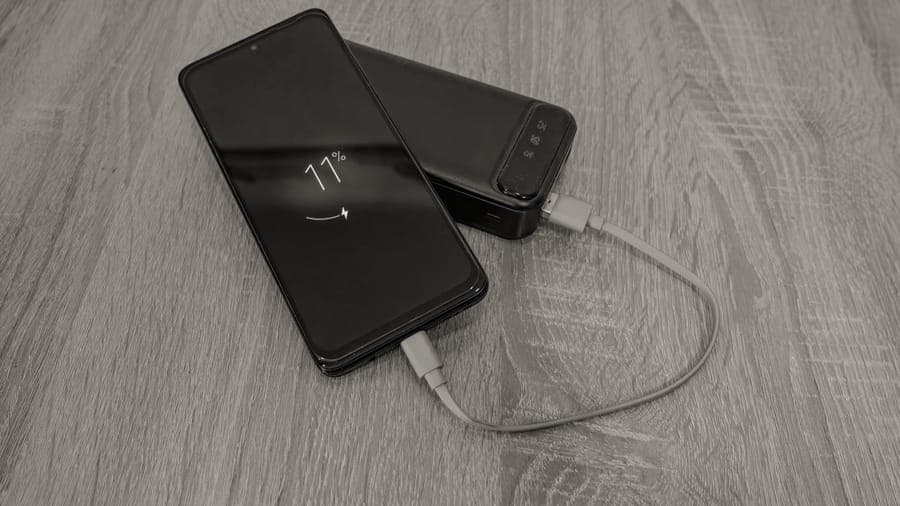 Anker PowerCore 10000 Power Bank About 37 Wh - two or three phone charges, well under every airline limit. | Most travelers | |
| 2 | Anker 737 Power Bank (PowerCore 24K) About 87 Wh with high-wattage USB-C output - still under the 100 Wh threshold. | Working travel | |
| 3 | 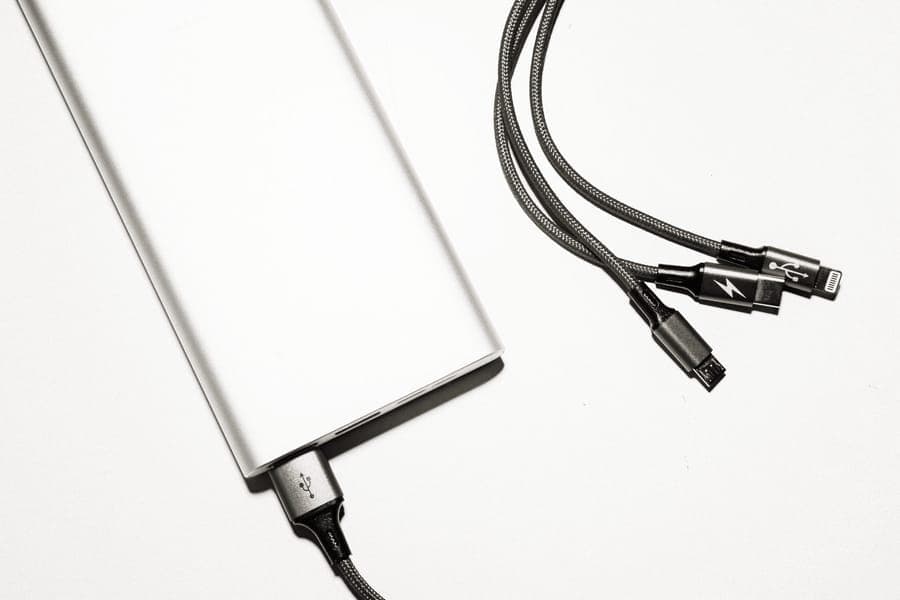 Anker Nano Power Bank (5,000 mAh) About 18 Wh, roughly one phone charge, and small enough for a pocket. | Day trips and short flights | |
| 4 | 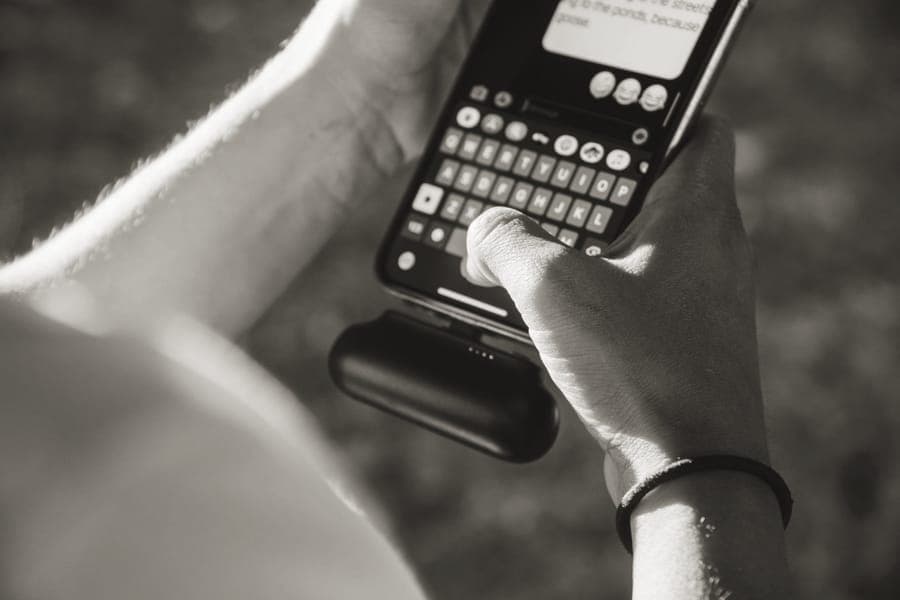 Power Bank with Built-In Cables Integrated cables, so the bank is useless without them and you cannot forget them. | Not carrying more cables |
The one that is small enough to carry and big enough to matter
Anker PowerCore 10000 Power Bank
The sensible default. Two or three full phone charges is what a normal travel day actually needs, and at 10,000 mAh the bank is small enough to live in an under-seat bag without becoming the heaviest thing in it. Comfortably inside every published airline limit.
The specs that decide it
- Capacity: 10,000 mAh, roughly 37 Wh - well under the 100 Wh threshold
- Output: Two or three full phone charges
- Travels: Carry-on only - prohibited in checked bags
Flaws but not dealbreakers
It will not meaningfully charge a laptop, so if that is what you need this is the wrong size. It is also a dense brick for its dimensions, which is noticeable in a bag you are trying to keep light.
The one that will actually charge a laptop
Anker 737 Power Bank (PowerCore 24K)
Charging a laptop needs both capacity and high-wattage USB-C output, and most power banks have neither. At around 24,000 mAh this sits just under the 100 Wh limit, which is about as large as you can go without needing airline approval.
The specs that decide it
- Capacity: Around 24,000 mAh, roughly 87 Wh - under the 100 Wh threshold
- Output: High-wattage USB-C, enough for most laptops
- Travels: Carry-on only, and check individual airline quantity rules
Flaws but not dealbreakers
Heavy - noticeably so in an under-seat bag, and it is the single densest item most people carry. Close to the 100 Wh limit, it is also the size most likely to attract a question at a gate, so know the Wh figure.
The one you will not notice carrying
Anker Nano Power Bank (5,000 mAh)
A full day of walking around a city with maps and a camera running drains a phone, and a small bank covers exactly that. For a day bag rather than a long-haul kit, one charge in something pocket-sized beats three charges in a brick you leave at the hotel.
The specs that decide it
- Capacity: 5,000 mAh, roughly 18 Wh
- Output: About one full phone charge
- Size: Pocketable - the reason to choose it
Flaws but not dealbreakers
One charge is genuinely one charge, so on a long-haul flight it will not see you through. Small banks also charge more slowly, which matters if you are topping up during a short layover.
The one that removes the cable you forgot
Power Bank with Built-In Cables
A power bank is useless without a cable, and the cable is the thing that ends up in the wrong bag. Integrated cables solve that by construction rather than by discipline, which is a more reliable approach than remembering.
The specs that decide it
- Cables: Built in, so there is nothing separate to forget
- Capacity: Varies - check the mAh and convert to Wh before flying
- Travels: Carry-on only
Flaws but not dealbreakers
A built-in cable is a permanent failure point - when it frays, the whole bank is done, where a separate cable is a cheap replacement. Integrated cables are also short, which is awkward if the only socket is behind the bed.
How they compare
| Pick | Capacity | Approx. Wh | Phone charges | Needs approval? |
|---|---|---|---|---|
| Anker Nano 5,000 | 5,000 mAh | About 18 Wh | About 1 | No |
| Anker PowerCore 10000 | 10,000 mAh | About 37 Wh | 2-3 | No |
| Anker 737 (24K) | 24,000 mAh | About 87 Wh | 5-6, or a laptop | No, but close to the line |
| Built-in cable banks | Varies | Convert before flying | Varies | Check the figure |
The airline rules, in full
- Carry-on only. Spare lithium batteries and power banks are prohibited in checked baggage. This is the rule people most often get wrong.
- Up to 100 Wh: allowed without airline approval. This covers essentially every consumer power bank up to about 27,000 mAh.
- 100 to 160 Wh: allowed with airline approval, arranged in advance.
- Over 160 Wh: prohibited on passenger aircraft.
- Terminals must be protected from short circuit - retail packaging, a case, or tape over the contacts.
- Airlines may impose their own limits on top, including quantity limits, and several now require power banks to stay visible rather than in the overhead bin.
That last point matters more than it used to. Several carriers tightened their power bank rules recently, with some prohibiting use of a power bank in flight and others requiring it to remain in the seat pocket or on your person rather than stowed overhead. Check your specific airline before you fly, because this is an area where policies are currently moving.
Converting mAh to watt-hours
Airlines regulate in watt-hours. Manufacturers market in milliamp-hours. The conversion assumes the standard 3.7V lithium cell voltage:
Wh = (mAh ÷ 1000) × 3.7
| Capacity | Approx. watt-hours | Airline status |
|---|---|---|
| 5,000 mAh | 18.5 Wh | Fine |
| 10,000 mAh | 37 Wh | Fine |
| 20,000 mAh | 74 Wh | Fine |
| 26,800 mAh | 99 Wh | Fine - just under the line |
| 30,000 mAh | 111 Wh | Airline approval required |
| 50,000 mAh | 185 Wh | Prohibited |
Two practical notes. Many power banks print the Wh figure on the case - look for it before doing arithmetic at a gate. And if you have a 30,000 mAh bank, it needs approval rather than being banned, so contact the airline rather than assuming you have to leave it.
What size do you actually need?
| Trip type | Capacity | Why |
|---|---|---|
| City day out | 5,000 mAh | One top-up, pocketable |
| Long-haul flight | 10,000 mAh | Two or three charges, covers unreliable seat power |
| Multi-day with no reliable power | 20,000 mAh | Several devices over several days |
| Working travel with a laptop | 24,000 mAh | High-wattage USB-C output, still under 100 Wh |
The mistake is buying the largest bank available. Capacity is weight, and a 20,000 mAh bank is roughly twice the weight of a 10,000 mAh one for a benefit most trips never use. On a weighed cabin allowance that is a real cost - see best luggage for international travel.
How we chose these picks
Capacity against the 100 Wh threshold, since a bank that needs airline approval is a bank you may not be allowed to carry. Then weight per charge, because capacity is weight and most people over-buy. Then output, which is the difference between a bank that charges a laptop and one that does not. Then whether the Wh figure is printed on the case, which turns a gate question into a two-second answer.
We have not measured real-world charge counts and do not run a lab - manufacturers' figures are nominal and real output is lower. Our methodology sets out the distinction.
What we passed over
- Power banks over 27,000 mAh. They exceed 100 Wh and need airline approval, which is friction you do not need for capacity most trips never use.
- Solar power banks. Panel output at that size is so low that charging a phone takes days of direct sun. They are a novelty for air travel.
- Banks with no printed capacity. If the Wh or mAh figure is not on the case, you cannot answer a gate question about it.
- Luggage with non-removable built-in batteries. Several airlines ban them outright, and you cannot take the battery out to comply.
If you are checking a bag
Take the power bank out first. It is the single most common way people breach this rule: they arrive at a gate, get asked to check their carry-on because the bin is full, and hand it over with the bank inside.
The same applies to spare camera batteries, spare laptop batteries and anything else with an uninstalled lithium cell. A battery installed in a working device - a laptop, a camera, a luggage tracker - is generally fine in a checked bag; a spare one is not.
Keep the bank somewhere you can grab quickly for exactly this reason. A tech pouch in an external pocket means you can retrieve it in ten seconds at a gate rather than unpacking on the jetway.
Frequently asked questions
Can I bring a power bank on a plane?
How do I convert mAh to watt-hours?
What size power bank is allowed on a plane?
Can a power bank go in checked luggage?
What size power bank do I need for a long flight?
Are power bank rules changing?
Read next
- Carry-on size by airline
- Best electronics organizers for travel
- Best travel adapters
- Long-haul flight essentials
- Best luggage trackers
More in Travel Essentials, or see every roundup and comparison on the site.