The best carry-on luggage for 2026
Six carry-ons for six different trips - each one checked against the 22 x 14 x 9 limit you will actually be measured against, and each one with its real flaw named.
By Michael W. · Last updated September 29, 2026

We earn a commission when you buy through our links, at no extra cost to you. It never changes what we pick or how we rank it. How we’re funded.
A carry-on is the only piece of luggage where the specification is set by somebody else. Your checked bag can be whatever size you like within reason. Your carry-on has to clear a box - 22 x 14 x 9 inches on most major US airlines, including wheels and handles - and a bag that is an inch over is worthless no matter how well it is made.
So this list starts from that constraint and works outward. Each pick below is described against the limit it clears, and where a bag is a poor fit for a specific airline we say which one. Beyond that, the useful question is not which carry-on is best, it is which failure mode you are buying against: a frequent flyer wears out wheels and handles, an occasional flyer scuffs a shell, and somebody flying a weight-capped international carrier is fighting the empty weight of the bag itself.
Measure before you fly
Manufacturers frequently quote the case body only, so a bag marketed as a 21-inch carry-on can measure over 22 inches with wheels and the handle housing included. Airlines measure at the widest points. Check the overall dimension against the limit for your airline before you buy.
Quick picks
The short list. Tap any row for the full write-up, including what each one is bad at.
| # | Product | Best for | Price |
|---|---|---|---|
| 1 | 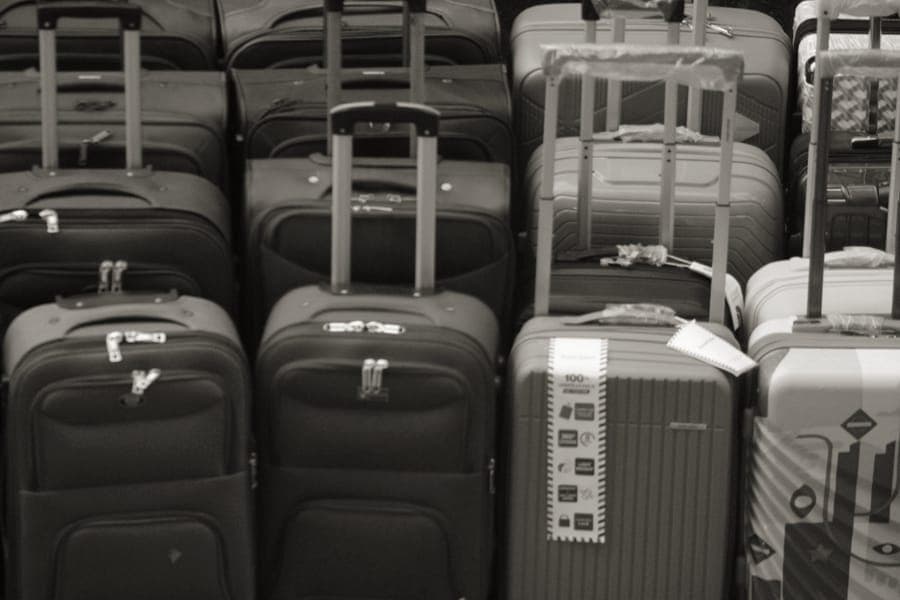 Travelpro Platinum Elite 21-inch Expandable Carry-On Spinner Softside carry-on built around the parts that actually fail: wheels and handle. | Frequent flyers | |
| 2 |  Samsonite Freeform Hardside Carry-On Spinner A light hardshell that resists the crush of a full bin and wipes clean. | Protecting what is inside | |
| 3 |  Amazon Basics 20-inch Hardside Spinner Deliberately under the standard, which is the cheapest insurance at a budget gate. | Occasional flyers and strict gates | |
| 4 |  Osprey Farpoint 40 Travel Pack Frameless and light, so the weight allowance goes to your clothes, not the bag. | 7-10 kg cabin allowances | |
| 5 | 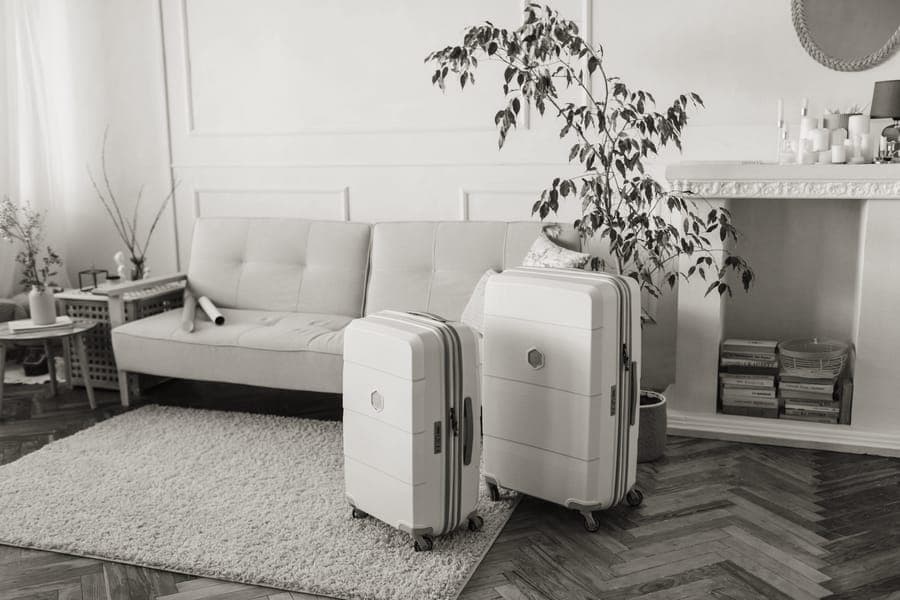 Away The Carry-On Compact footprint that fits European train racks and survives rough pavement. | Multi-city European trips | |
| 6 |  Cotopaxi Allpa 35L Travel Pack Clamshell pack sized to the under-seat envelope, so it works when the bin is not yours. | Basic Economy fares |
The one to buy if you fly often and want it to survive
Travelpro Platinum Elite 21-inch Expandable Carry-On Spinner
This is the bag for somebody who flies more than a handful of times a year and has had a wheel or a handle fail on a cheaper case. Travelpro's reputation in this category is built on the running gear rather than the fabric - the wheel housings and the telescoping handle are the parts that take the abuse, and they are the parts most brands cut costs on. If you fly monthly, that is the difference that matters.
The specs that decide it
- Size: Built to the 22 x 14 x 9 standard - clears American, Delta, United, JetBlue and Alaska
- Construction: Softside, which compresses slightly under a gate sizer where a hardshell cannot
- Pockets: External front pockets - genuinely useful for a laptop or documents at security
Flaws but not dealbreakers
The expansion zip takes it over the carry-on limit. It is useful on the way home when you are checking the bag anyway, and it is a trap if you forget you opened it - Alaska explicitly counts expansion toward the measurement. Softside also means less protection if the bag does get gate-checked.
The one that keeps its shape in a packed overhead bin
Samsonite Freeform Hardside Carry-On Spinner
If you carry anything fragile - a camera, a bottle, work equipment - a hardshell earns its place. A soft bag squashed under three others in a full overhead bin transmits that pressure to whatever is inside; a hardshell does not. This is also the right pick if you check your carry-on occasionally, because a rigid case survives a baggage belt far better than fabric does.
The specs that decide it
- Size: Carry-on spec against the 22 x 14 x 9 standard
- Shell: Polypropylene-type hardshell - light for the category, and water-resistant
- Interior: Split-case clamshell, which packs flat and evenly on both sides
Flaws but not dealbreakers
A hardshell has no give. If you are half an inch over, there is no squashing it into the sizer, and the split-case design means you need floor space to open it - awkward in a small hotel room or a train compartment. Light-colored shells also scuff visibly within a few trips.
The one to buy if you fly twice a year and hate the sizer
Amazon Basics 20-inch Hardside Spinner
Two kinds of people should buy this. The first flies twice a year and genuinely does not need a bag engineered for a decade of abuse. The second flies ultra-low-cost carriers where the gate sizer is a revenue instrument, and wants a bag that is comfortably inside the limit rather than exactly at it. At this price the bag owes you nothing after a handful of trips.
The specs that decide it
- Size: 20-inch case - clears every carrier in our airline table with margin
- Shell: Hardside, so it holds its shape without needing careful packing
- Trade-off: Less capacity than a full-size 22-inch carry-on, by design
Flaws but not dealbreakers
You are trading capacity for margin. On an airline that would happily have taken a full-size carry-on, that is space you paid for and did not get. Budget shells also scuff and crack at the corners sooner, and the wheels are the first thing to go.
The one for international carriers that weigh your cabin bag
Osprey Farpoint 40 Travel Pack
On carriers that weigh cabin baggage - standard across much of Europe, Asia and the Middle East - the empty weight of your suitcase is the most important number on its spec sheet. A wheeled hardside case can eat half of a 7 kg allowance before you pack anything. A frameless travel pack does not, and it compresses into a sizer in a way a rigid case simply cannot.
The specs that decide it
- Size: Designed to the carry-on envelope, and compresses further under a sizer
- Weight: Light for the capacity - the reason to choose it on a weighed route
- Harness: Stows away, so straps cannot catch on a baggage belt if it gets checked
Flaws but not dealbreakers
You carry it rather than roll it. Across a long terminal transfer with a full load that is a genuine physical difference, and it is the wrong choice if you have back or shoulder problems. There is also nothing to lean on while you queue.
The one for cobblestones, trains and tight luggage racks
Away The Carry-On
European trips punish big bags in ways a US domestic route never does: cobbled streets, stairs at stations with no lift, overhead racks on regional trains sized for a different era, and budget carriers with tighter limits. A compact, well-built carry-on with a hard shell and a small footprint is the right tool, and the interior compression panel matters more here than anywhere because you will be repacking in small rooms.
The specs that decide it
- Size: Carry-on spec, with a compact footprint for train racks and small elevators
- Interior: Compression panel - useful when you repack every two days
- Shell: Hardside, which handles wet pavement and rough stone better than fabric
Flaws but not dealbreakers
Four-wheel spinners are the wrong configuration for genuinely rough ground - on cobblestones you will end up dragging it on two wheels anyway, which puts sideways load on housings not designed for it. It is also expensive for what is, mechanically, a fairly ordinary suitcase.
The one for Basic Economy, when the personal item is all you get
Cotopaxi Allpa 35L Travel Pack
On United and Delta Basic Economy the full-size carry-on is gone and the personal item is the entire free allowance. A clamshell pack built to the under-seat envelope turns that into a usable bag rather than a laptop sleeve: it opens flat like a suitcase, so you can see and reach everything while it is wedged under the seat in front of you.
The specs that decide it
- Size: Fits the 18 x 14 x 8 personal item envelope used by American, Frontier and Spirit
- Opening: Clamshell - packs and unpacks like a suitcase, not a rucksack
- Does not clear: United's tighter published 17 x 10 x 9 personal item limit
Flaws but not dealbreakers
It exceeds United's published personal item dimensions on depth, which is awkward given United is one of the main reasons to want a bag like this. Loaded to 35 liters it is also heavy to shove under a seat with your foot.
How they compare
| Pick | Type | Best for | Fits 22 x 14 x 9? | Main flaw |
|---|---|---|---|---|
| Travelpro Platinum Elite 21 | Softside spinner | Frequent flyers | Yes, unexpanded | Expansion zip breaks compliance |
| Samsonite Freeform | Hardside spinner | Fragile contents | Yes | No give at a tight sizer |
| Amazon Basics 20-inch | Hardside spinner | Occasional flyers | Yes, with margin | Less capacity, shorter life |
| Osprey Farpoint 40 | Travel backpack | Weighed cabin allowances | Yes, and compresses | You carry it, not roll it |
| Away The Carry-On | Hardside spinner | European trips | Yes | Spinners struggle on cobblestones |
| Cotopaxi Allpa 35L | Clamshell pack | Basic Economy | Personal item, not carry-on | Over United's personal item limit |
Who this list is for, and who should skip it
This is for somebody buying one carry-on to cover most of their flying. If that describes you, pick 1 or pick 2 and stop reading - the rest of the list is for specific cases.
Skip this page if you are flying Southwest almost exclusively, because Southwest's 24 x 16 x 10 allowance means you can buy a meaningfully larger bag and every pick here leaves capacity on the table. Skip it too if you always check a bag, in which case best checked luggage is the right page. And if you are weighing the roll-versus-carry question rather than picking between suitcases, start at travel backpack vs suitcase.
How we chose these picks
In order of weight: fit against the published carry-on limits of the eight major US carriers, since a bag that does not clear them is not a carry-on; empty weight, which decides how much of an international cabin allowance you actually get to use; wheel and handle durability as reported in published hands-on testing, because those are the parts that fail; warranty and repair reality, not just the headline length; and availability, since a recommendation you cannot buy is not a recommendation.
We did not put these bags through airport security ourselves, and we do not run a testing lab. Where a durability finding comes from somebody else's hands-on testing we say so. Our methodology page sets out exactly what that means and where the line is - it is the page to read if you want to know how much weight to put on anything here.
What we passed over
- Smart luggage with built-in batteries. Airlines require removable batteries and several have banned non-removable ones outright. The feature adds weight, cost and a compliance problem to solve nothing.
- Ultra-premium aluminum cases. Beautiful, genuinely durable, and heavy enough to eat a meaningful share of any weight-limited cabin allowance. They also dent rather than flex, and a dented aluminum corner is permanent.
- Expandable carry-ons sold on the expansion. The expansion is only usable when you are checking the bag, so buying a carry-on primarily for it is buying a feature you cannot use in the situation you bought the bag for.
- Two-wheel uprights at the top end. Genuinely better on rough ground, but the market has moved and the good ones at carry-on size are now hard to find and rarely updated.
How to choose a carry-on
Start with the strictest airline you fly regularly
Not the most generous. A bag bought to Southwest's 24 x 16 x 10 is oversized everywhere else; a bag bought to the 22 x 14 x 9 standard is legal on Southwest too. If budget carriers are in your regular rotation, go smaller still - see the full table by airline.
Weigh the empty bag
On any carrier that weighs cabin baggage, this is the number that decides how much you can bring. The difference between a 6 lb softside bag and a 10 lb hardside one is four pounds of clothes you cannot pack. A luggage scale pays for itself the first time it stops you repacking at a check-in desk.
Buy the wheels, not the shell
Across every published durability test in this category, the failures cluster in the same two places: wheel housings and the telescoping handle. Shell material barely features. If you are choosing between two bags at the same price, the one with better running gear is the better bag even if it looks plainer.
Decide spinner or inline honestly
Four-wheel spinners are effortless on smooth terminal floors and fragile everywhere else, because the wheels protrude and take sideways impact. Two-wheel inline designs tuck the wheels into the shell and handle curbs and broken pavement far better. If your trips involve real streets rather than just airports, that matters - and it is the core of the hardside vs softside decision too.
After you buy: fitting a week inside it
A 22 x 14 x 9 carry-on holds about 40 liters, which is genuinely a week of clothes for most people. What breaks the plan is almost never clothing volume - it is shoes and liquids. Shoes are bulky and people bring three pairs; liquids are constrained by the 3-1-1 rule rather than by space.
Solve those two and carry-on-only stops feeling like a sacrifice. How to pack a carry-on has the sequence, and packing cubes are the one piece of gear that genuinely makes a hardshell case pack squarer.
Frequently asked questions
What is the best carry-on luggage size?
Is a hardside or softside carry-on better?
Should I buy a carry-on with a built-in battery?
How much does a carry-on suitcase weigh?
Can I use a backpack as a carry-on?
How long should a carry-on last?
Read next
- Carry-on size by airline
- How to pack a carry-on
- Best carry-on backpacks
- Best budget carry-on luggage
- Hardside vs softside luggage
- Best packing cubes
More in Luggage, or see every roundup and comparison on the site.