Personal item size by airline
The under-seat allowance has quietly become the most valuable bag on the ticket. Here is what each airline actually publishes - and which ones publish nothing.
By Michael W. · Last updated September 29, 2026
We earn a commission when you buy through our links, at no extra cost to you. It never changes what we pick or how we rank it. How we’re funded.
There is no single personal item standard. Where US carriers publish a figure at all it clusters around 18 x 14 x 8 inches - American, Frontier and Spirit all use exactly that - but United publishes a much tighter 17 x 10 x 9, JetBlue publishes 17 x 13 x 8, and Delta, Southwest and Alaska publish no dimensions whatsoever. The rule on those three is simply that the bag fits under the seat in front of you.
Verify with your airline before you fly
Baggage allowances change, they vary by fare class, and on a codeshare the operating carrier's rules usually apply rather than the airline you booked with. Every figure below links to the carrier's own baggage page - check it on the day. Use this table to choose a bag, not to argue with a gate agent.
This allowance matters more than it used to. As Basic Economy fares stripped out the carry-on on several carriers, the under-seat bag became the only free luggage on the ticket for a large share of passengers - and airlines responded by enforcing it with gate sizers where they previously did not. A bag built to the published figure is now worth real money.
Personal item limits by airline
| Airline | Personal item (inches) | Personal item (cm) | Weight limit | Notes |
|---|---|---|---|---|
| American | 18 x 14 x 8 | 45 x 35 x 20 | None published | Carry-on also included in Basic Economy |
| Delta | No dimensions published | - | None published | Must fit under the seat in front of you |
| United | 17 x 10 x 9 | 43 x 25 x 22 | None published | Tightest published figure of the eight |
| Southwest | No dimensions published | - | None published | Must fit under the seat |
| JetBlue | 17 x 13 x 8 | 43.2 x 33 x 20.3 | None published | Wide and flat rather than deep |
| Alaska | No dimensions published | - | None published | Purse, briefcase or laptop bag |
| Frontier | 18 x 14 x 8 | 45 x 35 x 20 | 35 lb | Usually the only free allowance |
| Spirit | 18 x 14 x 8 | 45 x 35 x 20 | None published | Usually the only free allowance |
The 18 x 14 x 8 standard, and why bags are built to it
18 x 14 x 8 inches is the most common published personal item size in the US, used by American, Frontier and Spirit. It has become a de facto target for bag manufacturers because it is the largest figure that clears the widest set of carriers - a bag built to it is legal as a personal item on American, Frontier and Spirit, and is small enough to pass unremarked on Delta, Southwest and Alaska, which publish no number.
The exception is United. A bag built to 18 x 14 x 8 is over United's published 17 x 10 x 9 on two of three dimensions, and dramatically over on depth. If United is your main carrier, buying an '18x14x8 personal item bag' is buying the wrong bag - and there are a lot of them marketed as universal.
Capacity-wise, 18 x 14 x 8 inches works out at around 33 liters of raw box volume. Real usable capacity is lower once you account for padding and shape, but a well-designed bag at that size genuinely holds a few days of clothes. That is why the category exists at all.
American Airlines personal item size
American publishes 18 x 14 x 8 inches, and includes a full carry-on in every cabin including Basic Economy. That combination is the most generous free allowance among the legacy US carriers, and it means a personal item on American is genuinely a second bag rather than a substitute for the first one.
In practice this makes American one of the easier airlines to do a carry-on-only trip on: a 22 x 14 x 9 bag overhead plus an 18 x 14 x 8 bag under the seat is a large combined volume - enough for two people on a long weekend, or one person for two weeks with laundry.
United personal item size
United's published personal item limit is 17 x 10 x 9 inches (43 x 25 x 22 cm) - the tightest of the eight carriers here, and the one most likely to catch a bag bought elsewhere. The 10-inch width in particular rules out a lot of backpacks that comfortably clear every other airline on this page.
This matters most on Basic Economy, where the personal item is the entire free allowance on most domestic routes. If you fly United Basic Economy regularly, measure against 17 x 10 x 9 and nothing else. A soft bag helps here - not because the rule is different, but because a soft bag will compress into a sizer where a structured one will not.
Frontier and Spirit: when the personal item is the whole ticket
Both publish 18 x 14 x 8 inches, and Frontier adds a 35 lb weight limit including handles, wheels and straps. On both airlines the base fare typically includes the personal item only; a carry-on is a paid add-on, and paying for it at the gate costs substantially more than paying for it at booking.
This is the segment where gate sizers are used most consistently, because the fee is the business model. If you are flying an ultra-low-cost carrier, treat the published dimension as an absolute rather than a guideline, and pack the bag so it can be squashed rather than so it holds its shape.
One practical tactic that is entirely legitimate: wear the bulky layer. A coat carried over your arm is not counted as baggage by any carrier in this table.
The airlines that publish no dimensions
Delta, Southwest and Alaska all state the requirement as a function rather than a number: the bag must fit under the seat in front of you. Delta and Alaska list example categories - purse, briefcase, laptop bag, small backpack, camera bag, diaper bag.
That cuts both ways. There is no published figure to fail against, so a modestly oversized bag is unlikely to be challenged. But there is equally no number to appeal to, so if an agent decides your bag is too large, you have no policy page to point at. The practical answer is to stay within the 18 x 14 x 8 envelope, which no under-seat space on a mainline jet will refuse.
Under-seat space is not uniform
The space under a window seat is often narrower than under a middle or aisle seat, because of the entertainment or power boxes mounted on some aircraft. Bulkhead rows frequently have no under-seat space at all - everything goes in the overhead bin for takeoff and landing. If you are relying on a large personal item, avoid the bulkhead.
Bags that fit these limits
The under-seat bag is where the rule and the purchase meet most directly. These pages apply the figures above:
- Best personal item bags - built to the under-seat envelope, including the 18 x 14 x 8 shape.
- Best underseat carry-on bags - for when the personal item is the whole allowance.
- Best travel backpacks - several clear United's 17 x 10 x 9 where wheeled bags cannot.
- Long-haul flight essentials - what actually needs to be in the bag at your feet for eleven hours.
- Best carry-on luggage - the overhead half of the allowance.
Quick picks
The short list. Tap any row for the full write-up, including what each one is bad at.
| # | Product | Best for | Price |
|---|---|---|---|
| 1 | 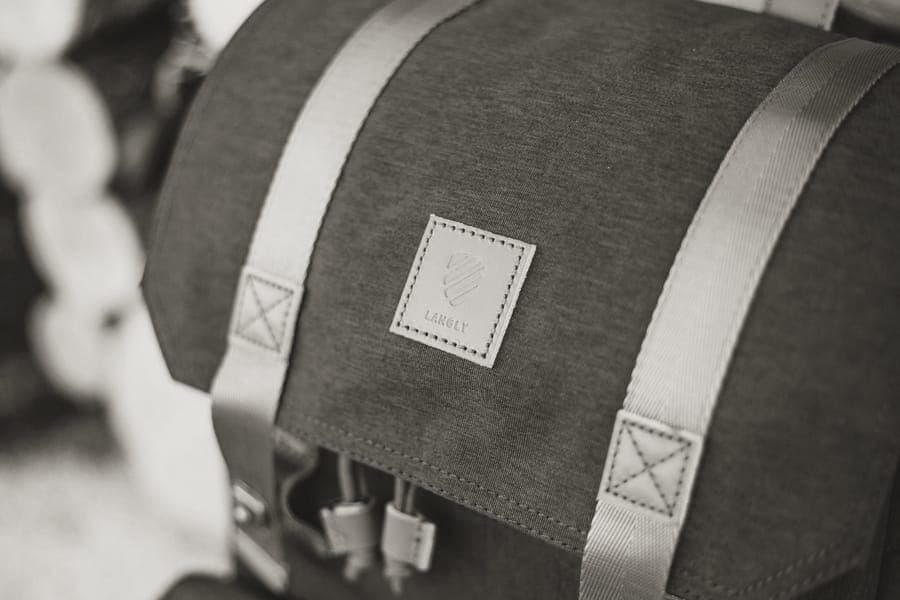 Cotopaxi Allpa 35L Travel Pack Clamshell opening and a squarish shape that uses the published envelope properly. | American, Frontier and Spirit | |
| 2 |  Osprey Daylite Plus Daypack Narrow enough for United's published figure, which most 'personal item' bags are not. | United's 17 x 10 x 9 limit | |
| 3 | 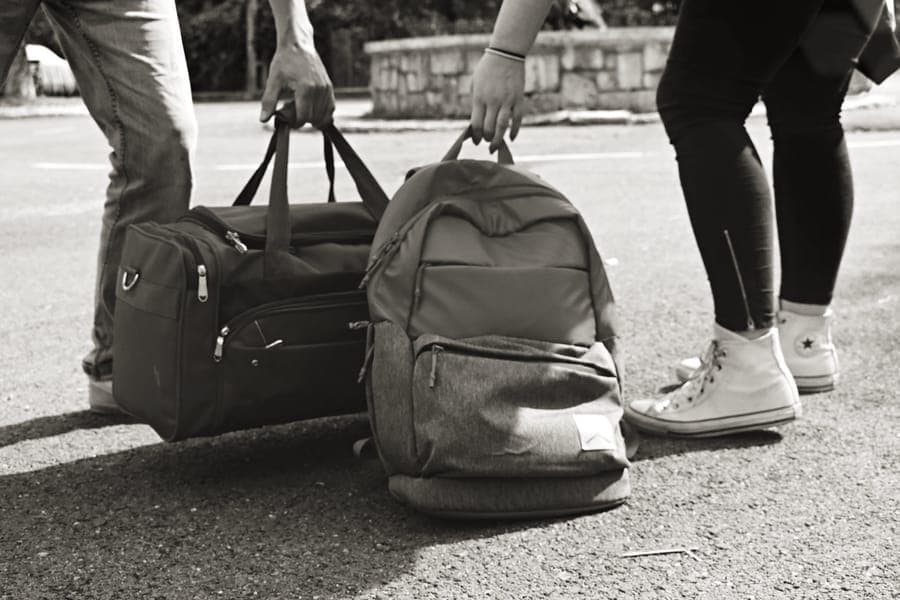 Patagonia Black Hole Duffel 25L No frame, no rigid panel - it becomes whatever shape the under-seat space is. | Airlines that publish no dimensions |
The one that turns the under-seat allowance into a real bag
Cotopaxi Allpa 35L Travel Pack
If your airline publishes 18 x 14 x 8, the winning bag is the one that fills that box rather than approximating it. A clamshell pack opens flat like a suitcase, which means you can actually see and reach what is inside while it is wedged under a seat - the thing a top-loading daypack makes impossible.
The specs that decide it
- Clears: American, Frontier and Spirit's published 18 x 14 x 8 envelope
- Opening: Clamshell - packs and unpacks like a suitcase, not a rucksack
- Does not clear: United's published 17 x 10 x 9 on depth
Flaws but not dealbreakers
It is over United's published personal item limit on depth, so it is the wrong bag if United is your main carrier. Fully loaded at 35 liters it is also heavy for something you are meant to slide under a seat with your foot.
The one to buy if you fly United Basic Economy
Osprey Daylite Plus Daypack
United's 17 x 10 x 9 is the tightest published personal item limit of the eight major carriers, and the 10-inch width is what rules out most bags marketed for this job. A slim daypack clears it. If United Basic Economy is how you fly, this is the constraint that matters and almost nothing sold as an 18x14x8 bag will meet it.
The specs that decide it
- Clears: United's published 17 x 10 x 9, plus every other carrier in the table
- Shape: Slim profile - the 10-inch width is the dimension that matters here
- Compresses: Soft construction squashes into a sizer under a firm push
Flaws but not dealbreakers
Capacity is modest, and on carriers with a generous 18 x 14 x 8 allowance you are leaving free space on the table. It is a daypack, so there is no laptop-first organization and no clamshell access.
The one that squashes into whatever sizer it meets
Patagonia Black Hole Duffel 25L
Delta, Southwest and Alaska publish no personal item dimensions at all, which means there is no number to fail against and equally no number to appeal to. A frameless soft duffel is the right answer to that ambiguity: it compresses to fit whatever space exists, and it never presents a rigid edge for an agent to object to.
The specs that decide it
- Best for: Delta, Southwest and Alaska, which publish no personal item figure
- Structure: Frameless - compresses to the space available
- Weather: Coated fabric, so it handles a wet walk to the terminal
Flaws but not dealbreakers
A duffel with no internal structure is a sack. Everything migrates to the bottom, finding one item means unpacking several, and there is no laptop protection at all unless you add a sleeve.
Frequently asked questions
What size is a personal item?
Is 18 x 14 x 8 a universal personal item size?
Does a backpack count as a personal item?
Can I bring a purse and a backpack?
Do personal items have a weight limit?
Sources
Read next
- Best personal item bags
- Best underseat carry-on bags
- Carry-on size by airline
- Best travel backpacks
- Long-haul flight essentials
More in Airline Rules, or see every roundup and comparison on the site.