Carry-on vs personal item
Two bags, two allowances, two completely different size limits - and on some fares only one of them is free.
By Michael W. · Last updated October 17, 2026
We earn a commission when you buy through our links, at no extra cost to you. It never changes what we pick or how we rank it. How we’re funded.
A carry-on is the larger bag that goes in the overhead bin - typically 22 x 14 x 9 inches. A personal item is the smaller bag that goes under the seat in front of you - typically 18 x 14 x 8 inches or smaller. Most economy fares include one of each; Basic Economy on United and Delta includes only the personal item.
The distinction matters for two reasons. The obvious one is size: a personal item is between a third and a half the volume of a carry-on, and the limits are published separately. The expensive one is cost. The personal item is free on every major US carrier and in every fare class. The carry-on is not - and on an ultra-low-cost carrier a carry-on discovered at the gate costs more than the ticket sometimes did.
The under-seat space is the real limit
Published personal-item dimensions are a guide; the actual constraint is the physical gap under the seat in front of you, and that gap is smaller in a bulkhead row, in some window seats where a box houses electronics, and on regional jets. A bag at exactly 18 x 14 x 8 can still fail to go under one specific seat.
Quick picks
The short list. Tap any row for the full write-up, including what each one is bad at.
| # | Product | Best for | Price |
|---|---|---|---|
| 1 | 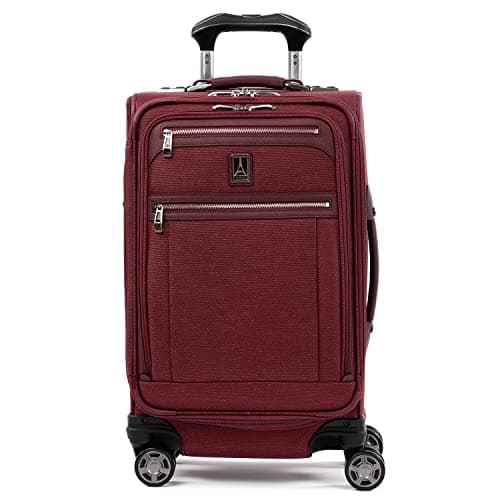 Travelpro Platinum Elite 21-inch Expandable Carry-On Spinner Designed against 22 x 14 x 9 as a total measurement including wheels, not as a case-body figure. | The bin bag on a mixed-carrier itinerary | $382.19View on Amazon #ad Price as of November 3, 2026. How we’re funded |
| 2 |  Osprey Daylite Plus Daypack Slim enough for the 17 x 10 x 9 inch limit United publishes, which is the strictest of the major carriers. | The free allowance on any fare | |
| 3 | 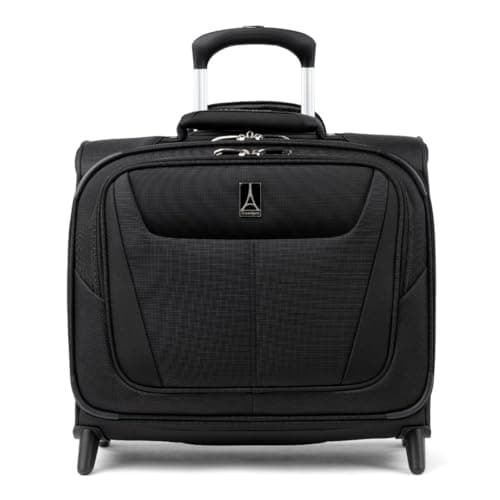 Travelpro Maxlite 5 Rolling Underseat Tote A wheeled tote sized to go under the seat, so the personal item rolls rather than hangs off you. | Anyone who should not be carrying weight |
The overhead-bin bag, built against the real limit
Travelpro Platinum Elite 21-inch Expandable Carry-On Spinner
If you are buying the bin bag, buy one sized against the overall standard rather than against a marketing number, because airlines measure the whole object - wheels and handle housing included. This clears 22 x 14 x 9 on American, Delta, United, JetBlue and Alaska measured that way, and being softside it compresses slightly under a firm push at a tight gate where a hardshell will not.
The specs that decide it
- Allowance: Carry-on - overhead bin
- Clears: 22 x 14 x 9 in on American, Delta, United, JetBlue, Alaska
- Construction: Softside, so it gives a fraction in a gate sizer
- Watch: Using the expansion zip takes it out of carry-on legal
Flaws but not dealbreakers
On Basic Economy with United or Delta this bag is not included at all, and finding that out at the gate is the expensive version of the lesson. It is also the most expensive bag in this comparison by a wide margin.
#ad Price as of November 3, 2026. How we’re funded
The under-seat bag that fits United's tightest limit
Osprey Daylite Plus Daypack
Buy the personal item against the tightest published figure and it works everywhere. United's 17 x 10 x 9 is the strictest of the eight major US carriers, so a pack that fits it fits American's 18 x 14 x 8 and JetBlue's 17 x 13 x 8 without thinking about it. It is also the bag that stays with you on a Basic Economy fare when the carry-on does not.
The specs that decide it
- Allowance: Personal item - under the seat
- Fits: United's 17 x 10 x 9 in, the strictest major-carrier figure
- Carry: Two shoulders, which is the comfortable way to carry a day's weight
- Free: On every major US carrier and every fare class
Flaws but not dealbreakers
Soft-sided and slim means it swells when overpacked, and a bulging daypack is what a gate agent points at. There is also no wheeled option here - everything in it is carried.
The under-seat bag that does not go on your shoulder
Travelpro Maxlite 5 Rolling Underseat Tote
A personal item carries the heavy, dense things - laptop, charger, water, book, medication - and on a long travel day that is the weight you feel. A wheeled under-seat tote moves it to the floor. It is the right answer if you are travelling Basic Economy, where this is your only bag, and you would rather not have your only bag on your shoulder for six hours.
The specs that decide it
- Allowance: Personal item - under the seat, with wheels
- Carry: Rolls, with a trolley sleeve to stack on a larger bag
- Best on: Fares where this is your only included bag
- Check: Measure against your airline's published personal-item figure
Flaws but not dealbreakers
The wheels and handle eat internal volume, so it holds less than a soft tote of the same external size, and they add weight. On a regional jet with a shallow under-seat gap it is also the format most likely not to fit.
Carry-on vs personal item, side by side
| Airline | Carry-on (inches) | Personal item (inches) | Both free in Basic Economy? |
|---|---|---|---|
| American | 22 x 14 x 9 | 18 x 14 x 8 | Yes - carry-on included |
| Delta | 22 x 14 x 9 | No dimensions published | No - personal item only |
| United | 22 x 14 x 9 | 17 x 10 x 9 | No - personal item only |
| Southwest | 24 x 16 x 10 | No dimensions published | Yes |
| JetBlue | 22 x 14 x 9 | 17 x 13 x 8 | Varies by fare |
| Alaska | 22 x 14 x 9 | No dimensions published | Yes |
| Frontier | 24 x 16 x 10 | 18 x 14 x 8 | Personal item only - carry-on is paid |
| Spirit | 22 x 18 x 10 | 18 x 14 x 8 | Personal item only - carry-on is paid |
The difference in one sentence each
Carry-on: the larger of your two cabin bags, sized to go in the overhead bin, typically 22 x 14 x 9 inches. A 21 or 22-inch spinner, a 40-litre travel backpack or a carry-on duffel all occupy this slot.
Personal item: the smaller bag that must fit in the space under the seat in front of you, typically 18 x 14 x 8 inches or less. A daypack, a laptop bag, a tote, a camera bag or a handbag occupy this slot.
You get one of each on a standard economy fare. The list of objects that count as a personal item - and the items most carriers carry free on top of both allowances, like a coat or a medical device - is in what counts as a personal item.
Which one the fare actually includes
This is where the money is. The personal item is free on every major US carrier in every fare class. The carry-on is where the fares diverge:
- American, Southwest, Alaska: carry-on included even on their cheapest economy fares.
- United and Delta Basic Economy: personal item only. The carry-on is not included, and at the gate it is charged plus a gate-handling fee.
- Frontier and Spirit: the personal item is the only free allowance on a base fare. The carry-on is a paid add-on, and it is cheapest bought at booking and most expensive bought at the gate.
The per-carrier detail, including how the fee escalates from booking to check-in to the gate, is in is a carry-on free.
Which one is my backpack?
Whichever one it fits. Airlines classify by dimension, not by bag type, so capacity in litres is the useful proxy:
| Pack size | Usual allowance | Notes |
|---|---|---|
| Up to about 20 L | Personal item | Goes under the seat; fits United's 17 x 10 x 9 |
| 25-30 L | Borderline | Fits American's 18 x 14 x 8 when not overstuffed |
| 35-45 L | Carry-on | Overhead bin - and on Basic Economy, a paid bag |
There is a useful consequence: a 40-litre pack taken as your carry-on leaves the under-seat allowance unused, so you can still bring a small daypack. Does a backpack count as a personal item works through the edge cases.
What to put in each bag
Treat the personal item as the bag you will actually have access to. Once the doors close, a bag in the overhead bin is reachable only when the seatbelt sign is off and the aisle is clear; the bag at your feet is reachable the entire flight.
- Personal item: passport, wallet, phone, charger, medication, laptop, water, headphones, eye mask, anything you need in the first hour after landing.
- Carry-on: clothes, shoes, the toiletry bag, everything you will not want mid-flight.
- Never in the carry-on if it can be helped: medication, keys, anything irreplaceable. A full bin means your carry-on gets gate-checked, and gate-checked bags go to the hold.
That last point is the one people learn the hard way. If the bin is full when you board, the carry-on is taken from you at the door - so the personal item has to be a self-sufficient flight kit on its own.
Frequently asked questions
What is the difference between a carry-on and a personal item?
Is a personal item free?
Can I bring both a carry-on and a personal item?
Read next
- Personal item size by airline
- Carry-on size by airline
- What counts as a personal item?
- Is a carry-on free?
- Best personal item bags
- Best underseat carry-on
More in Airline Rules, or see every roundup and comparison on the site.