What size luggage do I need?
Trip length sets the capacity. The airline sets the ceiling. Those are two different numbers and most advice conflates them.
By Michael W. · Last updated October 3, 2026

We earn a commission when you buy through our links, at no extra cost to you. It never changes what we pick or how we rank it. How we’re funded.
For most trips the answer is one of three sizes: about 20-25 liters for a weekend, about 40-46 liters for up to a week, and a 62-linear-inch checked bag for anything longer or anything with equipment in it. A week is the pivotal case, and a 40-liter travel pack or a 46-liter cabin spinner covers it comfortably with one laundry stop.
The reason this question is confusing is that two different limits get quoted as if they were the same thing. Trip length tells you how much capacity you need. The airline tells you the maximum you are allowed. Your bag has to satisfy both, and when they conflict the airline wins - which is why a 65-liter bag sold as a carry-on is not one.
The number that is not on the label
Suitcases are sold by inches and packed by liters, and the inch figure is usually the case body rather than the overall size. Travelpro's Maxlite 5 21-inch spinner measures 23 x 14.5 x 9 inches overall with wheels and handles, and holds 46 liters. Read the overall dimension, never the model name.
Trip length, converted to liters
These figures assume you wear your bulkiest layer and heaviest shoes rather than packing them, and that you are packing clothes rather than equipment. Both assumptions move the answer a long way if they do not hold.
| Trip | Capacity needed | Bag type | Capped by |
|---|---|---|---|
| 1-2 nights | 20-25 L | Personal item: duffel, tote or under-seat bag | Under-seat space - United publishes 17 x 10 x 9 in |
| 3-4 nights | 25-35 L | Large personal item or a small cabin bag | Under-seat space, or 22 x 14 x 9 in |
| 5-7 nights | 40-46 L | Full carry-on: travel pack or cabin spinner | 22 x 14 x 9 in on most US carriers |
| 1-2 weeks, carry-on only | 40-46 L plus one laundry stop | Same bag, different plan | Same, plus a 7-10 kg weight cap on many international carriers |
| 2 weeks or more, or winter | 60-90 L | Checked bag | 62 linear inches and 50 lb on most US carriers |
| Equipment, gear or sports kit | Driven by the item, not the days | Checked bag or a wheeled duffel | 62 linear inches; over 115 in is refused outright |
Two things are worth noticing. The jump from a weekend to a week is large; the jump from a week to a fortnight is almost nothing, because beyond about seven days you are not adding clothes, you are adding laundry. And winter is a genuine category change rather than a seasonal adjustment - a coat, a fleece and boots can take twenty liters between them, which is half a carry-on. How to pack for a week in a carry-on in winter deals with that case specifically.
The ceiling the airline puts on it
Capacity is your decision. Dimensions are not. Most major US airlines allow a carry-on of 22 x 14 x 9 inches including wheels and handles; Southwest and Frontier publish a more generous 24 x 16 x 10; Spirit publishes 22 x 18 x 10. Every major US carrier allows a checked bag up to 62 linear inches - length plus width plus height added together - with a standard 50 lb weight limit, and Frontier at 40 lb.
- Buy to the standard, not to the exception. A bag built to Southwest's 24 x 16 x 10 will not clear an American or Delta sizer. A bag built to 22 x 14 x 9 clears everything.
- Weight is a separate ceiling, and on international routes it bites first. Many international and low-cost carriers cap cabin baggage at 7 to 10 kg, which a heavy bag spends a third of before you pack it. Best lightweight luggage ranks on exactly this.
- Linear inches, not the longest side. A 30-inch case that is 20 wide and 12 deep is 62 linear inches and legal. A 28-inch case that is 22 wide and 14 deep is 64 and is not.
- Expansion zips void the measurement. Alaska explicitly counts expansion toward the carry-on measurement, so an expanded bag is a different bag as far as the gate is concerned.
- Check your own carrier, every time. The two reference pages on this site - carry-on size by airline and checked bag size and weight limits - carry every published figure with each airline's own page linked.
How to measure a bag you already own
- Measure the bag packed, standing upright, on a hard floor. An empty softside bag measures smaller than a packed one, and the packed figure is the one you will be judged on.
- Include the wheels and the handle housing. Airlines measure at the widest points. On the Maxlite 5 that is the difference between 21 inches and 23.
- Include external pockets, loaded. A bulging front pocket is part of the depth measurement, and Alaska explicitly counts expandable pockets.
- Add the three numbers for a checked bag. Height plus width plus depth is the linear-inch figure against the 62-inch limit.
- Weigh it. A luggage scale costs very little and removes the entire category of check-in surprise - best luggage scales covers the hardware.
- Write both numbers inside the lid. Then you never have to do this again, and you always know how much allowance you have left.
If the bag is a few tenths over on a softside case, it will usually give enough to pass a sizer. If it is a hardshell, it will not - there is no pushing a rigid shell into a box it does not fit.
What to look for when you only want to own one bag
If you are buying a single bag to cover most of your travel, the honest answer is a 40 to 46-liter carry-on built to 22 x 14 x 9 inches. It covers everything from a weekend to a fortnight, it clears every major US carrier, and it never gets lost by an airline because it never leaves you.
- Published overall dimensions at or under 22 x 14 x 9, wheels and handle included. This is the single most important specification and the one most often misquoted.
- Empty weight. On a weighed international cabin allowance this is the limit that binds. Under 6 lb for a wheeled carry-on is good; a frameless pack is lighter still.
- Forty liters or more. Below that a week stops working. Above about 46, you are buying volume you cannot legally use in the cabin.
- A squared-off interior. Tapered bags waste the corners of the airline's box. A clamshell or split-case opening uses them.
- No expansion zip you will be tempted by - or the discipline not to open it before a flight.
Then add a second bag only if you genuinely need it: a personal item for the weekends, or a checked bag for the fortnights and the winters. Those three cover almost every trip anyone takes. The picks below are one of each.
Quick picks
The short list. Tap any row for the full write-up, including what each one is bad at.
| # | Product | Best for | Price |
|---|---|---|---|
| 1 | 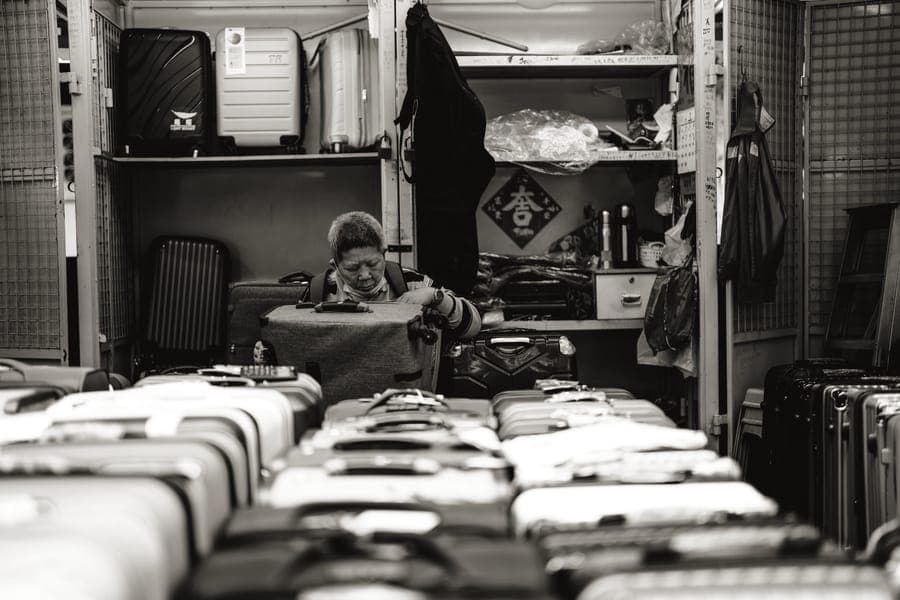 Travelpro Maxlite 5 21-inch Expandable Carry-On Spinner The size most people should own, at the lowest weight the category offers. | Up to a week, or two with laundry | |
| 2 | 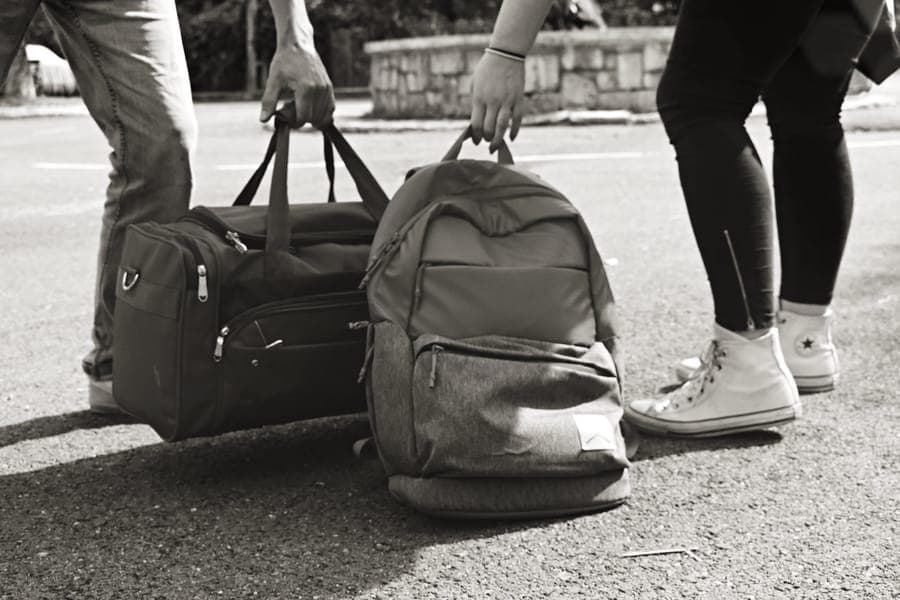 Patagonia Black Hole Duffel 25L Frameless and shapeless, so it fits whatever under-seat space the aircraft has. | One to two nights | |
| 3 |  Travelpro Maxlite 5 Expandable Checked Spinner Very light for a checked bag, which is several pounds of clothes you get to bring. | Two weeks or more, and winter |
Forty-six liters, 5.4 lb, and it covers a weekend to a fortnight
Travelpro Maxlite 5 21-inch Expandable Carry-On Spinner
This is the size that answers the question for most people. Travelpro publishes 46 liters and 5.4 lb empty, which is enough for seven days packed properly and light enough that a weighed 7 kg international cabin allowance is still workable. If you are buying one bag and want to stop thinking about it, this is the one.
The specs that decide it
- Capacity: 46 liters, published - a week, or two with one laundry stop
- Weight: 5.4 lb empty, published
- Overall size: 23 x 14.5 x 9 inches including wheels and handles
- Measure against: Carry-on size by airline
Flaws but not dealbreakers
The published overall height of 23 inches is over a 22-inch sizer, so it relies on soft-shell give at a strict gate rather than clearing the box outright. Lighter fabric also scuffs sooner than ballistic nylon, and the handle has more play under load.
Twenty-five liters, which is what one or two nights actually is
Patagonia Black Hole Duffel 25L
If the trip is a weekend, this is the capacity and a frameless bag is the format. Delta, Southwest and Alaska publish no personal item dimensions at all, so there is no number to fail against - and a soft duffel compresses to whatever space exists rather than presenting a rigid edge for an agent to object to. On Basic Economy it is also the bag that rides free.
The specs that decide it
- Capacity: 25 liters - one or two nights, packed deliberately
- Structure: Frameless - compresses to the space available
- Weather: Coated fabric, so it handles a wet walk to the terminal
- Measure against: Personal item size by airline
Flaws but not dealbreakers
No structure means everything settles to the bottom and finding one item means unpacking several, with no laptop protection unless you add a sleeve. At 25 liters there is also no slack at all for anything you buy on the trip.
The checked bag that spends the least of your 50 lb on itself
Travelpro Maxlite 5 Expandable Checked Spinner
Almost every US carrier caps a standard checked bag at 50 lb, and every pound of empty suitcase comes straight off that. A rigid polycarbonate checked case can eat a tenth of the allowance before you pack a sock. This is among the lightest properly built checked bags available, and the saving comes from lighter fabric rather than from cutting the wheels and handle.
The specs that decide it
- Weight: Very light for the checked category - the main reason to choose it
- Size: Check the total against the 62 linear inch limit most carriers set
- Expansion: Expandable, and unlike on a carry-on the expansion is genuinely usable
- Pair with: A luggage scale, so the saving is real
Flaws but not dealbreakers
Fabric checked bags get dirty on the first trip and stay that way, and they offer far less impact protection than a shell. If you are checking anything fragile this is the wrong bag - best checked luggage has the protective alternative.
Frequently asked questions
What size luggage do I need for a week?
What size suitcase is a carry-on?
What size luggage do I need for a two-week trip?
How do I calculate linear inches?
Is 40 liters enough for a week?
Should I buy a bigger bag than I need?
Sources
- American Airlines - carry-on baggage (22 x 14 x 9 in standard)
- American Airlines - checked baggage policy (62 linear inches, 50 lb)
- Southwest Airlines - carry-on baggage policy (24 x 16 x 10 in)
- Frontier Airlines - bag sizes and weight limits (40 lb checked, 35 lb carry-on)
- Alaska Airlines - carry-on baggage (expansion counted toward the measurement)
- Travelpro - Maxlite 5 21in Expandable Carry-On Spinner (46 L, 5.4 lb, 23 x 14.5 x 9 in overall)
Read next
- Carry-on size by airline
- Checked bag size and weight limits by airline
- Best luggage for a weekend trip
- How to pack a carry-on for a week
- Best lightweight luggage
- Carry-on vs checked luggage
More in Luggage, or see every roundup and comparison on the site.