How to pack for a week in a carry-on in winter
Cold-weather clothing is four times the volume of the same warmth in summer. The fix is what you wear, not what you leave behind.
By Michael W. · Last updated October 3, 2026

We earn a commission when you buy through our links, at no extra cost to you. It never changes what we pick or how we rank it. How we’re funded.
Wear your coat and your boots through the airport, pack three thin layers instead of two thick ones, and the winter week fits in the same carry-on as a summer one. The bulkiest two items in a cold-weather kit - the outer coat and the heaviest footwear - should never be inside the bag, and once they are out of it the rest of the problem is ordinary.
Winter packing fails for a volume reason, not a quantity reason. A week's worth of warm clothing is roughly the same number of garments as a week in summer, but each one is three or four times the packed volume. That means the solution is compression and layering, not editing the list down. A thin merino base layer under a mid-weight sweater is warmer than one thick sweater and packs to a third of the space.
Check your carrier's cabin weight limit first
Winter clothing is heavy as well as bulky, and a 7-10 kg cabin allowance on a European or Asian carrier is easy to breach even when the bag physically fits. Weigh it at home - carry-on size by airline covers which carriers weigh.
Why winter breaks a carry-on, and what actually fixes it
Three things cause the problem, and only one of them is about how much you bring.
| Problem | What it costs you | The fix |
|---|---|---|
| Outerwear volume | A coat alone can be a third of a carry-on | Wear it. Never pack the outer layer |
| Footwear volume | Boots are the single largest packed item | Wear the big pair, pack one flat alternative |
| Knitwear air | A thick sweater is mostly trapped air | Compression cubes or roll-up bags - this is what they are for |
| Quantity of clothes | Less than people think | One laundry stop mid-week |
Notice that only the last row is about packing fewer things. The other three are about where the volume sits and how much air is inside it, which is why winter packing advice that just says "bring less" does not help - you need the clothes, you need them somewhere other than inside the bag.
The layering system in full
- Base layer: two merino or synthetic tops, two bottoms if it is genuinely cold. Thin, next to the skin, fast-drying, and the item you will wash mid-week. Merino resists odour far better than synthetic, which is why it is worth the price on a week-long trip.
- Mid layer: two pieces, one light fleece and one sweater. These do the warmth work and they are the items compression actually helps with.
- Outer layer: one shell, worn. Wind and water resistance matters more than insulation here, because the insulation is the mid layer's job.
- Accessories: hat, gloves, a buff or scarf. Tiny, enormous effect on comfort, and they live in coat pockets rather than in the bag.
- Two pairs of trousers maximum, one of which you are wearing. Denim is heavy and slow to dry; a technical or wool-blend trouser is the better travel choice in cold weather.
- Socks: five pairs, thin. Thick wool socks are bulky and you only need one pair of those, worn with the boots. On the flight itself, swap to compression socks instead.
- Toiletries to the 3-1-1 rule as usual. Cold weather changes the clothing, not the liquids - TSA liquid rules and how to pack toiletries are unchanged.
That full list is five to seven days of cold-weather clothing and it fits in a standard carry-on with room left over, provided the coat and boots are on you rather than in it.
What to compress and what never to compress
Compression is the single biggest lever in winter packing and it is also the one most easily misused.
- Compress: knitwear, fleece, base layers, pyjamas, socks. All of these are mostly trapped air and all of them recover their shape within an hour of being unpacked.
- Do not compress: down insulation. A down jacket or vest held compressed for a week loses loft, and loft is the warmth. Pack it loosely or wear it.
- Do not compress: anything with a collar, a placket or a crease. Shirts and tailored trousers come out of a compression bag permanently marked.
- Compress at the end, not as you pack. Fill the cube loosely, close the bag, then compress - compressing a half-filled cube just makes a hard lump that wastes the space around it.
- Remember compression does nothing for weight. On a weighed cabin allowance a compressed bag is exactly as heavy as an uncompressed one, and winter clothes are heavy.
The mid-week laundry stop
One sink wash halves the volume of base layers and socks you need to carry, which in winter is the difference between a comfortable bag and a bursting one. Thin merino and synthetic base layers are specifically designed to dry overnight, which is why they are the right items to wash rather than the sweaters.
Detergent sheets are the travel-friendly form because they are solid, so they sit entirely outside the 3-1-1 liquid rule and take no space in the quart bag - see TSA liquid rules and solid toiletries for travel. Wash in the evening, roll the garment in a towel and stand on it to drive out the water, then hang it overnight. A twisted garment left dripping will still be damp in the morning in a cold climate.
Best travel laundry kit covers the full setup, which is a small and genuinely worthwhile category for anyone packing light in cold weather.
The three things that make it fit
The method works without any of these. These are what make it comfortable rather than tight:
Quick picks
The short list. Tap any row for the full write-up, including what each one is bad at.
| # | Product | Best for | Price |
|---|---|---|---|
| 1 | 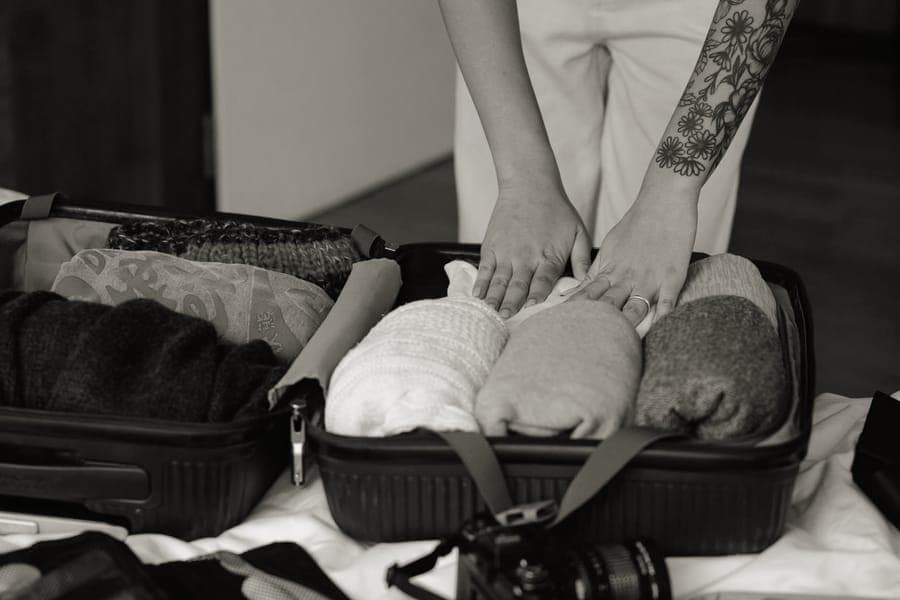 Eagle Creek Pack-It Compression Cube Set Cubes with a second zip that squeezes the air out after you have filled them. | Bulky soft layers | |
| 2 | 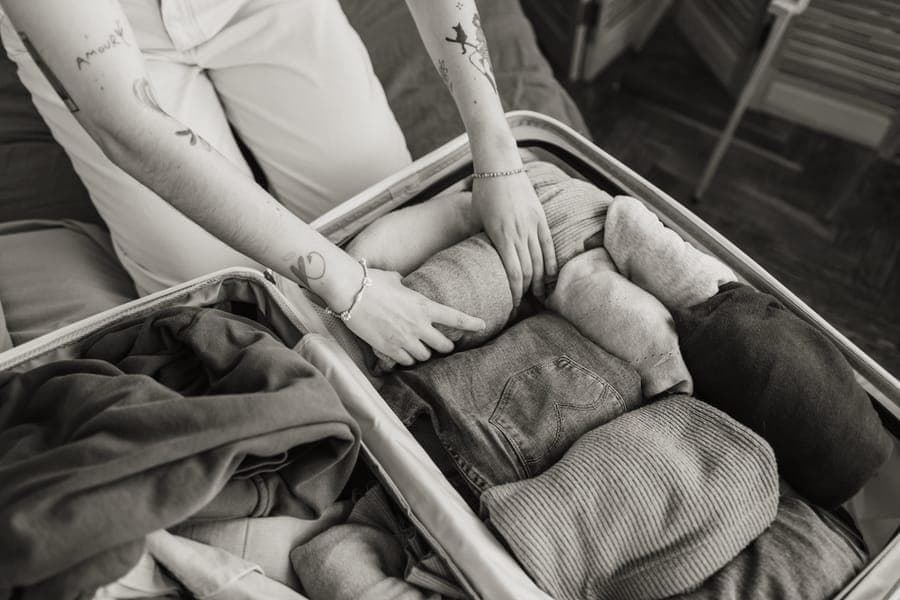 Roll-Up Compression Bags for Travel Roll the air out through a one-way valve - no vacuum cleaner required. | The one sweater too many | |
| 3 | 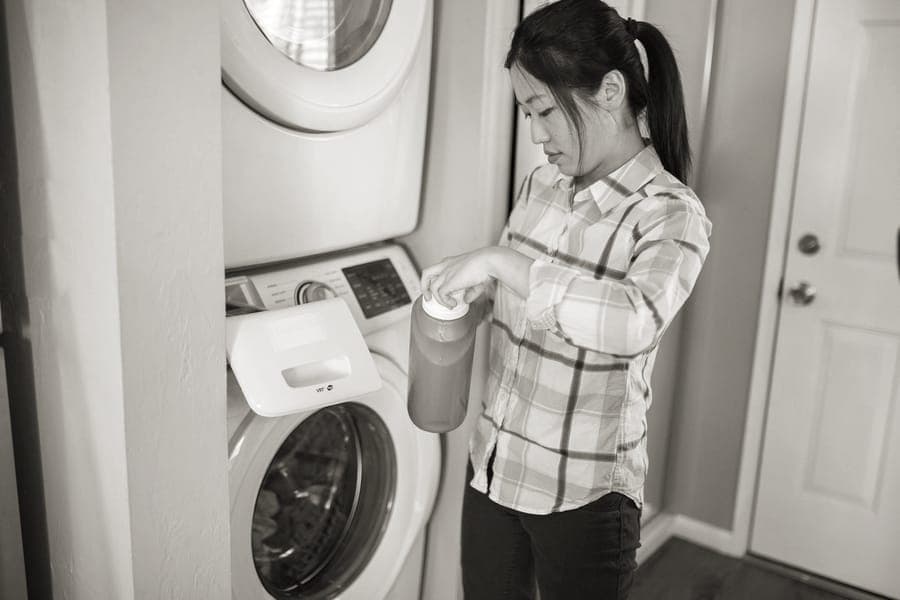 Laundry Detergent Sheets for Travel Solid sheets, so they sit outside the liquid rule entirely and weigh nothing. | Mid-week sink washes |
The thing that gets the air out of a week of sweaters
Eagle Creek Pack-It Compression Cube Set
A winter carry-on is mostly air trapped in knitwear, and a compression cube removes it without the fuss of a vacuum system. Fill it loosely, close the main zip, then run the compression zip - sweaters and fleece lose a surprising amount of volume and recover their shape within an hour of unpacking.
The specs that decide it
- What it does: Removes air from soft knits - the main winter volume problem
- Use it for: Sweaters, fleece, base layers, socks
- Never use it for: Down insulation, shirts or tailored trousers
Flaws but not dealbreakers
Compression saves volume and not one gram of weight, which is the limit that bites on a weighed international cabin allowance. The compression zips are also the component that fails first on cheaper sets.
The cheapest way to halve the volume of a bulky layer
Roll-Up Compression Bags for Travel
A roll-up bag compresses harder than a zipped cube because you are physically forcing the air out through a valve rather than cinching fabric. For the two or three bulkiest soft items in a winter bag, that extra reduction is the difference between closing the case and repacking it. They cost very little and weigh almost nothing.
The specs that decide it
- How it works: Roll from the closed end, air exits through a one-way valve
- Best for: The bulkiest soft items only - not the whole bag
- Return leg: Works just as well in a hotel room with no equipment
Flaws but not dealbreakers
Clothes come out heavily creased - fine for fleece and knitwear, unacceptable for anything you need to look pressed. The plastic also punctures and the valves fail, so treat them as consumables rather than as gear.
The solid detergent that halves how many base layers you pack
Laundry Detergent Sheets for Travel
The mid-week wash is what makes a winter week fit, and solid detergent is the form that does not cost you any of the quart bag. A sheet dissolves in a hotel sink, handles a couple of base layers and a few pairs of socks, and the whole packet is thinner than a phone.
The specs that decide it
- Form: Solid - outside the 3-1-1 liquid rule entirely
- Use: One sheet per sink wash of base layers and socks
- Technique: Roll the wet garment in a towel and stand on it before hanging
Flaws but not dealbreakers
Less effective than liquid detergent on anything genuinely dirty, and they do not dissolve well in cold water - which is most of what a hotel bathroom tap gives you quickly. For sweat in a base layer they are fine; for a real stain they are not.
Frequently asked questions
Can you pack for a week in winter in a carry-on?
How do you pack a winter coat in a carry-on?
Do compression bags help with winter packing?
How many layers do you need for a week in winter?
What shoes do you pack for a winter trip in a carry-on?
Read next
- How to pack a carry-on for a week
- Best compression packing cubes
- Best travel laundry kit
- Europe packing list
- Carry-on only packing list
- Carry-on size by airline
More in Packing, or see every roundup and comparison on the site.