Hardside vs softside luggage
The most argued-about question in luggage, and one of the least consequential. Here is where the difference is real.
By Michael W. · Last updated September 20, 2026
We earn a commission when you buy through our links, at no extra cost to you. It never changes what we pick or how we rank it. How we’re funded.
Short answer: choose hardside if you check bags or carry anything fragile. Choose softside if you fly carry-on only. That covers most people, and the rest of this page is about the cases where it is less obvious.
The reason this question gets so much attention is that it is the most visible difference between two suitcases, and the least consequential. Neither type is more durable than the other in any general sense, because neither fails at the body. Wheels and handles fail. A hardside and a softside bag at the same price from the same brand will usually last about as long as each other, and for the same reason.
Quick picks
The short list. Tap any row for the full write-up, including what each one is bad at.
| # | Product | Best for | Price |
|---|---|---|---|
| 1 |  Samsonite Freeform Hardside Carry-On Spinner A light hardshell that flexes under impact instead of cracking. | Protecting contents | |
| 2 | 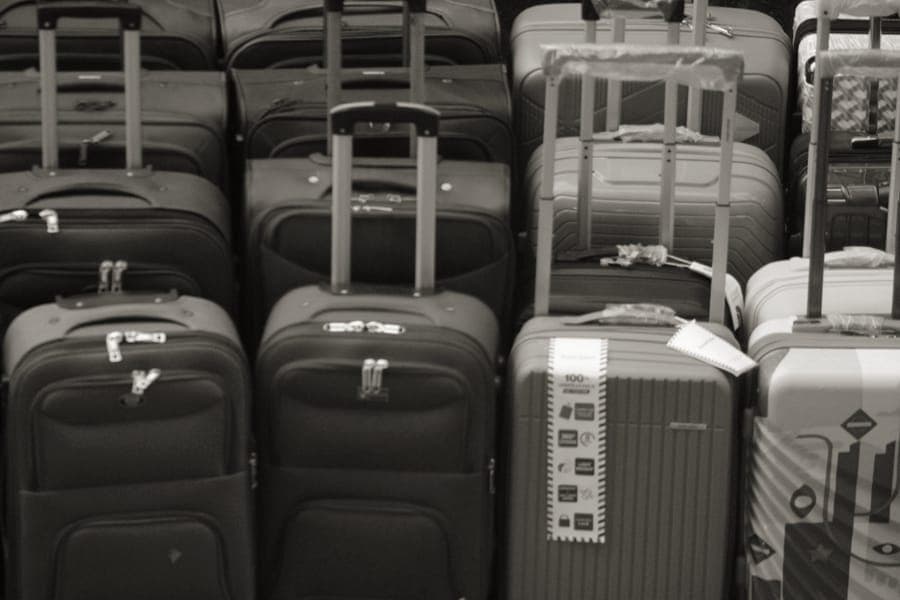 Travelpro Platinum Elite 21-inch Expandable Carry-On Spinner Compresses at a sizer, carries the pockets you actually use at security. | Cabin-only travel | |
| 3 | 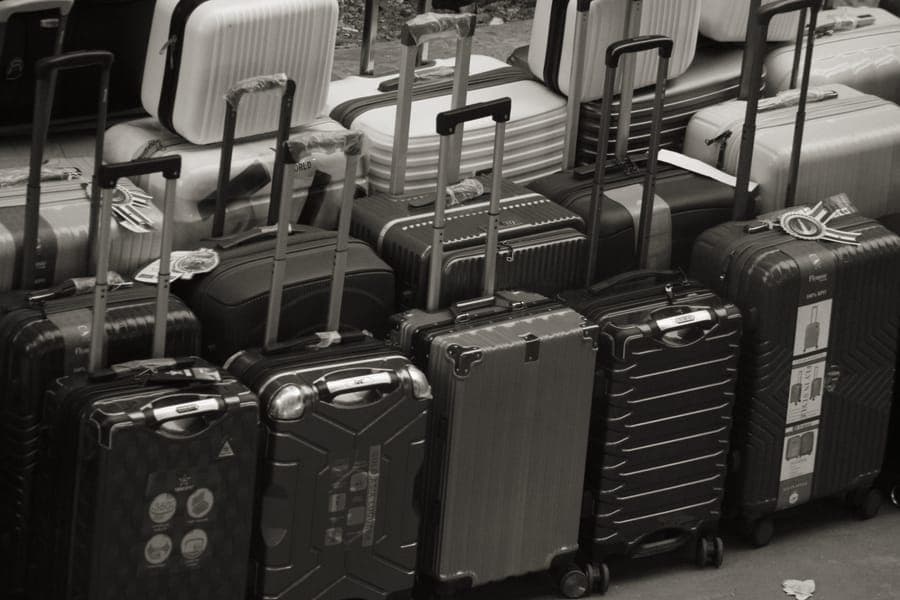 Samsonite Winfield 3 DLX Hardside Checked Spinner Rigid polycarbonate and a TSA-accepted lock, for a bag that will be thrown. | Checked baggage |
Choose this if you check bags or carry something breakable
Samsonite Freeform Hardside Carry-On Spinner
Hardside earns its place in two situations: the bag goes in the hold, or something inside it would mind being crushed. A polypropylene-type shell is the sensible version of that, because it protects without the weight penalty that makes polycarbonate and aluminum awkward on weight-limited routes.
The specs that decide it
- Protects contents: Yes - the main reason to choose hardside
- Compresses at a sizer: No - a rigid shell has no give
- External pockets: None, which is the practical cost
Flaws but not dealbreakers
No give at a tight gate sizer, no external access to a laptop or documents, and a split-case clamshell needs real floor space to open - awkward in a small hotel room or a train compartment.
Choose this if you fly carry-on only
Travelpro Platinum Elite 21-inch Expandable Carry-On Spinner
For a bag that never goes in the hold, fabric's advantages are the ones you meet every trip: it squashes into a sizer, it has front pockets for a laptop and documents, and it weighs less. The crush protection you give up only matters if something in the bag would be damaged by it.
The specs that decide it
- Protects contents: Limited - fabric transmits crush from a packed bin
- Compresses at a sizer: Yes - the practical advantage at a tight gate
- External pockets: Yes - laptop and documents without opening the main bag
Flaws but not dealbreakers
The expansion zip takes it over the carry-on limit, and Alaska counts expansion toward the measurement. Fabric also gets dirty and stays dirty in a way a wipeable shell does not.
Where hardside's argument is strongest
Samsonite Winfield 3 DLX Hardside Checked Spinner
The checked bag is where this debate has a clear winner. A baggage system throws, stacks and drops bags, and leaves them on wet tarmac. Rigidity and water resistance are genuinely protective there in a way they simply are not in an overhead bin.
The specs that decide it
- Shell: Polycarbonate - rigid, water-resistant, does not transmit impact
- Security: Integrated TSA-accepted lock
- Weight cost: Several pounds of your 50 lb allowance
Flaws but not dealbreakers
Heavy against a 50 lb checked limit, and polycarbonate cracks rather than flexing if it takes a hard enough corner impact. A cracked shell is not repairable.
Hardside vs softside, dimension by dimension
| Hardside | Softside | |
|---|---|---|
| Protects fragile contents | Yes | No - transmits crush |
| Water resistance | Good | Varies; usually poor unless coated |
| Compresses at a gate sizer | No | Yes, somewhat |
| External pockets | None | Yes |
| Weight for the same capacity | Usually heavier | Usually lighter |
| Cleaning | Wipes clean | Stains and stays stained |
| Packs flat and evenly | Yes - split case | Less evenly |
| Expandable | Rarely | Commonly |
| Looks new after 3 years | Scuffs visibly | Frays but hides wear |
| Repairable after damage | Cracks are terminal | Tears can be stitched |
Choose hardside if...
- You check the bag. A baggage system is genuinely rough and a shell is genuinely protective. This is the strongest argument in the whole debate.
- You carry something fragile. A camera, a bottle, work equipment, anything with a screen. In a full overhead bin a soft bag passes the load of everything stacked on it straight to the contents.
- You travel somewhere wet. A shell keeps rain out; uncoated fabric does not.
- You want it to wipe clean. Fabric picks up marks on the first trip and keeps them.
Choose softside if...
- You fly carry-on only. Every advantage of a shell is about what happens in a hold. If the bag never goes there, you are paying weight for protection you do not use.
- You fly budget carriers. Fabric compresses into a gate sizer under a firm push. A rigid shell does not, at any pressure.
- You want to reach a laptop without opening the bag. Hardshells cannot have external pockets without compromising the shell, so they mostly do not have them.
- The airline weighs your cabin bag. Fabric is generally lighter for the same capacity, which is several pounds of clothes on a 7 kg allowance.
The durability argument is mostly wrong
Both camps claim theirs lasts longer, and both are arguing about the wrong component. Across published durability testing in this category, failures cluster in the wheels and the telescoping handle. Shell and fabric barely feature.
What does differ is the failure mode when the body is damaged. A cracked hardshell is terminal - you cannot repair polycarbonate meaningfully. A torn fabric panel can be stitched, patched or simply lived with. In that narrow sense softside is more repairable, but it is a small consideration next to running gear that is riveted rather than bolted on almost every bag at any price.
The practical conclusion: do not choose between hardside and softside on durability. Choose on the trade-offs above, then buy the version with the better wheels.
If you do go hardside, which shell?
| Material | Impact resistance | Weight | Failure mode | Suits |
|---|---|---|---|---|
| ABS | Lowest | Lightest | Cracks at corners | Occasional flyers, budget |
| Polycarbonate | Highest | Medium-heavy | Cracks under hard corner impact | Checked bags |
| Polypropylene | High | Light | Flexes and scratches | Cabin bags |
Aluminum is the fourth option and a different conversation: extremely durable, very heavy, and it dents permanently rather than flexing back. On any weight-limited allowance it is an expensive way to carry less. Best hardside luggage goes into this properly.
So which should you buy?
If you are a typical flyer who checks a bag occasionally and carries a cabin bag the rest of the time, the most useful answer is to own one of each: a softside carry-on for the flexibility where it matters, and a hardside checked bag for the protection where it matters. That is not a dodge - it is genuinely how the trade-offs fall.
If you are buying one bag, decide by whether it will be checked. Checked means hardside. Cabin-only means softside. And if the airline weighs your cabin bag, the lightest bag wins regardless of what it is made of - see best luggage for international travel.
Frequently asked questions
Is hardside or softside luggage better?
Which lasts longer, hardside or softside?
Is hardside luggage heavier?
Does softside luggage fit better in overhead bins?
Can hardside luggage be repaired?
Read next
- Best hardside luggage
- Best softside luggage
- Best carry-on luggage
- Best checked luggage
- Carry-on size by airline
More in Luggage, or see every roundup and comparison on the site.