The best spinner luggage
Four wheels let you push the bag instead of dragging it. They also cost you about six liters, and we can show you the number.
By Michael W. · Last updated October 3, 2026
We earn a commission when you buy through our links, at no extra cost to you. It never changes what we pick or how we rank it. How we’re funded.
The best spinner for most people is the Travelpro Maxlite 5 21-inch spinner: 5.4 lb empty, 46 liters, and four 360-degree wheels that let you push the bag alongside you instead of dragging it behind. For a checked spinner, the Samsonite Winfield 3 DLX adds a rigid polycarbonate shell and an integrated TSA-accepted lock; for a strict low-cost gate, the Amazon Basics 20-inch hardside spinner is deliberately undersized.
Before the picks, the figure nobody puts on a listing. Travelpro publishes 46 liters for the four-wheel Maxlite 5 21-inch spinner and 52 liters for the two-wheel Maxlite 5 Rollaboard - same 5.4 lb empty weight, same 21 x 14 x 9 case, same 23 x 14.5 x 9 overall. The four-wheel version carries six fewer liters because externally-mounted spinner castors take their volume out of the inside of the bag. That is the trade, in the manufacturer's own numbers.
Who should buy a spinner
Terminals, hotels, offices, smooth pavement - four wheels are effortless and a two-wheel bag is work. Cobblestones, curbs, gravel and stairs - four small castors are the first thing to break. If your trips are mostly airports, buy a spinner. If they are mostly European old towns, read best luggage for Europe first.
Quick picks
The short list. Tap any row for the full write-up, including what each one is bad at.
| # | Product | Best for | Price |
|---|---|---|---|
| 1 | 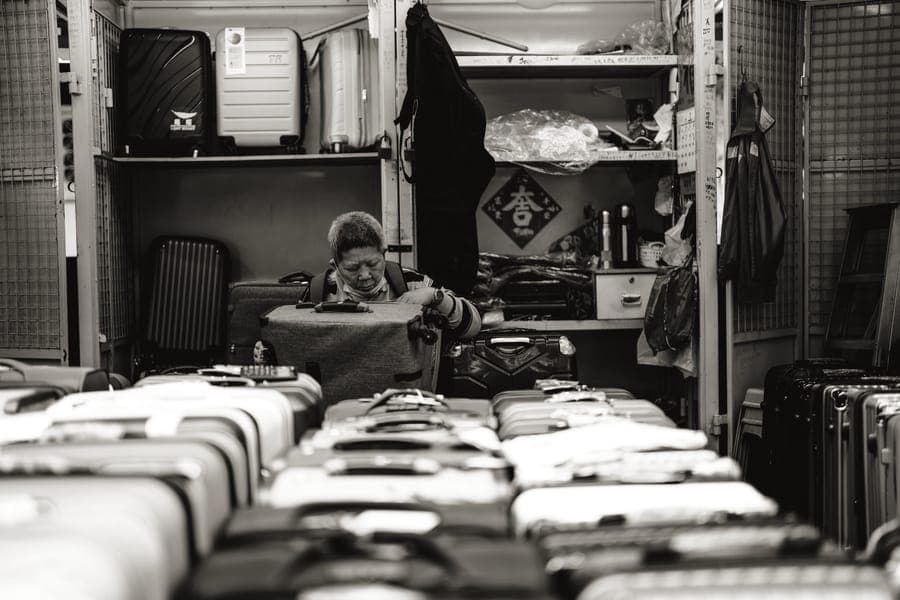 Travelpro Maxlite 5 21-inch Expandable Carry-On Spinner Four 360-degree wheels, 46 liters, and 5.4 lb empty - the lightest of the properly built ones. | Most flyers | |
| 2 |  Samsonite Freeform Hardside Carry-On Spinner A polypropylene-type shell that is light for a hardside and wipes clean. | Fragile contents in the cabin | |
| 3 | 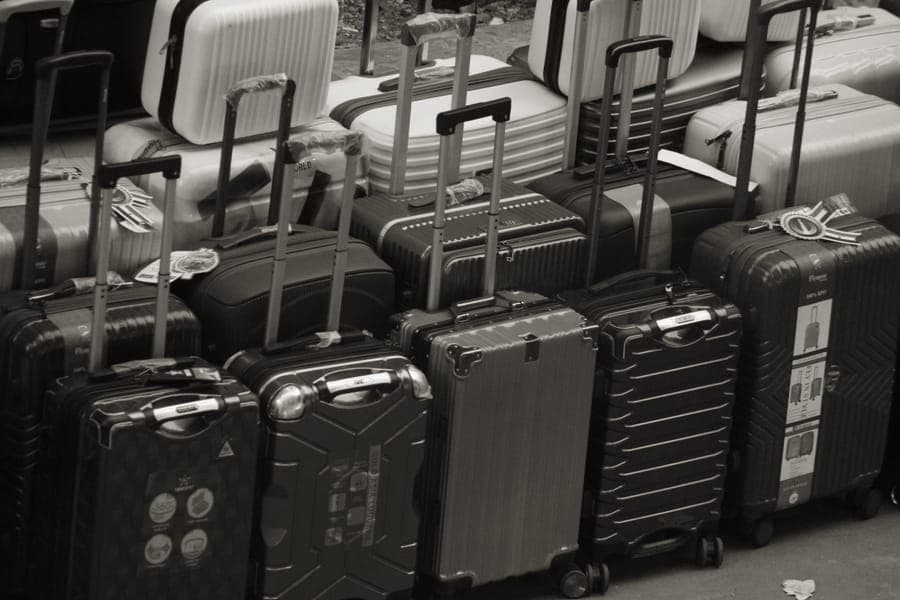 Samsonite Winfield 3 DLX Hardside Checked Spinner Rigid polycarbonate plus a TSA-accepted lock, on four wheels. | Fragile checked contents | |
| 4 |  Amazon Basics 20-inch Hardside Spinner Undersized against the standard on purpose, which is what you want at a strict gate. | Ultra-low-cost carriers | |
| 5 |  Samsonite Freeform Hardside Large Spinner A light hardshell at the large end, so one bag can cover two people inside one weight limit. | Shared packing |
The spinner to buy if you want one bag to do everything
Travelpro Maxlite 5 21-inch Expandable Carry-On Spinner
Travelpro publishes 5.4 lb empty, 46 liters and 360-degree four-wheel spinners on this model, and the weight is taken out of the shell and the structure rather than out of the running gear - which matters, because on a spinner the running gear is the whole point and the usual failure. If you fly a handful of times a year on smooth surfaces and want to push the bag rather than pull it, this is the default answer.
The specs that decide it
- Wheels: 360-degree four-wheel spinners, per Travelpro's own specification
- Weight: 5.4 lb empty, published
- Capacity: 46 liters - six less than the two-wheel version of the same case
- Overall size: 23 x 14.5 x 9 inches including wheels and handles
Flaws but not dealbreakers
Published overall height is 23 inches with wheels and handles, over a 22-inch sizer - it relies on soft-shell give at a strict gate. Externally mounted castors are also the part that shears off on a curb, and the lighter fabric scuffs sooner than ballistic nylon.
The spinner that keeps its shape in a packed overhead bin
Samsonite Freeform Hardside Carry-On Spinner
A soft spinner sags when three other bags are stacked on it. A rigid shell does not, which is the case for a hardside in the cabin if you carry a camera, a bottle or work equipment. The Freeform is the compromise worth making: it keeps the crush protection while staying light for the hardside category, and the split-case interior packs flat and evenly on both sides.
The specs that decide it
- Wheels: Four-wheel spinner on a rigid shell, which rolls more precisely
- Shell: Polypropylene-type - light for a hardshell, water-resistant
- Interior: Split-case clamshell, packs flat on both sides
- Size: Carry-on spec against the 22 x 14 x 9 standard
Flaws but not dealbreakers
A hardshell has no give - half an inch over and there is no pushing it into the sizer. The split case needs floor space to open, awkward in a small hotel room or a train compartment, and light shells scuff visibly within a few trips. See hardside vs softside luggage.
The one to check when what is inside matters
Samsonite Winfield 3 DLX Hardside Checked Spinner
The hold is where the hardside argument is strongest and where spinner wheels are least at risk, because the bag is on a conveyor rather than on a curb. A rigid polycarbonate shell takes conveyor impacts and stacking without passing them to the contents, keeps rain off on a wet tarmac transfer, and the integrated TSA-accepted lock means a screener can open it without cutting anything.
The specs that decide it
- Wheels: Four-wheel spinner - easy to steer loaded, which matters at 50 lb
- Shell: Polycarbonate - rigid, water-resistant, does not transmit impact
- Security: Integrated TSA-accepted combination lock
- Check: Total against the 62 linear inch limit most carriers set
Flaws but not dealbreakers
Heavy. Against a 50 lb limit the empty case is a meaningful fraction of what you are allowed, and polycarbonate cracks rather than flexing under a hard enough corner impact - a cracked shell cannot be repaired. Checked bag size and weight limits has the figures it is measured against.
The one to buy if you fly Spirit and Frontier and expect the sizer
Amazon Basics 20-inch Hardside Spinner
On an ultra-low-cost carrier the sizer is a revenue instrument and it will be used. Buying a spinner comfortably inside the limit rather than exactly at it is the cheapest insurance available, and at this price the bag owes you nothing after a few trips. A 20-inch case clears every major US carrier with margin, wheels included.
The specs that decide it
- Wheels: Four-wheel spinner at the lowest price in this list
- Clears: Every major US carrier's carry-on limit, with margin
- Construction: Hardside, so it holds its shape in an overhead bin
- Trade-off: Smaller than the maximum legal size - less capacity by design
Flaws but not dealbreakers
You are giving up real capacity to buy margin - on a carrier that would have accepted a 22-inch bag that is volume you paid for and did not use. Budget castors and housings are also the weakest part of a budget bag, and budget hardside shells scuff quickly.
The big spinner two people can share
Samsonite Freeform Hardside Large Spinner
Two people sharing one large checked bag pay one bag fee and have one bag to track. That only works if the empty case is light enough to leave room for both sets of clothes inside a single 50 lb limit, which rules out most large hardside cases and is exactly what a lighter polypropylene shell solves. Four wheels are close to essential at this size - a loaded large bag on two wheels has to be dragged at an angle.
The specs that decide it
- Wheels: Four-wheel spinner, which is what makes a large bag steerable
- Shell: Polypropylene-type - light for a hardshell, flexes rather than cracking
- Interior: Split-case clamshell, which keeps two people's packing separate
- Size: Large - verify the total against the 62 linear inch limit
Flaws but not dealbreakers
One shared bag means one lost bag takes out both travelers' clothes. Large cases are awkward on stairs and over rough ground whatever the wheel count, and flexible shells scuff visibly early.
How these spinners compare
| Pick | Where it goes | Shell | Published capacity | Best for |
|---|---|---|---|---|
| Travelpro Maxlite 5 21in Spinner | Cabin | Softside | 46 L | Most flyers |
| Samsonite Freeform Carry-On | Cabin | Polypropylene-type | Not published | Fragile contents |
| Samsonite Winfield 3 DLX | Hold | Polycarbonate | Not published | Checked protection |
| Amazon Basics 20in Spinner | Cabin | Hardside | Not published | Strict low-cost gates |
| Samsonite Freeform Large | Hold | Polypropylene-type | Not published | Two people, one bag |
What four wheels actually cost you
Spinner castors hang off the bottom corners of the case. They need clearance to rotate, and the housings that hold them intrude into the shell. A two-wheel inline design recesses its wheels into the base instead, so the same external box holds more.
Travelpro sells both versions of the same bag and publishes both sets of numbers, which makes this one of the few places the trade can be measured rather than argued about.
| Specification | 21in four-wheel spinner | Two-wheel Rollaboard |
|---|---|---|
| Published volume | 46 L | 52 L |
| Empty weight | 5.4 lb | 5.4 lb |
| Case dimensions | 21 x 14 x 9 in | 21 x 14 x 9 in |
| Overall with wheels and handles | 23 x 14.5 x 9 in | 23 x 14.5 x 9 in |
| Wheels | 360-degree four-wheel spinners | 2 ball-bearing wheels |
Six liters is roughly a pair of shoes, or two sweaters, or the difference between a five-day trip and a seven-day one. Whether that is worth paying for the ability to push the bag instead of dragging it depends entirely on how far you walk on smooth floors - which is the real question, and spinner vs roller luggage works through it properly.
What separates a good spinner from a bad one
The shell is not the part that fails. Across every price point, the complaints are about the running gear, and on a spinner there is twice as much of it as on a two-wheel bag.
- Wheel diameter. Small castors catch on every expansion joint and threshold. Larger wheels roll over them. This is the single most noticeable difference between a cheap spinner and a good one.
- Housing mount. Castors bolted through a reinforced plate survive curbs. Castors riveted to a thin shell shear off at the mount, and that is not a repair most people can get done.
- Sealed bearings. Grit in an open bearing turns a smooth wheel into a noisy one within a season, and airports are full of grit.
- Handle play. Telescoping handle wobble is the most common durability complaint at every price, and on a spinner you steer through the handle rather than pull through it, so play is worse.
- Whether the wheels count in the published size. They always do at a gate. Travelpro's 21-inch case measures 23 inches overall - read the overall figure, not the model name.
One habit worth building regardless: lift the bag over curbs and thresholds rather than rolling it up them. Nearly every sheared castor is a curb, and lifting costs you two seconds.
Where spinners are the wrong answer
A spinner on a polished terminal floor is genuinely better than a two-wheel bag - you push it beside you at walking pace with one hand, and it does not tug at your wrist. Change the surface and the advantage inverts completely.
- Cobblestones and old-town pavement. Small castors hammer on every joint and the housings take the shock. This is the standard way a European trip ends a spinner - best luggage for Europe covers it.
- Gravel, grass and unpaved ground. Four small wheels dig in. Two larger inline wheels, dragged at an angle, do not.
- Stairs and trains. Nothing with wheels is good here. If stairs are routine on your trips, a travel backpack is the honest answer.
- Sloped aircraft aisles and ferry decks. A free-rolling spinner will not stay where you put it, which is a minor irritation and occasionally somebody else's problem.
How we chose these
Running gear first, because on a spinner it is the product and the failure point. Then published size against the limit the bag is actually measured on, wheels included. Then empty weight, since four wheels add some. Then shell and interior.
Capacity and weight figures above are quoted only where the manufacturer publishes them, and the table says so where they do not. We do not run a lab and we have not rolled these over a curb to see what breaks - our methodology sets out what our picks rest on.
Frequently asked questions
What is spinner luggage?
Does spinner luggage hold less?
Are spinner wheels more likely to break?
Do spinner wheels count toward the carry-on size limit?
Are spinners good for cobblestones?
Sources
Read next
- Spinner vs roller luggage
- Best carry-on luggage
- Best hardside luggage
- Best checked luggage
- Carry-on size by airline
- Best luggage for Europe
More in Luggage, or see every roundup and comparison on the site.