The best softside luggage
Fabric bags give up crush protection and get back flexibility, pockets and weight. For carry-on-only travel that is usually the better trade.
By Michael W. · Last updated September 27, 2026
We earn a commission when you buy through our links, at no extra cost to you. It never changes what we pick or how we rank it. How we’re funded.
Hardside luggage has taken over the market on looks, and in the process a genuinely better option for a lot of travelers got quietly sidelined. For carry-on-only flying, softside is usually the right answer - it compresses under a gate sizer, it carries external pockets you will use at every security checkpoint, and it weighs less for the same capacity.
The trade is real and worth stating plainly: a fabric bag transmits crush. In a packed overhead bin with three cases stacked on yours, a soft bag squashes and whatever is inside takes that load. If you carry a camera, a laptop without a hard sleeve, or anything breakable, that is a genuine reason to choose a shell instead.
Measure before you fly
Manufacturers frequently quote the case body only, so a bag marketed as a 21-inch carry-on can measure over 22 inches with wheels and the handle housing included. Airlines measure at the widest points. Check the overall dimension against the limit for your airline before you buy.
Quick picks
The short list. Tap any row for the full write-up, including what each one is bad at.
| # | Product | Best for | Price |
|---|---|---|---|
| 1 | 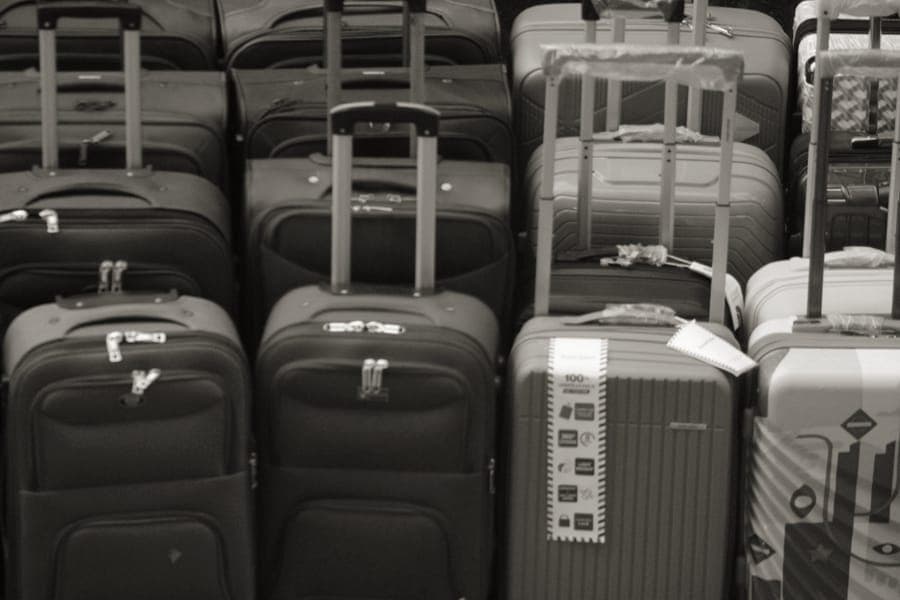 Travelpro Platinum Elite 21-inch Expandable Carry-On Spinner The category benchmark, built around wheels and handle rather than fabric. | Frequent flyers | |
| 2 |  Osprey Farpoint 40 Travel Pack Frameless construction squashes into whatever box the gate agent produces. | Budget carriers and weighed cabin allowances | |
| 3 | 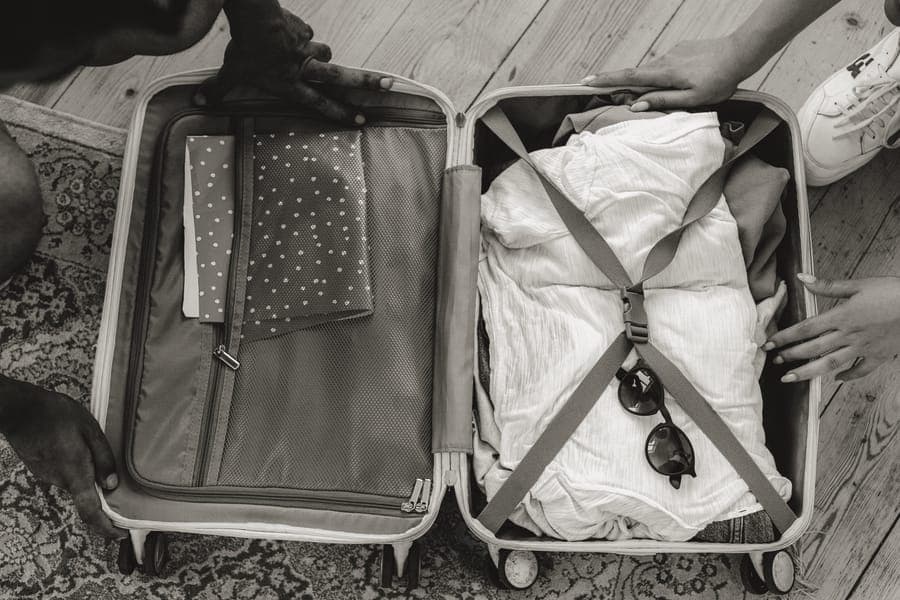 Rockland Melbourne Softside Carry-On Cheap, light, and keeps the front-pocket access that hardshells refuse to offer. | Working while traveling | |
| 4 | 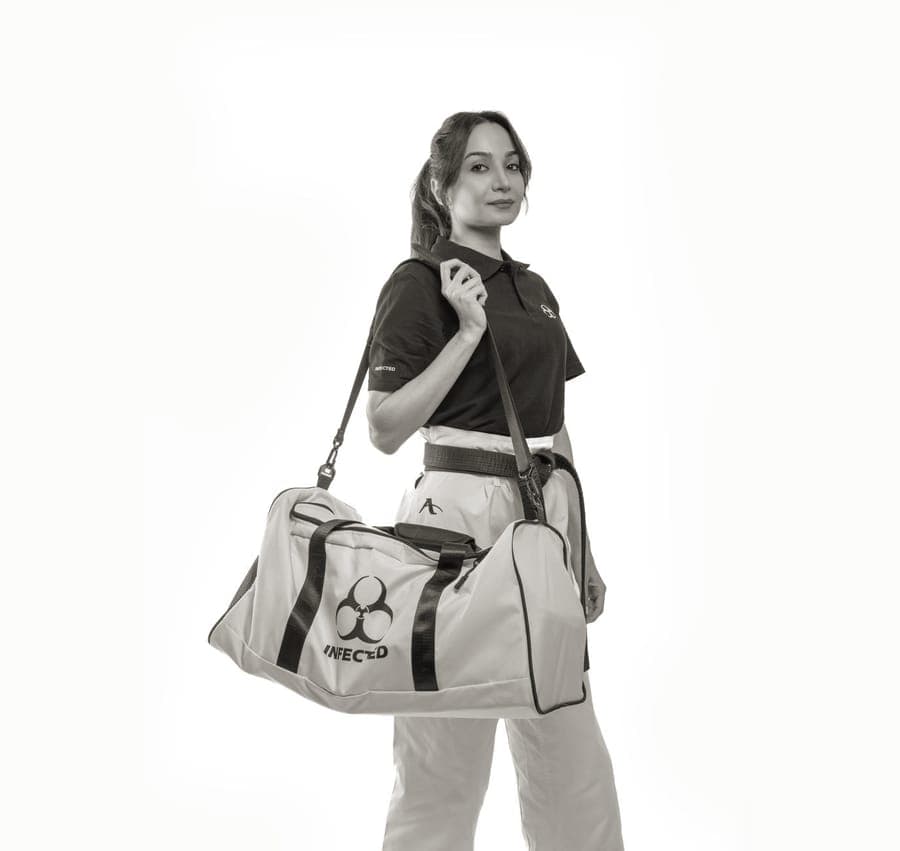 Patagonia Black Hole Duffel 40L No frame, coated fabric, and it becomes whatever shape the space is. | Trips where the bag has to fit somewhere awkward | |
| 5 |  Travelpro Maxlite 5 Expandable Checked Spinner Very light for a checked bag, which means more of the 50 lb allowance is yours. | 50 lb checked weight limits |
The one that lasts, in the configuration that suits flying often
Travelpro Platinum Elite 21-inch Expandable Carry-On Spinner
This is the softside bag people keep. Its reputation rests on the running gear, which is where soft bags most often fail because the fabric body does not support the wheel housings the way a rigid shell does. If you fly often enough that durability is your first question rather than your third, start here.
The specs that decide it
- Size: Built to the 22 x 14 x 9 standard, unexpanded
- Access: External front pockets - laptop and documents without opening the main bag
- Running gear: The reinforced wheel housings and handle are the reason to buy it
Flaws but not dealbreakers
The expansion zip takes it over the carry-on limit, and Alaska explicitly counts expansion toward the measurement. Softside also means no protection for fragile contents in a crowded bin - which is the whole trade you are making.
The one that compresses into a sizer the way nothing rigid can
Osprey Farpoint 40 Travel Pack
On ultra-low-cost carriers and on international airlines that weigh cabin baggage, a frameless pack is the most forgiving bag you can own. It compresses under a sizer, it weighs very little empty, and the harness stows away so it can be checked without straps catching in a belt system.
The specs that decide it
- Size: Carry-on envelope, and compresses further under pressure
- Weight: Light - the number that matters on a 7-10 kg cabin limit
- Harness: Stows away for check-in
Flaws but not dealbreakers
You carry it. Over a long terminal transfer with a full load that is real physical work, and it is the wrong bag if you have back or shoulder problems. There is nothing to lean on in a queue either.
The one for people who want pockets and do not want to spend
Rockland Melbourne Softside Carry-On
External pockets are the underrated advantage of fabric bags, and at the budget end they are essentially the whole reason to choose softside. If you travel with a laptop, documents and the assorted items that come out at security, being able to reach them without opening the main compartment is worth more day to day than shell rigidity.
The specs that decide it
- Size: Carry-on spec - check the stated overall dimension including wheels
- Access: Front pockets for laptop, documents and security-tray items
- Weight: Light, which helps on any weight-capped route
Flaws but not dealbreakers
Budget fabric bags use lightweight zips and thin linings, and the zip is the usual failure. There is also essentially no protection for anything fragile.
The one that ignores shape entirely
Patagonia Black Hole Duffel 40L
There are trips where the constraint is not a published dimension but a physical space: a small car trunk, an overhead rack on a regional train, a boat locker. A frameless coated duffel wins those outright because it has no shape of its own to defend. It also handles weather in a way most fabric bags do not.
The specs that decide it
- Structure: Frameless - conforms to the space available
- Fabric: Coated and weather-resistant
- Carry: Handles plus removable shoulder straps
Flaws but not dealbreakers
A duffel with no internal structure is a sack - everything ends up at the bottom and finding one item means unpacking several. It is also uncomfortable to carry far when heavily loaded, however good the straps are.
The one to check when the airline weighs it and you want the allowance
Travelpro Maxlite 5 Expandable Checked Spinner
On a 50 lb checked limit, the empty weight of the suitcase is dead weight against your allowance, and hardside checked bags are heavy. A light fabric checked bag can give you back several pounds of usable capacity on every single trip - which over a few years is a lot of not repacking at a check-in desk.
The specs that decide it
- Weight: Very light for the checked category - the reason to choose it
- Expansion: Expandable, which is genuinely usable on a checked bag
- Size: Check against your airline's 62 linear inch checked limit
Flaws but not dealbreakers
Fabric checked bags get dirty and stay dirty, and they offer far less protection than a shell on a baggage system that will throw them. If you check anything fragile, buy hardside instead.
How they compare
| Pick | Type | Best for | External pockets | Main flaw |
|---|---|---|---|---|
| Travelpro Platinum Elite 21 | Wheeled carry-on | Frequent flyers | Yes | Expansion breaks compliance |
| Osprey Farpoint 40 | Travel pack | Tight gates, weighed cabins | Limited | You carry the weight |
| Rockland Melbourne | Wheeled carry-on | Budget, working travel | Yes | Zip quality |
| Patagonia Black Hole 40L | Duffel | Awkward spaces | Minimal | No internal structure |
| Travelpro Maxlite 5 | Checked spinner | 50 lb weight limits | Yes | Little impact protection |
The three real advantages of fabric
1. It compresses
A fabric bag half an inch over the limit will usually go into a gate sizer under a firm push. A polycarbonate one will not, at any pressure. That flexibility is not a rule you can rely on and it is a genuine practical difference, particularly on budget carriers where the sizer actually gets used.
2. External pockets
Hardshells cannot have them without compromising the shell, so they mostly do not. On a fabric bag you can reach a laptop, a passport and the assorted items that come out at security without opening the main compartment on a terminal floor. If you travel for work, this is the feature you will use most.
3. Weight
For the same capacity, fabric is generally lighter than a shell - though the gap has narrowed with modern polypropylene. On any carrier that weighs cabin bags, or against a 50 lb checked limit, every pound of empty bag is a pound of clothes you cannot bring.
How we chose these picks
In order: wheel and handle construction, because soft bodies do not brace the running gear the way a shell does and this is where fabric bags fail; empty weight, which is the main reason to choose softside in the first place; zip and lining quality, the second most common failure; and external access, since it is the practical advantage fabric offers.
We have not put these bags through an airport ourselves. Durability patterns reported here come from published hands-on testing by named reviewers, and our methodology explains exactly what that means.
What we passed over
- Very low denier fabrics. Anything under about 400D on a bag meant for regular use will abrade through at the corners, which is not repairable in any meaningful way.
- Soft bags with exposed wheel housings. Without a shell to brace against, a protruding wheel on a fabric bag takes impact directly into stitched fabric.
- Heavily pocketed 'organizer' cases. Every external pocket counts toward the airline measurement, and bags sold on pocket count tend to be over the limit before you pack them.
- Soft checked bags in light colors. They get dirty on the first trip and stay that way.
How to choose softside luggage
- Check the fabric weight. Denier is the usual measure. 400D and up for a bag you will use regularly; below that is for occasional use only.
- Look at how the wheels attach. On a fabric bag the housing needs a reinforced plate behind it. If it is stitched straight to the body panel, that is where it will fail.
- Measure unexpanded. Expandable carry-ons are over the limit when expanded, every time. Treat the expansion as a checked-bag feature.
- Decide whether you need the pockets. If you do, this settles the hardside question for you - shells cannot give you them.
- Do not buy softside for fragile contents. That is what a shell is for. Hardside vs softside covers the full comparison.
Packing a soft bag differently
A fabric bag holds whatever shape you pack into it, which means a badly packed soft bag bulges and measures larger than a well-packed one of identical capacity. This is the one case where packing cubes genuinely affect whether your bag clears a sizer: cubes turn a heap into blocks, and blocks pack square.
The other soft-bag technique that matters is loading heavy items low and against the wheel end, so the bag stands up rather than toppling when you let go of the handle. On a hardshell this barely matters; on fabric it is the difference between a bag that behaves and one that does not. How to pack a carry-on has the full sequence.
Frequently asked questions
Is softside luggage more durable than hardside?
Does softside luggage fit better in overhead bins?
What denier fabric should I look for?
Are expandable softside carry-ons worth it?
Does softside luggage protect fragile items?
Read next
- Hardside vs softside luggage
- Best hardside luggage
- Best carry-on luggage
- Best packing cubes
- Carry-on size by airline
More in Luggage, or see every roundup and comparison on the site.