How to choose luggage
Four decisions in a fixed order, and the right order matters more than the brand. Size first, weight second, shell third, and the parts that break last - because they decide everything else.
By Michael W. · Last updated October 11, 2026
We earn a commission when you buy through our links, at no extra cost to you. It never changes what we pick or how we rank it. How we’re funded.
Choose luggage in this order: the size your airline allows, the empty weight you can afford, the shell your trips need, and then the wheels and handle - because those are the parts that actually fail. Brand comes last, and only as a proxy for the fourth question.
Most bad luggage purchases are made in the wrong order. Somebody picks a colour and a brand, then discovers the case is 22.5 inches with the wheels counted, or that it weighs 11 pounds empty against a 7 kg international cabin limit, or that the telescoping handle has developed a wobble by the fourth trip. The four questions below, answered in sequence, remove all three of those outcomes.
Which question each pick answers
| Pick | Size | Empty weight | Shell | Buy it if |
|---|---|---|---|---|
| Travelpro Maxlite 5 carry-on | 22 x 14 x 9 | Very light | Softside | You are buying one bag |
| Samsonite Winfield 3 DLX | Checked | Heavier | Polycarbonate | Something goes in the hold |
| Osprey Farpoint 40 | Carry-on envelope | Lightest | Frameless | The limit is in kilograms |
| Travelers Club Cosmo 20 | 19.5 in body | 6 lb | ABS | You fly twice a year |
Question one: what size does your airline allow?
Start here because it is a hard constraint and the others are trade-offs. Most major US carriers publish 22 x 14 x 9 inches for a carry-on, including wheels and handles. Southwest and Frontier publish 24 x 16 x 10, and Spirit publishes 22 x 18 x 10. Checked bags are standardised at 62 linear inches and 50 pounds.
Buy to the strictest limit you fly against regularly, not the most generous. A 24-inch case bought for Southwest is oversized on every other carrier in the table, and you would be optimising for the trip you take least often. The full figures are in carry-on size by airline, and what size luggage do I need maps trip length onto capacity.
Question two: how much can the bag weigh empty?
This is the question almost nobody asks and it decides more trips than the shell does. Travelpro publishes 5.4 lb for the 21-inch Maxlite 5 and 7.8 lb for the 21-inch Platinum Elite - same brand, same size, two and a half pounds apart. Against a 7 kg (15.4 lb) international cabin allowance, that gap is a sixth of everything you are permitted to bring.
If you only ever fly US domestic, where carry-on weight is mostly unpublished, weight matters less and you can spend it on a tougher shell. If you fly internationally or on European budget carriers, empty weight is the specification to optimise. The verified figures are collected in how much does an empty suitcase weigh.
Question three: hard or soft, and which plastic
- Softside - compresses at a tight gate, has external pockets, is lighter, and protects contents least. The right default for a carry-on.
- Polycarbonate - flexes under impact and returns, water-resistant, the best hard shell. The right default for a checked bag.
- Polypropylene - light for a hard shell and flexes well; a good middle option.
- ABS - cheapest and most brittle. It cracks rather than flexing. Fine for occasional use, wrong for frequent flying.
The material comparison in detail is in polycarbonate vs ABS luggage, and the format argument is in hardside vs softside luggage.
Question four: the wheels and the handle
Shells almost never fail. Wheels and telescoping handles fail, and they are what separates a bag that lasts a decade from one that lasts three trips. This is also the only place where brand is a useful proxy: the reason Travelpro and Samsonite have the reputations they do is the wheel housings and the handle tubes, not the fabric.
Two spinner wheels or four is a real trade and not a cosmetic one - four roll effortlessly on smooth floors and cost you internal volume and stability on broken pavement, which is covered in spinner vs roller luggage. Check whether the warranty covers wheels and handles specifically, because a shell-only warranty covers the part that does not break.
And only then, brand
Brand is a shortcut for question four, and nothing else. A premium name on a bag with the wrong dimensions for your airline is still the wrong bag, and a budget bag that clears your carrier's sizer with margin will get you to the gate just as reliably for two or three years.
If you have reached this point and want the tiers compared on what each one actually buys, that is best luggage brands - and the current picks by category are in best carry-on luggage and best checked luggage.
Quick picks
The short list. Tap any row for the full write-up, including what each one is bad at.
| # | Product | Best for | Price |
|---|---|---|---|
| 1 | 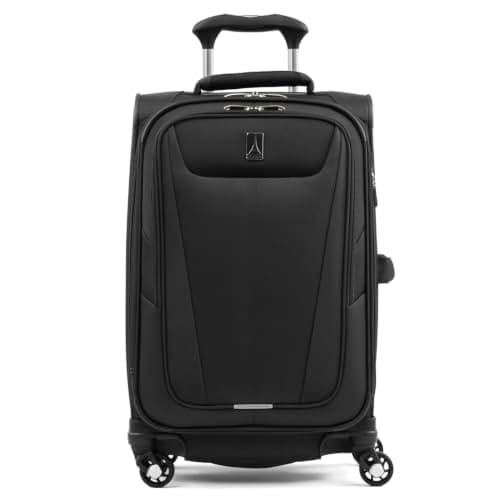 Travelpro Maxlite 5 Carry-On Spinner Built to the 22 x 14 x 9 standard at a low empty weight, which answers questions one and two together. | Most travelers, most trips | $160.00View on Amazon #ad Price as of October 10, 2026. How we’re funded |
| 2 | 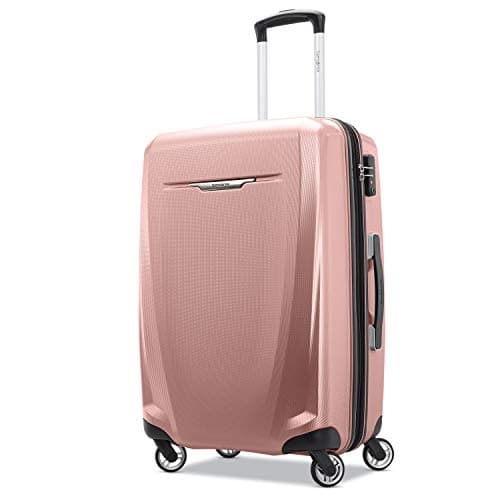 Samsonite Winfield 3 DLX Hardside Checked Spinner Polycarbonate and water-resistant, with an integrated TSA lock - built for being handled by other people. | Week-plus trips and anything fragile | $167.89View on Amazon #ad Price as of October 10, 2026. How we’re funded |
| 3 | 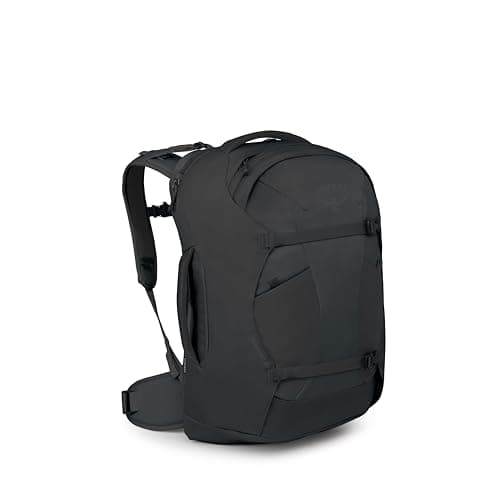 Osprey Farpoint 40 Travel Pack Forty litres in the carry-on envelope, with no wheels or frame to spend your allowance on. | International, budget-carrier and multi-city trips | $198.85View on Amazon #ad Price as of October 10, 2026. How we’re funded |
| 4 | 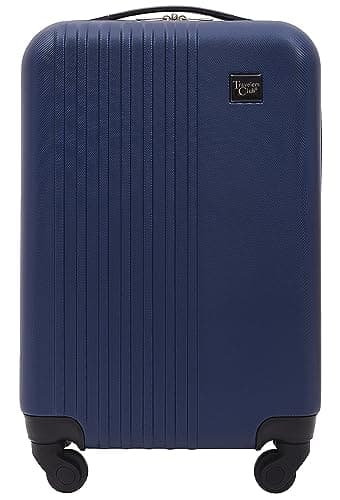 Travelers Club Cosmo 20-inch Hardside Spinner Undersized against the standard on purpose, at a price where longevity stops being the question. | Occasional flyers and strict gates | $39.00View on Amazon #ad Price as of October 10, 2026. How we’re funded |
The default answer if you fly a few times a year
Travelpro Maxlite 5 Carry-On Spinner
If you are buying one bag and you do not yet know what kind of traveler you are, buy a carry-on built to the standard envelope with the lowest empty weight you can find. It will clear five of the eight major US carriers on dimensions, it leaves the most of any weighed allowance for your clothes, and a carry-on-only trip avoids checked bag fees and lost bags entirely.
The specs that decide it
- Size: Built to the 22 x 14 x 9 standard, unexpanded
- Weight: Among the lightest wheeled carry-ons, which is the whole point
- Construction: Softside, so it compresses slightly at a tight gate
- Answers: Questions one and two - size and weight
Flaws but not dealbreakers
Light construction is thin construction: it protects contents less well than a hard shell if it gets gate-checked, and the fabric picks up grime that cannot be wiped off. Open the expansion zip and it is no longer carry-on legal.
#ad Price as of October 10, 2026. How we’re funded
The one for trips where something goes in the hold
Samsonite Winfield 3 DLX Hardside Checked Spinner
A checked bag is handled by machinery and strangers four to eight times per trip, which is a different brief from a bag that never leaves your hand. A rigid polycarbonate shell flexes and returns rather than transmitting impact inside, it keeps rain off on a wet ramp, and the integrated lock removes the loose-padlock problem.
The specs that decide it
- Shell: Polycarbonate - rigid, water-resistant, does not transmit impact inside
- Security: Integrated TSA-accepted combination lock
- Cost: Several pounds of your 50 lb allowance, spent on the bag itself
- Check: Confirm the size against the 62 linear inch limit
Flaws but not dealbreakers
It is heavier than a softside case of the same size, and on a weighed allowance that weight is clothes you left at home. Hard shells also scuff permanently from the first trip, so it will never look new again.
#ad Price as of October 10, 2026. How we’re funded
The answer when the allowance is in kilograms
Osprey Farpoint 40 Travel Pack
On carriers that weigh cabin baggage at 7 to 10 kg - common across Europe, Asia and the Middle East - the empty weight of the bag is the single most important number on its spec sheet. A frameless pack spends almost none of the allowance on itself, and it compresses into a sizer in a way a rigid case cannot. It is also the right answer for cobblestones and station stairs.
The specs that decide it
- Capacity: 40 litres - a week or more with one laundry stop
- Weight: Light, which matters on a 7-10 kg cabin limit
- Harness: Stows away for check-in
- Answers: Question two, when weight is the binding limit
Flaws but not dealbreakers
You carry it rather than rolling it, which is a real physical cost across a long terminal and the wrong choice entirely with back or shoulder problems. There is also no way to set it down and lean on it.
#ad Price as of October 10, 2026. How we’re funded
The one to buy if you fly once or twice a year
Travelers Club Cosmo 20-inch Hardside Spinner
If you fly twice a year, a case built to survive fifty flights is money spent on a problem you do not have. A 19.5-inch body clears every carrier with margin - which is what you want at a budget-carrier gate - and at this price the bag owes you nothing after a handful of trips.
The specs that decide it
- Clears: A 19.5 x 13.5 x 8.5 in body - inside every major carrier's limit
- Construction: ABS hardshell, 6 lb empty, so it holds its shape in an overhead bin
- Trade-off: A 19.5-inch body is smaller than the legal maximum - less capacity by design
- Answers: Question four by sidestepping it - replace rather than repair
Flaws but not dealbreakers
ABS is the most brittle common shell material and it cracks rather than flexing. The wheels and handle are the known failure points at this price, they are not replaceable parts, and you are giving up real capacity to buy sizer margin.
#ad Price as of October 10, 2026. How we’re funded
Frequently asked questions
How do I choose the right luggage?
What is the best luggage to buy?
How do I choose a luggage size?
Is expensive luggage worth it?
Sources
Read next
- What size luggage do I need?
- Hardside vs softside luggage
- Polycarbonate vs ABS luggage
- Spinner vs roller luggage
- Best luggage brands
More in Luggage, or see every roundup and comparison on the site.