The best travel adapters
An adapter changes the plug shape. A converter changes the voltage. Buying the wrong one is how hair tools die abroad.
By Michael W. · Last updated September 7, 2026
We earn a commission when you buy through our links, at no extra cost to you. It never changes what we pick or how we rank it. How we’re funded.
An adapter changes the shape of the plug. A converter changes the voltage. Confusing the two is the single most expensive mistake in this category, and it is entirely avoidable: it destroys appliances, occasionally spectacularly, and it happens every summer.
The good news is that most people need only the adapter. Phones, laptops, tablets, cameras and virtually every modern charger are dual voltage - look for `100-240V` printed on the brick or the device. If it says that, it works anywhere in the world with nothing more than a plug-shape adapter.
Check the label before you buy anything
Find the small print on your charger or appliance. If it reads 100-240V, you need an adapter only. If it reads 120V alone, it is single-voltage and plugging it into 230V European power through a plain adapter will destroy it - that needs a converter, or leaving it at home.
Quick picks
The short list. Tap any row for the full write-up, including what each one is bad at.
| # | Product | Best for | Price |
|---|---|---|---|
| 1 | 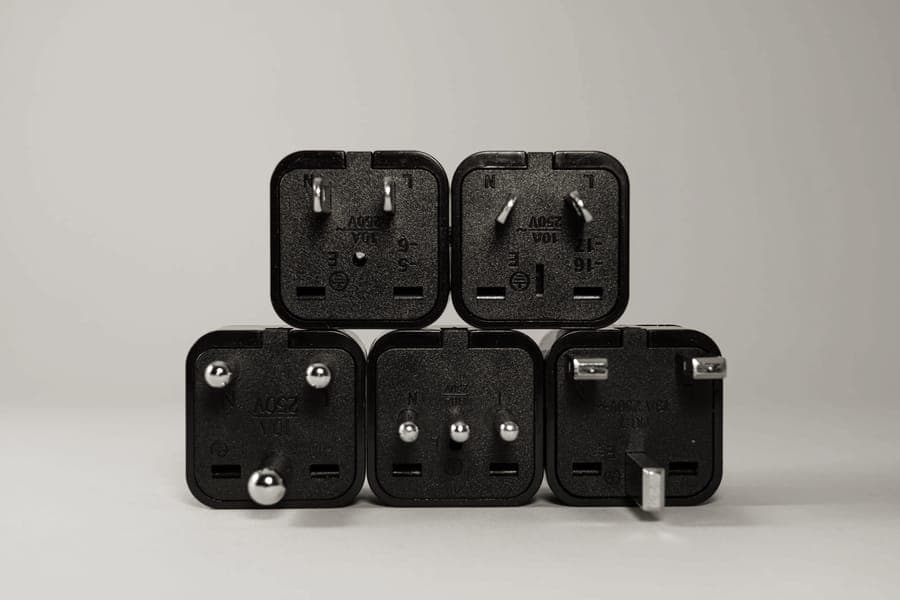 Epicka Universal Travel Adapter One adapter for most of the world, with USB ports that replace spare bricks. | Most international travel | |
| 2 | 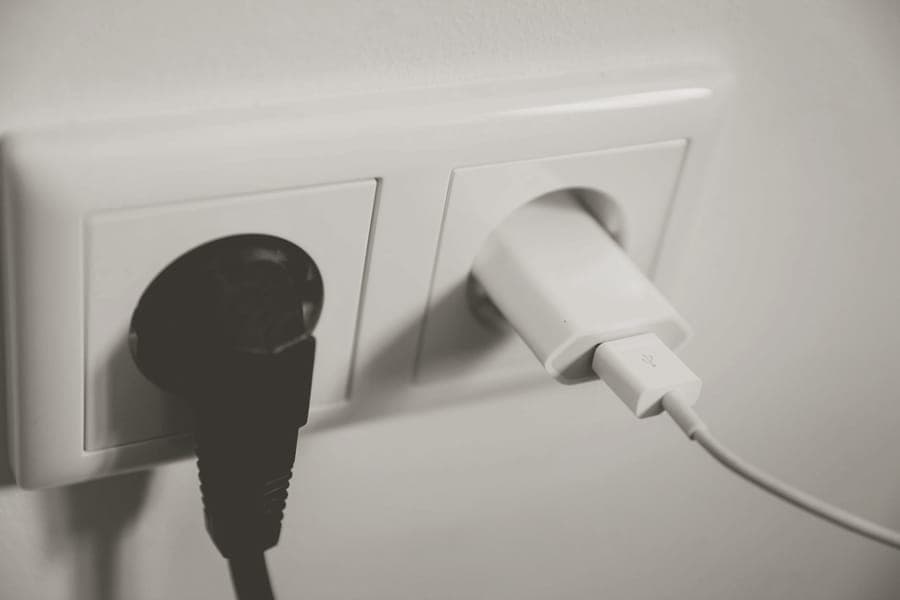 European Plug Adapter (Type C, Two-Pack) A simple Type C adapter, a fraction of the size and cost of a universal. | A single European trip | |
| 3 | 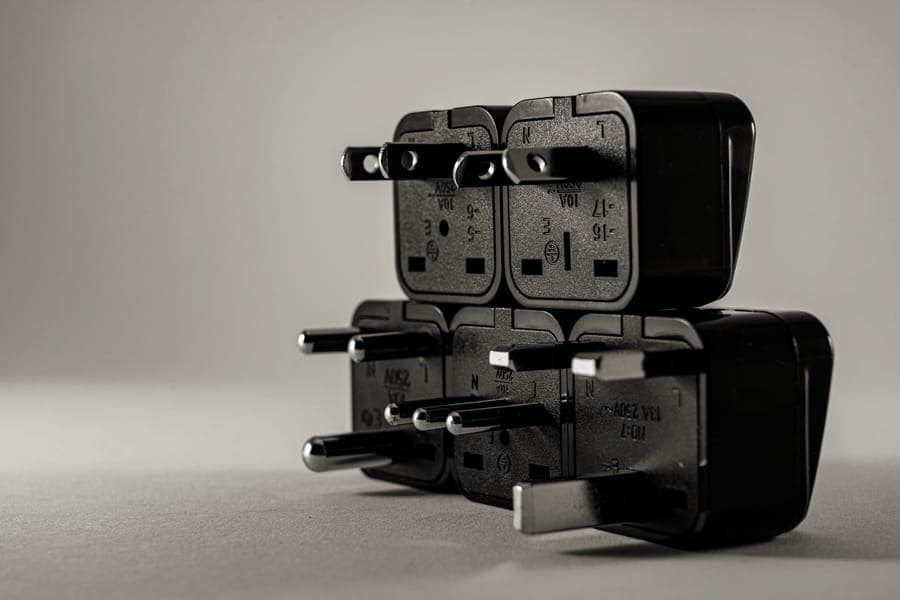 Anker Multi-Port USB Charger with Interchangeable Plugs One brick, several ports, and swappable plug heads for different countries. | Multiple devices | |
| 4 |  Travel Voltage Converter (Step-Down 230V to 120V) Converts voltage as well as plug shape - heavy, and only occasionally necessary. | Older hair tools |
The one that covers everywhere and charges several things at once
Epicka Universal Travel Adapter
A universal adapter with built-in USB ports solves two problems at once: the plug shape, and the fact that hotel rooms have far fewer accessible outlets than you have devices. The USB ports mean you carry one adapter instead of an adapter plus three chargers.
The specs that decide it
- Covers: Most common plug types worldwide, including Europe's Type C and F
- USB: Multiple ports, which reduce how many bricks you pack
- Does not do: Voltage conversion. Check your device reads 100-240V
Flaws but not dealbreakers
Universal adapters are bulky and heavy for what they are, and the sliding-pin mechanism is a wear point. They also hang heavily out of a wall socket, which on a loose European outlet means they work their way out overnight.
The small cheap one if you are only going to Europe
European Plug Adapter (Type C, Two-Pack)
If your trip is Europe and only Europe, a universal adapter is a lot of bulk for one plug shape. A pair of simple Type C adapters weighs almost nothing, costs very little, and two means you can charge in two places at once - which matters in a room with one accessible socket.
The specs that decide it
- Covers: Type C - works across most of continental Europe
- Size: Tiny compared with a universal adapter
- Buy two: Rooms rarely have more than one usable socket
Flaws but not dealbreakers
Type C does not cover the UK or Ireland, which use Type G - if your trip includes both, you need two kinds or a universal. Simple adapters also have no USB ports, so you still carry your bricks.
The one that replaces every charger you own
Anker Multi-Port USB Charger with Interchangeable Plugs
The biggest space saving available in this category is not a smaller adapter, it is fewer chargers. A single multi-port charger runs a phone, a tablet, earbuds and a laptop from one outlet, and interchangeable plug heads mean it handles the country change too.
The specs that decide it
- Replaces: Several individual chargers with one brick
- Plugs: Interchangeable heads for different countries
- Check: Confirm the wattage supports your laptop if you need it charged
Flaws but not dealbreakers
If it fails, every device loses its charger at once - there is no redundancy. Higher-wattage models are also bulky, and a charger that will run a laptop is considerably larger than one that will not.
The one for single-voltage appliances with heating elements
Travel Voltage Converter (Step-Down 230V to 120V)
Almost nobody, and that is worth stating first. If your device says 100-240V you do not need this. You need it only for single-voltage appliances with heating elements - typically older hair dryers, straighteners and curling irons rated at 120V alone.
The specs that decide it
- Does: Steps 230V down to 120V, as well as changing the plug shape
- Needed for: 120V-only appliances with heating elements
- Not needed for: Anything reading 100-240V - which is almost everything
Flaws but not dealbreakers
Heavy and bulky, and many travel converters are rated below what a hair dryer actually draws - using an underrated converter is how they overheat. In most cases the honest answer is to leave the appliance at home and use the hotel's dryer.
How they compare
| Your device says | You need | Example |
|---|---|---|
| 100-240V | Plug adapter only | Phone charger, laptop, camera, tablet |
| 120V only, no heating element | Converter, or leave it | Older small electronics |
| 120V only, with a heating element | Converter rated above its wattage | Older hair dryer or straightener |
| Dual voltage with a switch | Adapter, and set the switch | Some travel hair tools |
Which plug do you need?
| Type | Used in | Voltage |
|---|---|---|
| A and B | United States, Canada, Mexico, Japan | 120V (100V in Japan) |
| C and F | Most of continental Europe | 230V |
| G | United Kingdom, Ireland | 230V |
| I | Australia, New Zealand | 230V |
| D and M | India, South Africa | 230V |
The practical point for a European trip: Type C covers most of the continent but not the UK or Ireland, which use Type G. If your itinerary includes London and Paris, you need both shapes or a universal adapter. See the Europe packing list for the rest of the trip-specific kit.
Adapter vs converter, explained properly
What an adapter does
Nothing electrical. It is a mechanical shape-changer that lets a plug from one country physically fit a socket in another. The electricity passes through unchanged - the same voltage arrives at your device.
What a converter does
Steps the voltage down (or up), typically 230V to 120V for an American traveling to Europe. This is real electrical work, which is why converters are heavy and rated to a maximum wattage.
Why most people only need an adapter
Because almost every modern electronic device has a switching power supply that accepts anything from 100V to 240V. Check the small print: if it reads `100-240V`, you need an adapter only. That covers phones, laptops, tablets, cameras, e-readers, electric toothbrushes and virtually every USB charger.
What actually needs a converter
Single-voltage appliances with heating elements. Older hair dryers, straighteners and curling irons rated at 120V alone. And the honest advice: most hotels provide a hair dryer, and a converter rated to run one is heavy enough that leaving the appliance at home is usually the better call. Buying a dual-voltage travel hair tool is the other sensible answer.
How many do you need?
More than one, and this is the practical tip people appreciate most. Hotel rooms, especially older European ones, frequently have one accessible socket - often behind the bed or in an awkward corner - and you have a phone, a watch, earbuds and possibly a laptop.
- Two simple adapters cost very little and weigh almost nothing. Take two.
- Or one adapter plus a multi-port USB charger, which turns one socket into four charging points.
- Or a short extension lead with your home plugs on it, plugged into one adapter. This is the most efficient version and the one seasoned travelers use.
The extension trick works because you only need to adapt one plug - everything else plugs into your familiar sockets. It is the only situation where carrying an extension lead abroad makes sense, and it genuinely does.
How we chose these picks
Whether it solves the problem you actually have, which for most travelers is plug shape rather than voltage. Then how many devices it charges, since outlet scarcity is the real constraint in a hotel room. Then bulk, because universal adapters are heavy for what they do. Then whether the product is honest about not converting voltage, which some listings are not.
We have not electrically tested these and do not run a lab. Voltage and plug-type information here reflects published regional standards - check your own device labels rather than relying on a general statement. Our methodology sets out where our confidence comes from.
What we passed over
- Adapters marketed as 'converters'. Some listings use the words interchangeably, which is how appliances get destroyed. If it does not state a wattage rating, it does not convert voltage.
- Very cheap universal adapters with no fuse. A fuse is a safety component, and an adapter without one carrying a laptop charger is not a saving.
- Converters rated below 1,800W sold for hair dryers. A dryer commonly draws more than a travel converter can supply, and the converter overheats.
- Adapters with no grounding pin if you are carrying a grounded laptop charger. A three-pin plug forced into a two-pin adapter loses the ground connection.
Frequently asked questions
Do I need a voltage converter for Europe?
What is the difference between a travel adapter and a converter?
What plug adapter do I need for Europe?
Can I use my hair dryer in Europe?
How many travel adapters should I bring?
Are universal travel adapters safe?
Read next
- Europe packing list
- Best power banks for travel
- Best electronics organizers for travel
- Best luggage for Europe
- Long-haul flight essentials
More in Travel Essentials, or see every roundup and comparison on the site.