The best electronics organizers for travel
Cables migrate. A tech pouch is the cheapest fix for the most annoying packing problem, and it speeds up security too.
By Michael W. · Last updated September 16, 2026
We earn a commission when you buy through our links, at no extra cost to you. It never changes what we pick or how we rank it. How we’re funded.
Cables are the worst-behaved things in a bag. They tangle with each other, migrate to the bottom, wrap around everything else, and the one you need is always the one at the very bottom. A dedicated pouch fixes all of that for very little money and almost no weight.
There is a second benefit that matters more than people expect: security screening. Electronics frequently need to come out of the bag, and having everything electrical in one pouch you can lift out in a single movement is the difference between a five-second stop and unpacking your bag onto a table.
Power banks go in the cabin, never in a checked bag
Spare lithium batteries and power banks are prohibited in checked baggage and must travel in carry-on. Most airlines allow up to 100 watt-hours without approval, and 100-160 Wh with airline approval. If you are checking a bag, the power bank comes out first - see best power banks for travel.
Quick picks
The short list. Tap any row for the full write-up, including what each one is bad at.
| # | Product | Best for | Price |
|---|---|---|---|
| 1 | Bagsmart Electronic Organizer Elastic loops and mesh pockets, opening flat so you can see the lot at once. | Most travelers | |
| 2 | 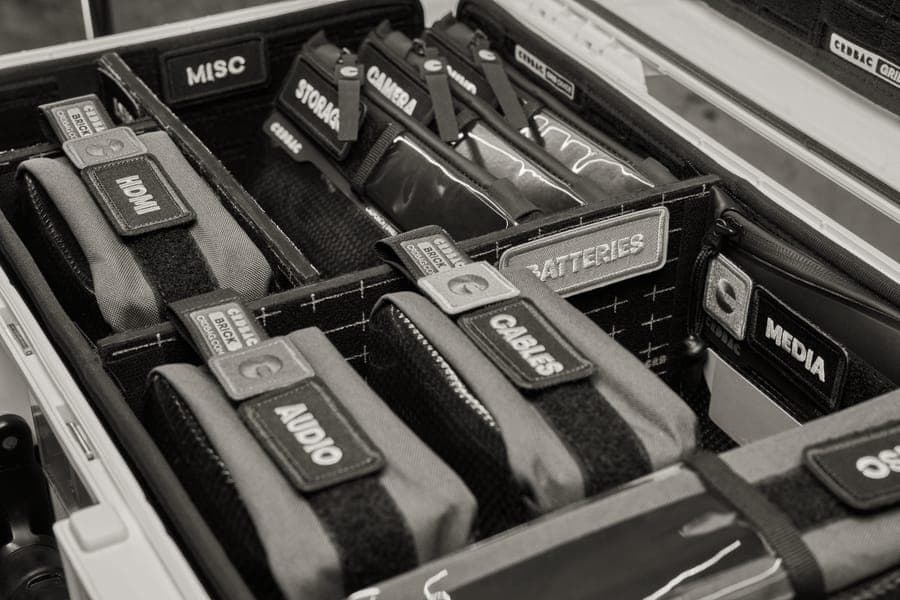 Bellroy Tech Kit Compact Small enough to live in a jacket pocket, big enough for a phone kit. | Minimal kits | |
| 3 | 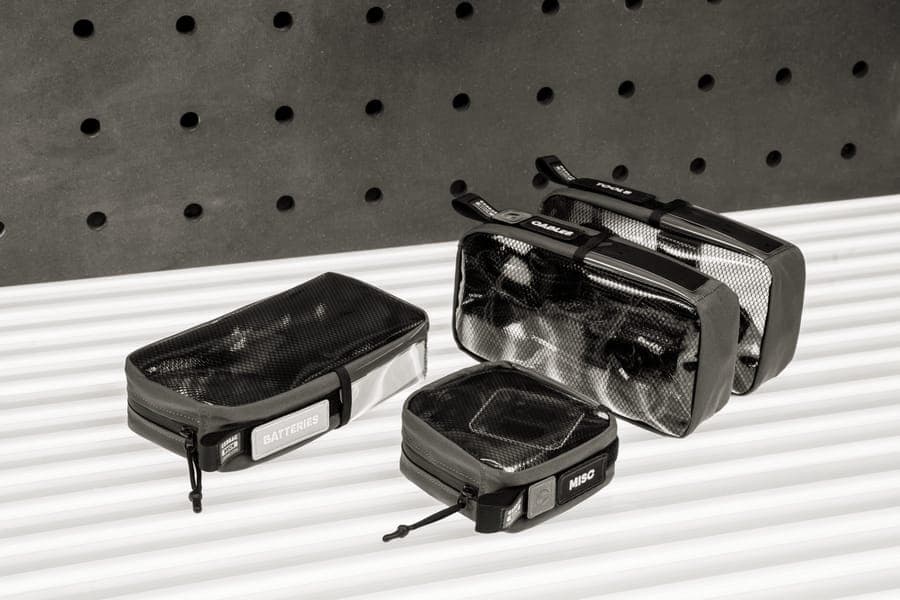 Peak Design Tech Pouch Origami-style internal pockets that expand around bulky chargers. | Working travel | |
| 4 | 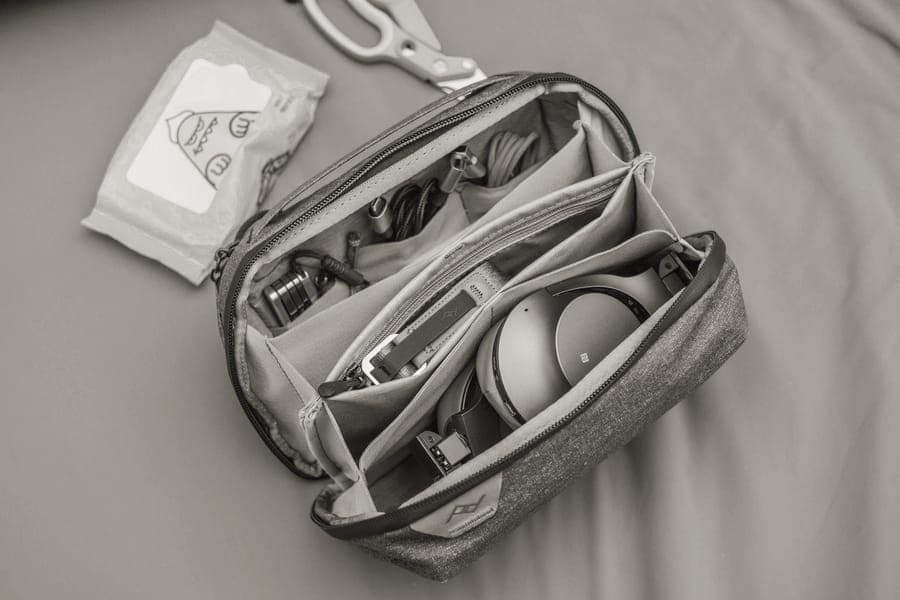 Travel Cable Organizer Bag (Double Layer) A generic double-layer cable pouch, which is 90% of the benefit for 20% of the cost. | Anyone without one yet |
The one that holds everything and opens flat
Bagsmart Electronic Organizer
The straightforward answer. Elastic loops hold cables individually so they cannot tangle with each other, mesh pockets take the odd-shaped things, and the whole thing opens flat so you find what you want by looking rather than by rummaging.
The specs that decide it
- Layout: Elastic loops for cables, mesh pockets for adapters and odds
- Opening: Opens flat - the whole contents visible at once
- Security: Lifts out in one movement at a checkpoint
Flaws but not dealbreakers
Elastic loops stretch out over time and stop gripping, at which point cables start migrating again. The fixed loop sizes also suit some plugs better than others - a large power brick often will not fit any of them.
The one for people who carry three things, not fifteen
Bellroy Tech Kit Compact
Most organizers are sized for a photographer's cable collection. If you carry a phone charger, a cable and some earbuds, a large pouch is mostly empty space you are carrying around. A compact kit fits the actual kit.
The specs that decide it
- Size: Compact - fits a phone charger, a cable and earbuds
- Where it lives: A jacket pocket or the front pocket of a bag
- Build: Structured, so it protects rather than just containing
Flaws but not dealbreakers
Genuinely small - a laptop charger will not fit, and neither will a power bank of any size. Expensive for its capacity if you judge it by liters rather than by fit.
The one that fits a laptop brick and still closes
Peak Design Tech Pouch
The problem with most tech pouches is that a laptop power brick does not fit the loops and does not fit the mesh pocket, so it ends up loose in the bag anyway. A pouch with expanding internal pockets takes bulky items without forcing you into a much larger case.
The specs that decide it
- Capacity: Takes a laptop charger, cables and a power bank together
- Layout: Expanding internal pockets rather than fixed loops
- Access: Opens wide, with the pockets visible
Flaws but not dealbreakers
Expensive, and heavier than a simple pouch because the structure is built in. Filled with a laptop brick and a power bank it is also a substantial object in a carry-on that may not have the room.
The one that costs almost nothing and solves the whole problem
Travel Cable Organizer Bag (Double Layer)
This is a simple product and the cheap versions work. If you have never used a tech pouch, there is no reason to spend significantly to find out whether you like having your cables in one place - you will.
The specs that decide it
- Layout: Two layers of loops and mesh pockets
- Cost: A fraction of the premium options
- Function: The same core job: cables contained, findable, liftable
Flaws but not dealbreakers
Budget elastic loses its grip faster, and the zips are lighter. It is also usually one fixed size, so it will be either slightly too big or slightly too small for your particular kit.
How they compare
| Pick | Fits a laptop charger? | Fits a power bank? | Size | Main flaw |
|---|---|---|---|---|
| Bagsmart Electronic Organizer | Usually | Yes | Medium | Elastic stretches over time |
| Bellroy Tech Kit Compact | No | No | Small | Genuinely small |
| Peak Design Tech Pouch | Yes | Yes | Medium-large | Expensive and heavy |
| Generic double-layer pouch | Sometimes | Yes | Medium | Budget elastic and zips |
What actually goes in it
- Charging cables, one per device, coiled and secured individually.
- A multi-port charger rather than one brick per device - this is the single biggest space and weight saving available in this category.
- A [travel adapter](/essentials/best-travel-adapters) if you are going abroad. One good one, not a drawer of country-specific plugs.
- A [power bank](/essentials/best-power-banks-for-travel), which must travel in the cabin.
- Earbuds or headphones, if they do not live in a case of their own.
- A short extension or a two-port splitter, which solves the hotel-room-with-one-accessible-socket problem more often than you would expect.
What should not go in it: anything liquid. Screen cleaner, contact solution, hand sanitizer - those belong in the quart bag with everything else liquid, not in the pouch you hand to a security officer.
Getting through security faster
Electronics often need to come out of a bag at screening, and the number of separate items you produce is roughly the number of trays you fill and the time you spend. One pouch is one item. It lifts out in a single movement, goes in a tray, and goes back in the same way.
The same principle applies to the liquids bag: pack it at the very top of the carry-on so retrieving it does not mean unpacking anything. Two lifts, two trays, done. Some checkpoints with newer CT scanners no longer require either, but packing as if they do costs nothing.
How we chose these picks
Whether it fits a real kit - specifically a laptop power brick, which is the item most pouches cannot take and the one people most need contained. Then how it opens, since a pouch you have to rummage in is only marginally better than a bag you have to rummage in. Then elastic and zip quality, which is where cheap pouches degrade. Then weight, because this is overhead.
We do not run a testing lab; see our methodology for what we verify.
What we passed over
- Hard-shell tech cases. They protect cables, which do not need protecting, at a substantial weight and bulk cost.
- Pouches with fixed loops only and no open pocket. A power brick fits nothing, so it ends up loose in the bag and you have solved half the problem.
- Organizers with a built-in power bank. Non-removable batteries create an airline compliance problem, and the bank is usually a poor one.
- Anything that puts liquids and electronics in the same case. A leak in that pouch is an expensive leak.
How to choose a tech organizer
- Lay out your actual kit first. Then buy the pouch that fits it, rather than the pouch that looks organized.
- Check it takes your largest item. Usually the laptop charger. If it does not, the pouch has failed its main job.
- Prefer a flat-opening design. Visibility is the whole point.
- Consolidate chargers before buying. One multi-port charger replaces three bricks and shrinks the pouch you need.
- Keep liquids out of it. They belong in the 3-1-1 bag.
Frequently asked questions
What is the best travel organizer for cables?
Can I put a power bank in my checked bag?
Do electronics have to come out at airport security?
Should I put liquids in my tech pouch?
How do I stop cables tangling?
Read next
- Best power banks for travel
- Best travel adapters
- Best travel organizers
- TSA liquid rules
- Long-haul flight essentials
More in Packing, or see every roundup and comparison on the site.