The best carry-on luggage with a laptop compartment
A front pocket is not a laptop compartment. Here is which bags have the real thing, and which only claim to.
By Michael W. · Last updated October 3, 2026
We earn a commission when you buy through our links, at no extra cost to you. It never changes what we pick or how we rank it. How we’re funded.
The best carry-on with a real laptop compartment is the Tortuga Travel Backpack 40L: a squared-off clamshell with a dedicated, padded laptop compartment that opens separately from the main bag - which is what lets you get the machine out at security without unpacking a week of clothes onto the belt. If what you carry is equipment rather than just a laptop, the Peak Design Travel Backpack 45L adds side and rear access.
Here is the part the category pages do not say: almost no wheeled carry-on has a padded laptop compartment. A telescoping handle runs up the back panel of a roller, which is exactly where a laptop sleeve would have to live, so wheeled cases offer a front organizer pocket instead and the listing calls it a laptop pocket. That is a real feature - it just is not padding, and it is not separate access.
Why separate access matters more than padding
In a standard screening lane, electronics larger than a phone come out of the bag. TSA PreCheck members may "leave in your bag electronics and 3-1-1 liquids". If you are not in PreCheck, a laptop compartment that opens on its own is the difference between a five-second lift and repacking at the end of the belt.
Quick picks
The short list. Tap any row for the full write-up, including what each one is bad at.
| # | Product | Best for | Price |
|---|---|---|---|
| 1 |  Tortuga Travel Backpack 40L A squared-off clamshell with a dedicated laptop compartment that opens separately. | Carry-on-only working travel | |
| 2 |  Peak Design Travel Backpack 45L Structured, genuinely padded, with side and rear access to the machine. | Cameras and large laptops | |
| 3 | 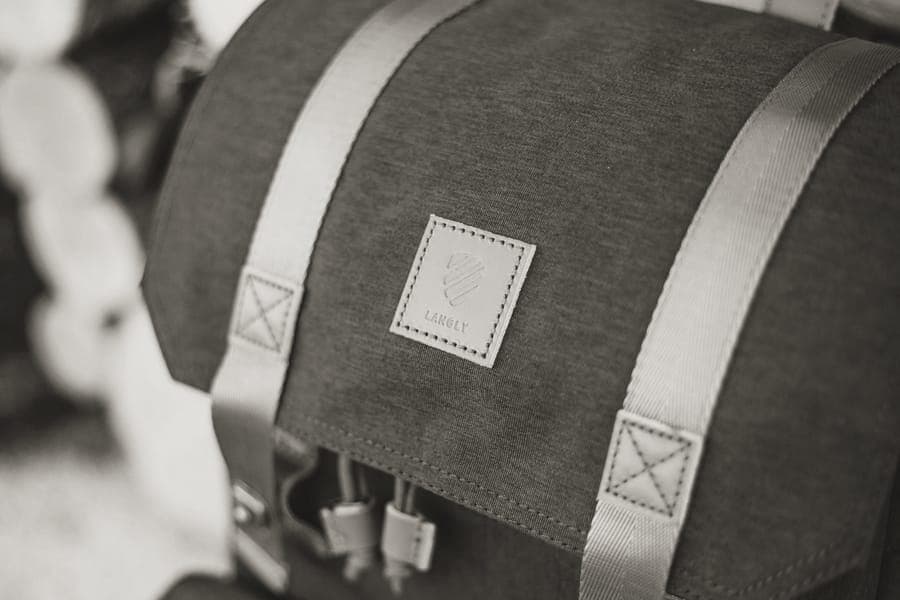 Cotopaxi Allpa 35L Travel Pack Clamshell access with a padded laptop sleeve, sized to live under the seat. | Working in flight | |
| 4 | 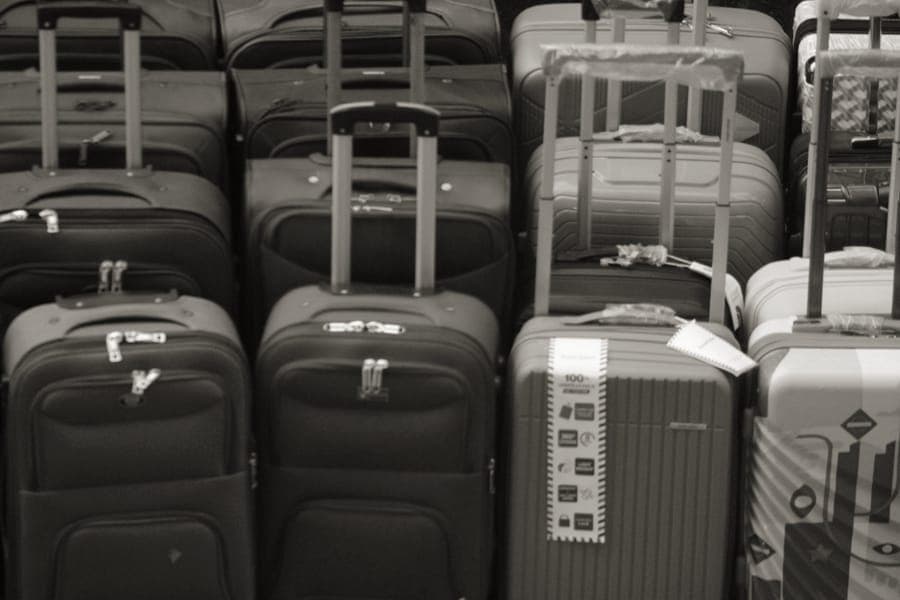 Travelpro Platinum Elite 21-inch Expandable Carry-On Spinner External front pockets rather than a padded compartment - and the best running gear here. | Rolling, with reachable documents | |
| 5 |  Samsonite Wheeled Underseater A front pocket for the laptop, on wheels, sized to slide under the seat. | Long terminals, bad backs |
The one with a real laptop compartment and the full carry-on box
Tortuga Travel Backpack 40L
Most packs taper at the top, which looks like a backpack and wastes the top corners of the airline's box. A squared-off travel pack uses the whole allowance, and this one puts a dedicated laptop compartment on the back panel where there is no telescoping handle competing for the space. If carry-on-only is how you travel and the laptop comes with you, this is the bag the category exists to produce.
The specs that decide it
- Laptop: Dedicated compartment, separate from the main clamshell
- Shape: Squared-off - uses the corners of the carry-on envelope a tapered pack wastes
- Capacity: 40 liters, which is a week with one laundry stop
- Harness: Adjustable, built for carrying a full load through airports
Flaws but not dealbreakers
A squared pack filled to capacity is heavy and sits away from your back, which is less comfortable than a tapered design over distance. It is also expensive for a bag with no wheels, and there is nothing to set down and lean on in a queue.
The one if the expensive thing you carry is not only the laptop
Peak Design Travel Backpack 45L
Fabric transmits crush, which is the standard argument for a hardshell and the standard problem with packs. A structured pack with real padding and a compressible outer is the middle path: protection for the equipment, flexibility at the gate. Side and rear access is the feature that matters here - the laptop comes out at security without opening the main compartment at all.
The specs that decide it
- Laptop: Structured with genuine padding for equipment and large laptops
- Access: Side and rear - laptop out at security without a full unpack
- Size: Compresses to the carry-on envelope, expands beyond it when checked
- Hands free: Worth a lot if you are also wheeling a second bag
Flaws but not dealbreakers
Heavy empty, because structure and padding are material, and on a weighed 7 kg cabin allowance that undercuts one of the main reasons to choose a pack. It is also expensive, and overkill if you carry a laptop and nothing else.
The one you can reach at your feet without standing up
Cotopaxi Allpa 35L Travel Pack
Once you are seated, the overhead bin is out of reach for practical purposes. A clamshell bag at your feet opens flat and lets you pull a laptop out without hauling anything into the aisle - which is the difference between carrying a machine and being able to use it. At 35 liters it fits the 18 x 14 x 8 personal-item envelope on several carriers, so on the right ticket it rides free.
The specs that decide it
- Laptop: Padded sleeve inside a clamshell that opens flat
- Access: Usable while the bag is under a seat
- Size: Fits the 18 x 14 x 8 personal item envelope on several carriers
- Does not fit: United's tighter published 17 x 10 x 9
Flaws but not dealbreakers
Over United's published personal item dimensions on depth, which is awkward on the long-haul routes they operate. Loaded to 35 liters it is also heavy to position under a seat with your foot, and the laptop sleeve is a sleeve rather than a separate-access compartment.
The best wheeled answer, and we will be honest about what it is
Travelpro Platinum Elite 21-inch Expandable Carry-On Spinner
If you want wheels, this is the bag - built to the 22 x 14 x 9 standard, with a reputation resting on the wheel housings and the telescoping handle rather than the fabric. What it does not have is a padded laptop compartment, because the handle tubes occupy the back panel. What it has instead is genuinely useful external front pockets that put a laptop, a passport and the security-tray items within reach without opening the case.
The specs that decide it
- Laptop: External front pockets, not a padded compartment - add a sleeve
- Clears: The 22 x 14 x 9 standard on American, Delta, United, JetBlue and Alaska
- Construction: Softside, which compresses slightly in a gate sizer
- Running gear: The reason to buy it - wheels and handle outlast the shell
Flaws but not dealbreakers
No padding for the machine, so a separate sleeve is not optional. Use the expansion zip and the bag is no longer carry-on legal - Alaska explicitly counts expansion toward the measurement. Softside also means less protection if it gets gate-checked.
The one that rolls to the gate and never goes overhead
Samsonite Wheeled Underseater
A wheeled under-seater solves a real problem: if you cannot comfortably carry a loaded pack across a long terminal, the whole just-use-a-backpack answer does not apply to you. These are sized to the under-seat envelope with the wheels counted, which is the part cheap versions get wrong, and the front pocket puts the laptop and documents within reach without opening the main bag.
The specs that decide it
- Laptop: Front pocket for a laptop and documents, reachable without opening the bag
- Fits: Designed to the under-seat envelope with wheels counted
- Why: Removes the carry entirely, which matters more than it sounds
- Pair with: A padded sleeve - the pocket is not padded
Flaws but not dealbreakers
The wheels and handle eat capacity from a bag that has very little to spare, so there is noticeably less usable space than a soft bag of the same external size. Wheeled under-seaters are also the heaviest empty option in this category.
Padded compartment, or just a pocket?
| Pick | Laptop provision | Separate access | Wheels | Best for |
|---|---|---|---|---|
| Tortuga 40L | Dedicated padded compartment | Yes | No | Carry-on-only working travel |
| Peak Design 45L | Structured padding | Yes - side and rear | No | Cameras and large laptops |
| Cotopaxi Allpa 35L | Padded sleeve | Clamshell, not separate | No | Working at your feet |
| Travelpro Platinum Elite 21in | External pocket only | Yes, but unpadded | Yes | Rolling |
| Samsonite Wheeled Underseater | Front pocket only | Yes, but unpadded | Yes | Not carrying anything |
Why wheeled cases and laptop compartments conflict
This is a geometry problem rather than a cost-cutting one. A laptop wants to sit flat against the back panel of the bag, where it is protected on one side by the frame and on the other by clothes. On a wheeled case, that is exactly where the two telescoping handle tubes run, from the wheel housings to the grip.
So the roller has three options, and all three are compromises. It can put the sleeve in front of the handle tubes, which means the laptop sits over two hard rails - the worst place for it. It can put a flat organizer pocket on the outside of the lid, which is what most do and which is unpadded. Or it can drop the laptop provision entirely and let you add a sleeve, which is honestly the best of the three.
A backpack has no handle tubes. The back panel is free, so a dedicated, padded, separately-zipped laptop compartment is straightforward to build - which is why every pick with a real compartment on this page is a pack. If you want both wheels and padding, buy the roller you actually want and add a sleeve.
What to look for, in order
- Separate access, before padding. If the compartment opens without opening the main bag, security takes five seconds. If it does not, you repack at the end of the belt every single time.
- A false bottom. The sleeve should stop short of the base of the bag, so a dropped bag lands on fabric rather than on the corner of your screen.
- A stated maximum size, not a vague one. Fourteen, sixteen and seventeen-inch machines have genuinely different footprints and a 16-inch laptop does not go into a 15-inch sleeve.
- Padding on both faces. A single-sided sleeve protects the laptop from the bag's frame and not from whatever you packed against it.
- A closure. An open-topped sleeve lets the machine slide out when the bag is upside down on a conveyor, which is where checked and gate-checked bags spend their time.
- Then the rest of the bag. A brilliant laptop compartment on a bag that does not clear your airline's sizer is of no use - check carry-on size by airline first.
Getting it through screening
In a standard lane, personal electronics larger than a phone come out of the bag and into a tray. TSA PreCheck changes that: members may "leave in your bag electronics and 3-1-1 liquids and leave on belts, light jackets, and shoes". If you fly more than a few times a year, that single difference is worth more than any bag feature on this page.
- Pack the laptop last and nearest the opening, whichever bag you buy. The best compartment in the world does not help if there is a packing cube on top of it.
- Put the quart liquids bag next to the laptop, because in a standard lane both come out at the same moment. TSA liquid rules has the rest of the 3-1-1 detail.
- Keep chargers and cables in one pouch, not loose. A tangle of cables is the thing most likely to trigger a bag search - best electronics organizers for travel covers the options.
- Never put the laptop in a checked bag. It is not prohibited, but it is unprotected, uninsured in practice, and it is the item you will most want if the bag is delayed - see what not to pack in checked luggage.
How we chose these
Whether the laptop provision is a padded compartment or a pocket, stated plainly rather than in the listing's language. Then whether it opens separately. Then whether the rest of the bag is one we would recommend anyway - a mediocre carry-on with a good sleeve is still a mediocre carry-on.
Where a bag has a pocket rather than a compartment, the table above says so and the pick says so. That is the main thing this page is for. We have not drop-tested any of these and we do not run a lab - our methodology sets out the distinction.
Frequently asked questions
Do wheeled carry-ons have laptop compartments?
What size laptop fits in a carry-on bag?
Do I have to take my laptop out at security?
Can I put a laptop in checked luggage?
Is a laptop bag my personal item?
Sources
Read next
- Best carry-on luggage for business travel
- Best travel backpacks
- Best personal item bags
- Best electronics organizers for travel
- Carry-on size by airline
- Personal item size by airline
More in Luggage, or see every roundup and comparison on the site.