What not to pack in checked luggage
Two separate lists: the things the rules forbid in a checked bag, and the things that are legal but will ruin your trip if the bag is late.
By Michael W. · Last updated October 3, 2026
We earn a commission when you buy through our links, at no extra cost to you. It never changes what we pick or how we rank it. How we’re funded.
Four categories are prohibited in checked baggage outright: spare lithium batteries and power banks, electronic cigarettes and vaping devices, all matches, and lighters containing fuel (with a narrow exemption for up to two in an approved case). All of them must travel in the cabin instead, and all of them are banned for the same reason - a fire in the hold cannot be reached.
Then there is a second, longer list: things that are perfectly legal in a checked bag and should still never go in one. Medication, documents, keys, chargers, and anything you cannot replace. The rule of thumb is simple - if your bag arrived three days late, what would turn that from an annoyance into a problem? That is your carry-on list.
This applies to gate-checked bags too
If your carry-on is taken at the aircraft door, it goes into the hold. Pull your power bank, laptop, spare batteries and medication out before you hand it over - this is the single most common way travelers breach the rule without intending to.
Banned from checked bags outright
| Item | Checked bag | Carry-on | Note |
|---|---|---|---|
| Power banks and spare lithium batteries | Prohibited | Permitted | Includes battery charging cases - see power bank rules for flights |
| E-cigarettes and vaping devices | Not allowed | Permitted with precautions | Must be protected against accidental activation |
| Safety matches | Prohibited - all matches | One book of safety matches | Strike-anywhere matches are prohibited in both |
| Lighters with fuel | Prohibited | Generally one, on your person | Up to two fueled lighters in a DOT-approved case is the exemption |
| Torch lighters | Prohibited | Prohibited | Not allowed in either bag |
| Lighter fluid | Prohibited | Prohibited | Not allowed in either bag |
| Lithium-battery-powered lighters | Prohibited | Permitted | Same logic as any spare lithium battery |
| Empty disposable or Zippo lighters | Allowed without fuel | Permitted | The fuel is the restricted part, not the lighter |
The pattern behind all of it is ignition risk in an unreachable space. A cabin fire is seen immediately and the crew is trained and equipped for it; a cargo hold fire is neither. That is why these items move up into the cabin rather than being banned from the aircraft entirely.
Allowed, but never put it in there anyway
Nothing in this section breaks a rule. Everything in it turns a delayed bag into a ruined trip.
- Prescription medication. In the cabin, in its original labelled packaging. Liquid medication is exempt from the 3-1-1 limit and does not need to go in the quart bag - declare it at the start of screening. TSA liquid rules covers the exemptions.
- Passport, visas, boarding passes and anything else you cannot reprint. A bag that goes to the wrong city with your documents in it is a different category of problem.
- Laptops, cameras and anything expensive. Airline liability for checked baggage is limited and electronics are frequently excluded entirely. Insurance generally follows the same logic.
- House and car keys. The bag arrives at the airport; you arrive home. Those are not always the same day.
- Chargers for anything you will need on arrival. A phone with no charger at 11pm in a foreign city is a surprisingly complete problem.
- One change of clothes. The cheapest insurance against a delayed bag there is, and the thing people most regret not doing.
- Jewelry and anything irreplaceable. Not because theft is common, but because the loss is not compensable at any realistic level.
- Glasses, contact lenses and solution. Specifically the spare pair, which is the one people check.
If that list sounds like a lot, it is - which is the argument for a properly sized personal item rather than a token one. Best personal item bags covers the bags that hold all of it under the seat in front of you, best power banks for travel covers the battery that has to come with you, and best toiletry bags covers keeping the cabin-side liquids in one grabbable pouch.
What about liquids in a checked bag?
The 3-1-1 rule does not apply to checked baggage. Full-size shampoo, a liter of contact solution, a bottle of wine - all fine as far as the liquid rule is concerned. Different restrictions do apply: aerosols are limited in quantity, flammable liquids are restricted or prohibited, and alcohol above a certain proof is capped.
The practical constraint in a checked bag is leakage, not legality. Cabin pressure changes push product out of any container that is not properly sealed, and a burst bottle of shampoo across a week's clothes is the trip-level consequence. Tape the caps, bag the bottles, and do not check anything you would mind losing. How to pack toiletries has the sequence that prevents it.
The gate-check trap
On a full flight, or on a regional aircraft with small bins, your carry-on gets taken at the aircraft door. That bag goes into the hold, which means every rule on this page suddenly applies to a bag you packed as hand luggage.
- Assume it will happen on any regional jet, any full flight, and any boarding group after the first few.
- Keep the restricted items in a pouch you can grab in one movement - power bank, spare batteries, vape, medication, documents.
- Pull that pouch and your laptop before you hand the bag over. Thirty seconds at the door, and you are compliant.
- Do not put the pouch in the seat pocket. It is the single most common place to leave things behind on an aircraft.
A small structured organizer is the practical answer here, because it turns five loose items into one thing you can find without unpacking at the door. The picks below are the ones we recommend for exactly this.
Quick picks
The short list. Tap any row for the full write-up, including what each one is bad at.
| # | Product | Best for | Price |
|---|---|---|---|
| 1 | 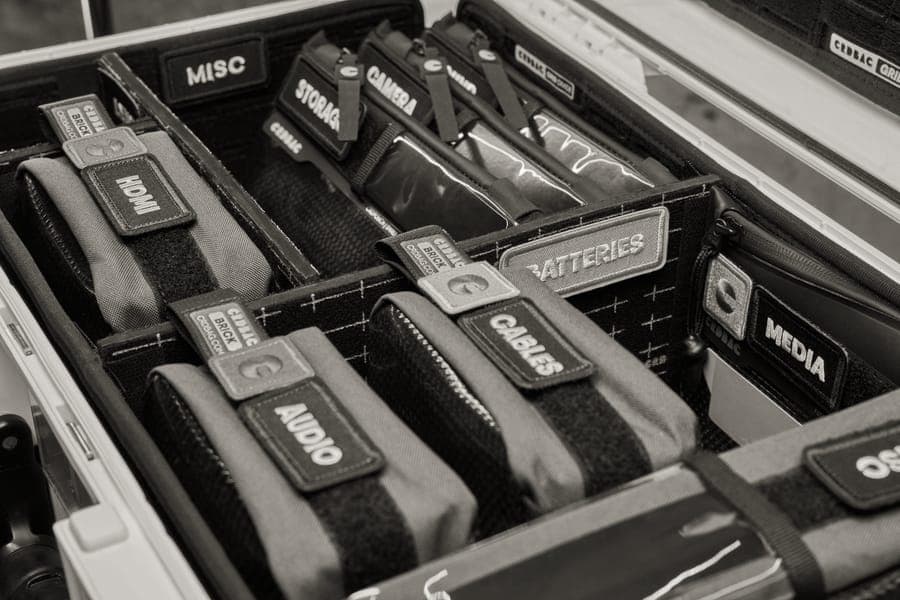 Bellroy Tech Kit Compact Small, structured, and it lives in a jacket pocket when the bag goes in the hold. | Keeping restricted items together | |
| 2 |  Apple AirTag Turns 'where is my bag' from a question into a location you can show someone. | Anyone who checks a bag | |
| 3 |  Clear TSA-Approved Quart Toiletry Bag A quart-sized clear pouch that comes out of the bag in one movement at screening. | Medication and anything you cannot replace |
The pouch that holds the things that must not be gate-checked
Bellroy Tech Kit Compact
The gate-check problem is really a findability problem: five loose items in different pockets cannot be retrieved in thirty seconds at the aircraft door. One compact structured pouch holding the cables, the power bank and the small electronics solves it, and it fits in a jacket pocket when the bag goes away.
The specs that decide it
- Size: Compact - fits a charger, a cable and earbuds
- Why here: One thing to pull out, not five
- Build: Structured, so it protects rather than just containing
Flaws but not dealbreakers
Genuinely small - a large laptop charger will not fit, and neither will a power bank of any size. If you carry both, a larger organizer is the right call.
The thing that changes what happens after the bag does not arrive
Apple AirTag
A tracker does not stop a bag being delayed, but it changes the conversation completely. Instead of asking an airline where your bag is, you tell them - which is routinely the difference between a three-day delay and a one-day one. It belongs on this page because everything above assumes the bag might not arrive with you.
The specs that decide it
- Requires: An iPhone. There is no Android app at all
- For Android: Use a Find My Device tracker - see best luggage trackers
- Where it goes: Inside the bag, not on an external tag
Flaws but not dealbreakers
Useless to an Android user, and it only reports when a compatible phone passes near it - so it will not update from a cargo hold in flight. It tells you where the bag has been, not where it is right now.
The pouch that keeps essential liquids in the cabin
Clear TSA-Approved Quart Toiletry Bag
Anything you genuinely need on arrival should not be in the hold, and for liquids that means a compliant quart bag in the cabin. A reusable clear pouch is also the thing you grab at a gate check, and it speeds up screening because the officer can see what is in it without opening anything.
The specs that decide it
- Size: Genuinely quart-sized - roughly 7 x 8 inches, and it must close
- Medication: Exempt from 3-1-1 and does not have to go in the bag at all
- Where it lives: The top of the carry-on, so it comes out first
Flaws but not dealbreakers
Some officers are stricter about reusable pouches that are noticeably larger than a quart, so buy one sold specifically as compliant and keep it genuinely quart-sized. An overstuffed bag that will not seal is a failed bag.
Frequently asked questions
What is not allowed in checked luggage?
Can you put a power bank in a checked bag?
Can you pack a vape in a checked bag?
Can you put matches or a lighter in a checked bag?
Should I put medication in my checked bag?
Do these rules apply if my carry-on is gate-checked?
Sources
Read next
- Power bank rules for flights
- TSA liquid rules
- Checked bag size and weight limits by airline
- Best luggage trackers
- Best personal item bags
- How to pack toiletries
More in Airline Rules, or see every roundup and comparison on the site.