Power bank rules for flights
The watt-hour thresholds that decide what you can carry, why the checked bag is never an option, and the carrier rules that are getting stricter.
By Michael W. · Last updated October 3, 2026
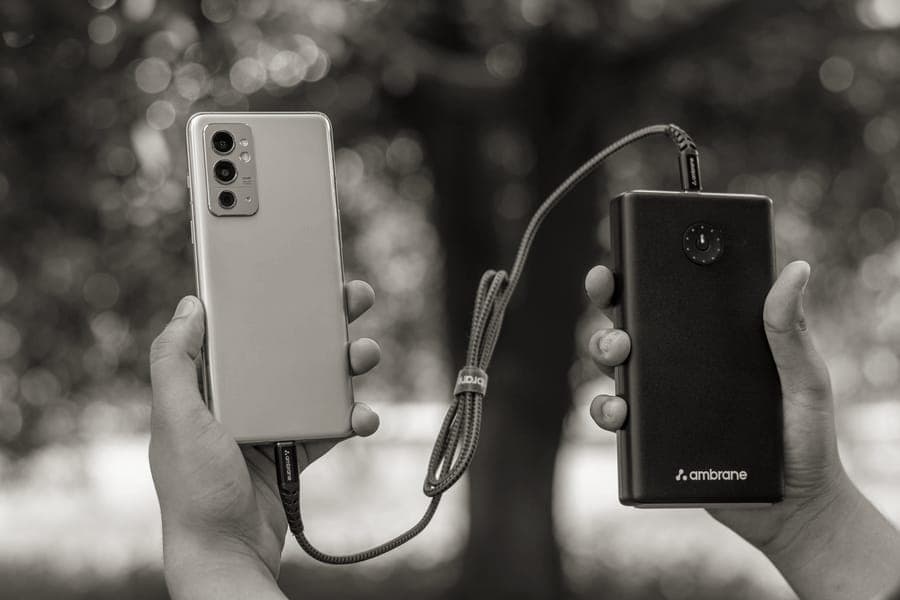
We earn a commission when you buy through our links, at no extra cost to you. It never changes what we pick or how we rank it. How we’re funded.
Power banks must be carried in your carry-on bag and are prohibited in checked baggage - no exceptions. TSA's rule is explicit: "Portable chargers or power banks containing a lithium ion battery must be packed in carry-on bags." Under FAA rules, batteries up to 100 Wh need no approval, 101-160 Wh require the airline's approval and are limited to two spares per person, and anything over 160 Wh is forbidden on a passenger aircraft.
Carrier rules are getting stricter, and they are the ones you will be held to
The FAA sets the floor. Several airlines, US and international, now add their own limits on how many power banks you may carry, where they can be stowed in the cabin and whether you may charge them in flight. Check your airline's hazardous materials page before you fly - the links are in the Sources block.
The reason behind all of this is thermal runaway. A damaged or short-circuited lithium cell can ignite, and a fire in the cabin can be reached and extinguished by the crew within seconds. A fire in the cargo hold cannot. That single asymmetry explains every rule on this page, including the ones that look inconvenient.
The three watt-hour thresholds
Every lithium battery rule in aviation is written in watt-hours, not milliamp-hours, and this is the whole framework:
| Capacity | Allowed? | Where | Limit |
|---|---|---|---|
| 0-100 Wh | Yes, no approval needed | Carry-on only | Carrier may cap the quantity |
| 101-160 Wh | Yes, with airline approval | Carry-on only | Two spare batteries per person |
| Over 160 Wh | No - forbidden on passenger aircraft | Nowhere | None |
Almost every consumer power bank sold for travel sits comfortably in the first band. A 10,000 mAh pack is roughly 37 Wh and a 20,000 mAh pack roughly 74 Wh - both well inside 100 Wh with no approval required. The 101-160 Wh band is where large laptop-charging and camera-crew batteries live, and that is the band where you need to call the airline in advance.
How to convert mAh to watt-hours
Power banks are marketed in milliamp-hours and regulated in watt-hours, which is the source of most of the confusion. The conversion is simple arithmetic:
Wh = (mAh ÷ 1000) × nominal voltage. Lithium-ion cells are nominally 3.7 V, which is the figure manufacturers use. So a 20,000 mAh bank is (20 ÷ 1) × 3.7 = 74 Wh.
- 5,000 mAh is about 18.5 Wh - fine anywhere.
- 10,000 mAh is about 37 Wh - fine anywhere, and the size most people actually carry.
- 20,000 mAh is about 74 Wh - still under 100 Wh, no approval needed.
- 27,000 mAh is about 100 Wh - right at the threshold, so check the printed figure rather than assuming.
- Over about 27,000 mAh crosses into the approval band. Read the case.
You should not have to do this arithmetic at a checkpoint. Reputable manufacturers print the Wh rating on the case, usually in small type next to the capacity and the certification marks. A power bank with no printed rating is the one most likely to be questioned, and some carriers refuse unmarked batteries outright.
Why power banks can never go in a checked bag
TSA is unambiguous: "Spare lithium batteries, which include both power banks and phone chargers, are prohibited in checked luggage." The FAA requires spare lithium-ion and lithium-metal batteries, including power banks and battery charging cases, to be carried in carry-on baggage only.
The logic is containment, not probability. Lithium cell failures are rare, but a cell that enters thermal runaway in the cabin is visible and reachable - crews are trained for it and aircraft carry equipment for it. The same event in a cargo hold is neither. That is why the rule is absolute rather than risk-weighted, and why it applies equally to a 5,000 mAh pocket charger and a 20,000 mAh brick.
It is also why a bag gate-checked at the aircraft door still needs the battery out of it. If your carry-on is taken at the gate, pull the power bank, your laptop and any spare camera batteries and keep them with you. This is the single most common way people breach the rule without meaning to - see what not to pack in checked luggage for the rest of that list.
Using a power bank in the cabin
- Protect the terminals. Keep the bank in its own pouch or with tape over exposed contacts so loose keys and coins cannot bridge them. A short circuit against a set of keys is a real and documented failure mode.
- Keep it where you can see it. Several carriers now require power banks to stay within reach rather than in an overhead bin, specifically so a problem is noticed early.
- Expect in-flight charging restrictions. A growing number of airlines prohibit charging a power bank from an in-seat outlet, and some restrict using one at all during the flight.
- Do not use a damaged pack. Swelling, a soft or split case, or a bank that gets noticeably hot in normal use should not be flown at all - and should not be in a bag.
- Declare the big ones in advance. Anything in the 101-160 Wh band needs the airline's approval before the day of travel, not a conversation at the gate.
- Keep it reachable at your feet, not in the overhead. Long-haul flight essentials covers what else belongs in the personal item, and best personal item bags covers the bag it goes in.
What to look for when buying one
Three things decide whether a power bank is a good travel battery, and capacity is only one of them.
- A printed Wh rating on the case. This is the single most useful feature at a checkpoint, and it is also a decent proxy for whether the manufacturer takes certification seriously.
- Capacity matched to what you actually charge. A phone is roughly 3,000-5,000 mAh, so a 10,000 mAh bank is two or three full charges. A laptop needs USB-C Power Delivery and a much larger bank - and that is the one that approaches the threshold.
- The right output standard. USB-C PD for a laptop or a fast-charging phone; anything will do for earbuds. A huge battery with a slow output is a heavy way to charge a phone overnight.
The picks below are the three sizes that cover almost every trip, and all three sit well inside the 100 Wh no-approval band. Best power banks for travel is the full shortlist, best electronics organizers for travel is where the bank and its cable should live so you can pull them out at a gate check, and best luggage trackers covers the other lithium device most travelers carry.
Quick picks
The short list. Tap any row for the full write-up, including what each one is bad at.
| # | Product | Best for | Price |
|---|---|---|---|
| 1 | 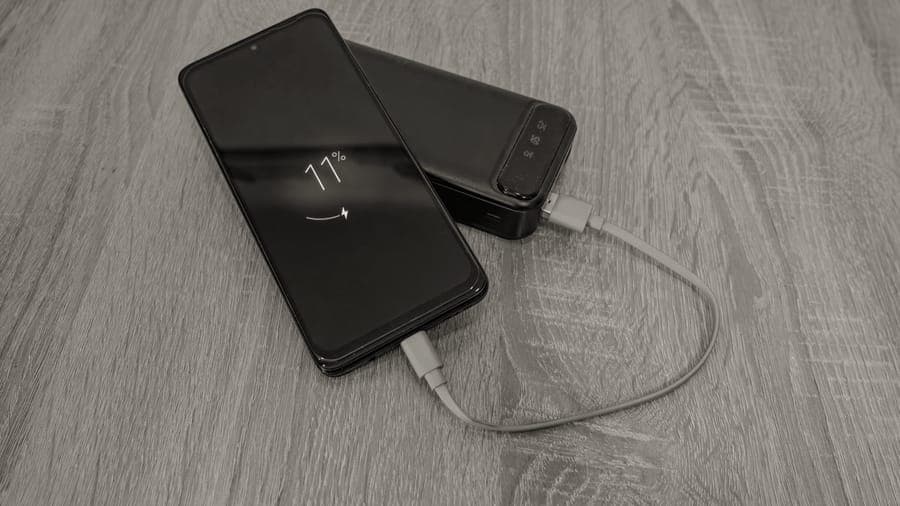 Anker PowerCore 10000 Power Bank Two or three phone charges, at roughly 37 Wh - nowhere near any threshold. | Phone charging on any trip | |
| 2 | 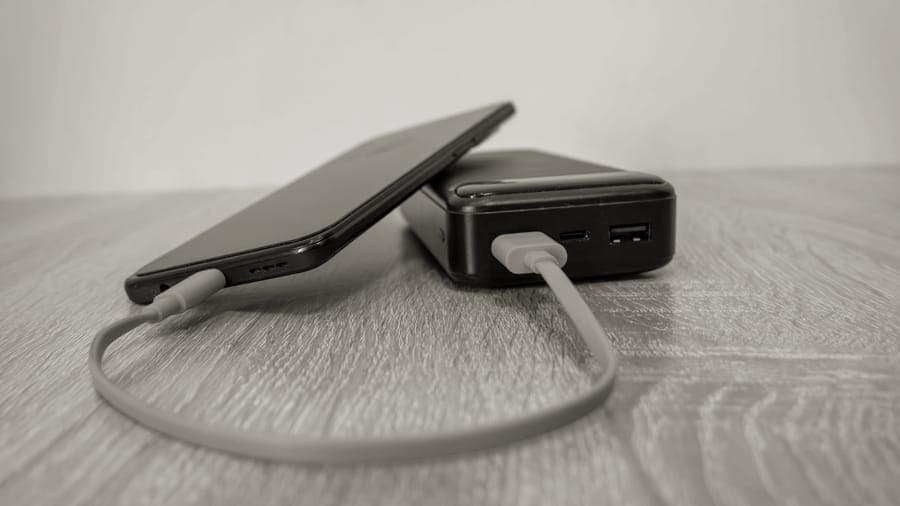 Anker 737 Power Bank (PowerCore 24K) High-output USB-C PD, still inside the no-approval band - but check the printed rating. | Working on the move | |
| 3 | 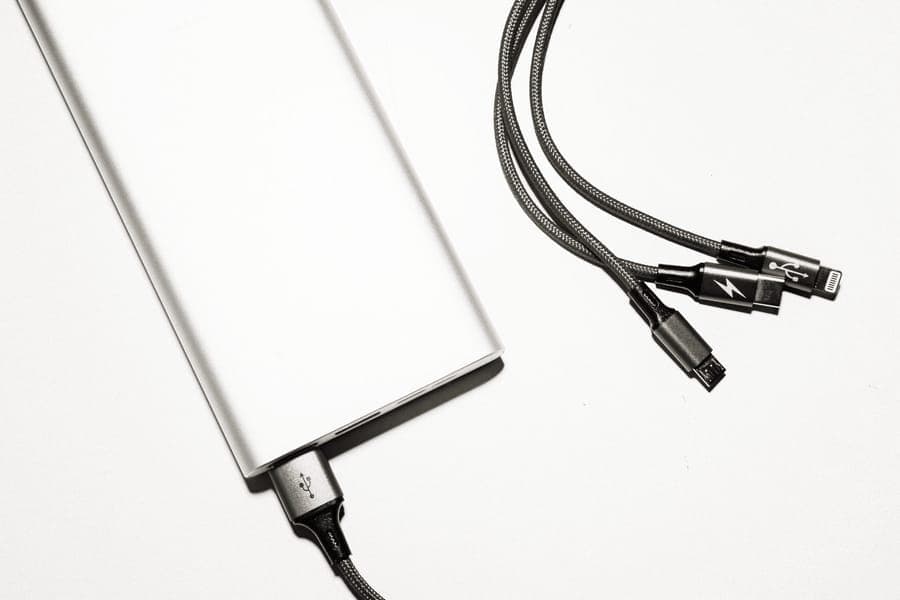 Anker Nano Power Bank 5000 About 18.5 Wh in something that lives in a pocket rather than a bag. | Day trips and personal-item-only flying |
The size people actually carry rather than leave at home
Anker PowerCore 10000 Power Bank
In-seat power is unreliable and a phone running maps, boarding passes and a camera all day does not last. 10,000 mAh is the capacity that stays in the bag because it is small enough to be worth carrying, and at about 37 Wh it is a third of the no-approval limit.
The specs that decide it
- Capacity: About 37 Wh - well under the 100 Wh threshold
- Charges: Two to three full phone charges
- Where it goes: Carry-on only, like every power bank
Flaws but not dealbreakers
A dense brick for its size, which is noticeable in a small bag, and it will not meaningfully charge a laptop. If you work while traveling, the larger pack below is the right one.
The one that charges a laptop, and the one to read the label on
Anker 737 Power Bank (PowerCore 24K)
Charging a laptop needs both capacity and a high-wattage USB-C Power Delivery output, and most large banks only have the first. This is the category for anyone who works on a long-haul leg or through an airport day. It sits under 100 Wh, which is the band where no airline approval is required - but it is the size where you should read the case rather than assume.
The specs that decide it
- Output: High-wattage USB-C PD - enough for a laptop, not just a phone
- Capacity: Under 100 Wh - verify the printed Wh figure on the case
- Rule: Carry-on only, and keep it reachable in the cabin
Flaws but not dealbreakers
Heavy and physically large - this is a brick, and on a weighed cabin allowance it is a real cost. It is also expensive, and complete overkill if you only ever charge a phone.
The one small enough that you always have it
Anker Nano Power Bank 5000
The best power bank is the one you have with you, and a 10,000 mAh brick frequently gets left in the hotel. A pocket-sized pack gives roughly one full phone charge, which is almost always what you actually need, and it costs essentially nothing in bag space on a personal-item-only trip.
The specs that decide it
- Capacity: About 18.5 Wh - the smallest band, no approval anywhere
- Charges: Roughly one full phone charge
- Size: Pocket-sized, so it is actually with you when the battery dies
Flaws but not dealbreakers
One charge is one charge - on a long day with maps running you will use all of it by mid-afternoon. It also charges slowly compared with the larger packs.
Frequently asked questions
Can you bring a power bank on a plane?
What size power bank is allowed on a plane?
Is a 20000mAh power bank allowed on a plane?
Why can't power banks go in checked baggage?
What happens if my carry-on gets gate-checked?
Can I use a power bank during the flight?
Sources
Read next
- Best power banks for travel
- What not to pack in checked luggage
- TSA liquid rules
- Best electronics organizers for travel
- Long-haul flight essentials
More in Airline Rules, or see every roundup and comparison on the site.