The best travel organizers for clothes
Cubes are the baseline. These are the organizers that do something a cube cannot - and the ones that just add weight.
By Michael W. · Last updated September 16, 2026
We earn a commission when you buy through our links, at no extra cost to you. It never changes what we pick or how we rank it. How we’re funded.
Once you have packing cubes, the organizer category gets crowded with products that add structure rather than function. The test for anything in this section is simple: does it do something a cube cannot? Most do not, and the ones that do are worth knowing about.
Three genuinely solve distinct problems. A shelf system turns a bag into a chest of drawers, which changes how you live out of it. A garment folder keeps tailored clothes flat in a way rolling or cubing cannot. And a dedicated pouch keeps small items findable rather than loose at the bottom of a bag.
Quick picks
The short list. Tap any row for the full write-up, including what each one is bad at.
| # | Product | Best for | Price |
|---|---|---|---|
| 1 | 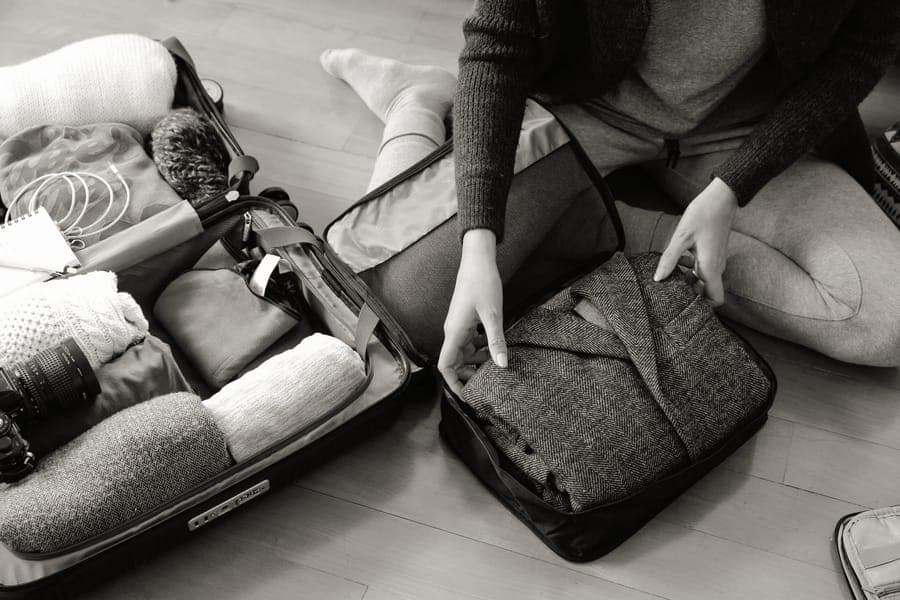 Eagle Creek Pack-It Reveal Cube Set Mesh-topped cubes remain the most useful organizer for most trips. | Most travelers | |
| 2 | 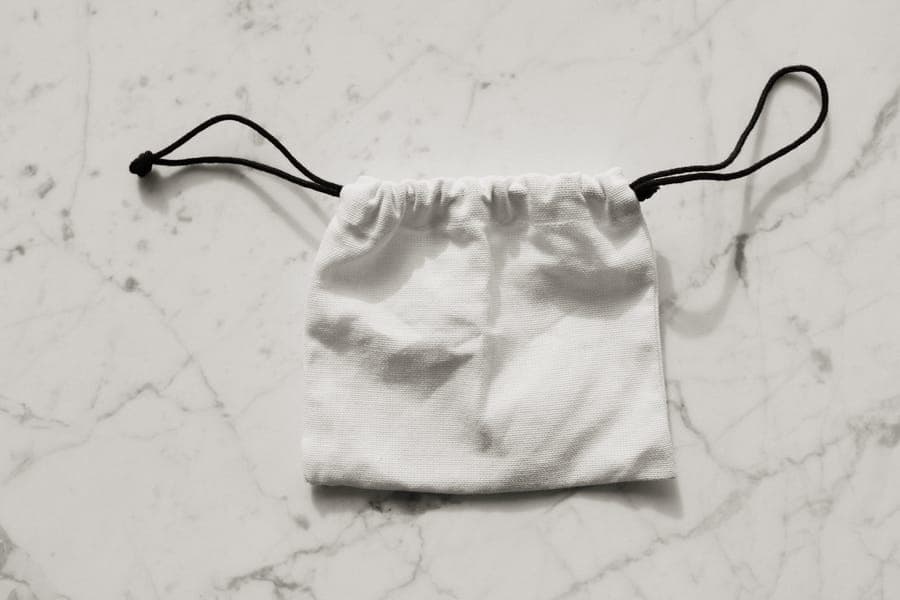 Hanging Travel Shelf Organizer Hangs in a wardrobe with your clothes already sorted into shelves. | One base, several days | |
| 3 | 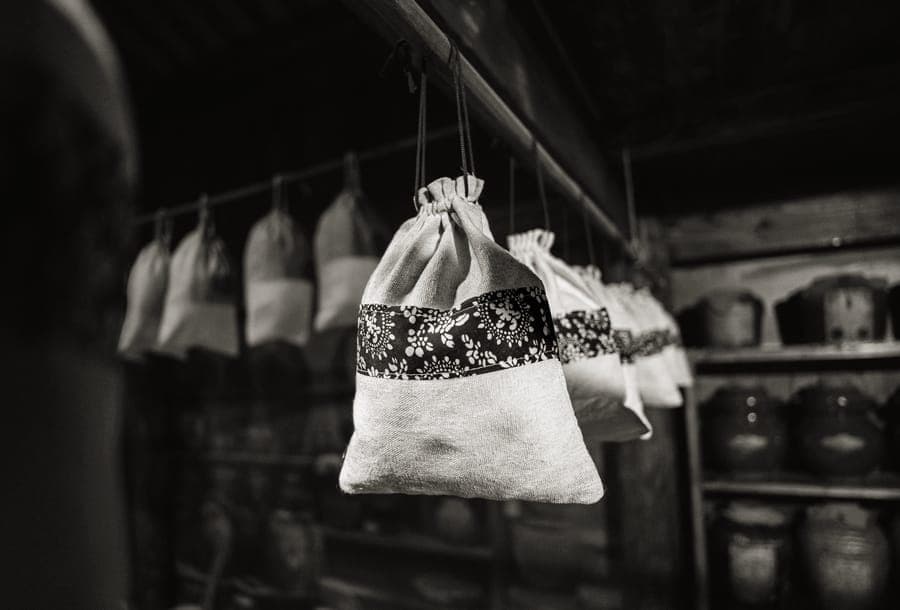 Eagle Creek Pack-It Garment Folder A folding board that keeps shirts flat with one soft fold instead of many hard ones. | Business travel | |
| 4 | 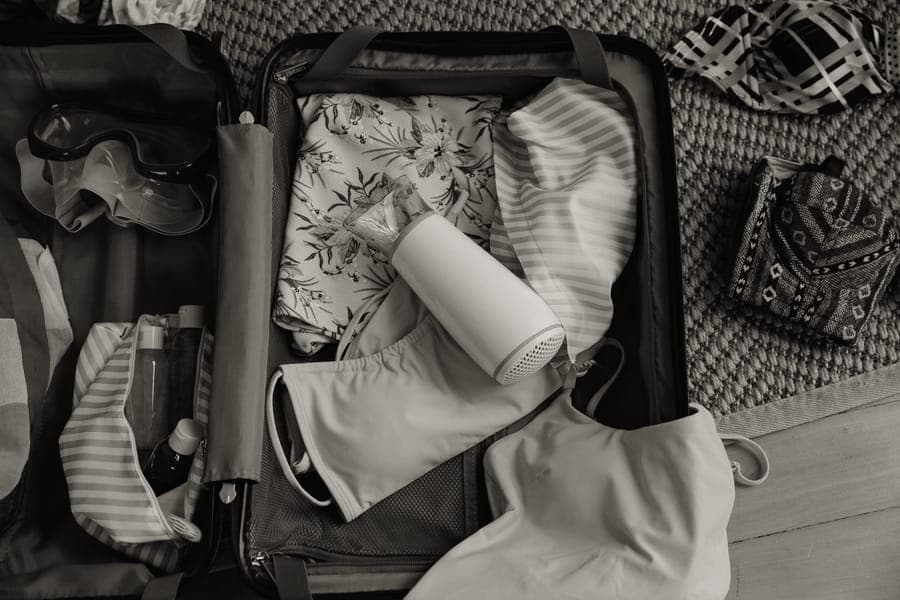 Bagsmart Travel Accessory Pouch Set A few small zip pouches, which is the cheapest organization upgrade there is. | Chargers, documents and odds | |
| 5 |  Peak Design Packing Cubes Structured cubes that stop the load shifting in a backpack. | Frameless packs |
The baseline that most organizers fail to beat
Eagle Creek Pack-It Reveal Cube Set
It is worth starting here, because a lot of the organizer category is sold to people who would be better served by good cubes. If you can see into a cube and the zip works, you have solved most of the organization problem at the lowest weight penalty available.
The specs that decide it
- Solves: Categories, findability, fast unpacking
- Weight penalty: The lowest of anything in this category
- Works in: Suitcases, packs and duffels alike
Flaws but not dealbreakers
Cubes stack rather than hang, so you still have to lift the top ones off to reach the bottom of the bag. A shelf system fixes that at a cost in weight and bulk.
The one that turns your bag into a chest of drawers
Hanging Travel Shelf Organizer
If you are in one place for several days, the difference between a bag on the floor and a hanging shelf in the wardrobe is substantial: you stop packing and unpacking entirely and just take things off a shelf. It also means never digging under the top cube again.
The specs that decide it
- Solves: Living out of a bag for several days without unpacking
- Use: Pack it collapsed, hang it on arrival, take it down at the end
- Best for: Single-base trips rather than multi-city ones
Flaws but not dealbreakers
Heavy and bulky for what it does - the frame and hanger are pure weight against your allowance. It also needs a wardrobe with a rail, which a hostel bunk and many small hotel rooms do not have.
The one for shirts that have to look pressed on arrival
Eagle Creek Pack-It Garment Folder
Shirts crease along whatever line you fold them on, and a cube gives you no control over where that line falls. A garment folder uses a board to create one deliberate soft fold, which is what keeps a shirt wearable straight out of the bag. This is a business-travel product and it does its job well.
The specs that decide it
- Solves: Hard crease lines in shirts and tailored clothing
- Mechanism: A folding board creating one controlled soft fold
- Capacity: Several shirts, packed flat
Flaws but not dealbreakers
It only works if you keep it flat, which means it has to be the top layer and nothing can be packed on top of it. That is a real constraint in a full carry-on, and it makes the folder awkward to combine with cubes.
The one that stops small things ending up at the bottom
Bagsmart Travel Accessory Pouch Set
The bottom of a bag accumulates: chargers, adapters, a passport holder, medication, a spare mask. A couple of small pouches turn that into two findable objects. It is the least glamorous item in this category and probably the highest return per dollar.
The specs that decide it
- Solves: Small items migrating to the bottom of the bag
- Sizes: Several small pouches rather than one large one
- Weight: Negligible - the best weight-to-benefit ratio here
Flaws but not dealbreakers
Buy too many and you have reproduced the original problem one level up - now you are searching for the right pouch. Two or three is the limit before it stops helping.
The ones that keep their shape when the bag does not have one
Peak Design Packing Cubes
In a pack there is no shell to hold contents in place, so soft cubes slump and the load shifts as you walk - which is both uncomfortable and how a pack starts pulling to one side. Cubes that hold their own shape solve a problem that does not exist in a suitcase.
The specs that decide it
- Solves: Load shift in a frameless pack
- Structure: Holds shape rather than slumping
- Feature: Expands or compresses depending on contents
Flaws but not dealbreakers
Structure is material and material is weight, so these are heavier than plain cubes for the same capacity - on a pack chosen specifically for being light. They are also expensive relative to what they do.
How they compare
| Pick | Does what a cube cannot | Weight penalty | Best for |
|---|---|---|---|
| Pack-It Reveal cubes | Nothing - this is the baseline | Lowest | Most travelers |
| Hanging shelf organizer | Hangs - no unpacking at all | High | One base, several days |
| Garment folder | Controls where shirts crease | Low | Business travel |
| Accessory pouches | Contains small loose items | Negligible | Everyone |
| Structured cubes | Holds shape in a frameless pack | Medium | Travel backpacks |
The test for any organizer
Every item in a bag has to justify its weight, and organizers are pure overhead - they hold your things, they are not your things. So the question for each one is: does this do something a plain cube cannot, and is that thing worth the grams?
- A hanging shelf - yes. No cube lets you stop unpacking entirely.
- A garment folder - yes. No cube controls where a shirt creases.
- Accessory pouches - yes, and at almost no weight cost.
- A shoe bag - yes, because it contains dirt, which is a different job. See best shoe bags for travel.
- A 'suitcase organizer insert' - usually no. It is a cube with a rigid frame, and the frame is weight you are carrying for structure your suitcase already has.
- Separate 'underwear organizers' - no. That is a small cube with a marketing name.
How we chose these picks
Against the test above, and then on weight per unit of benefit, because that is the currency this category trades in. An organizer that solves a genuine problem badly, at high weight, is worse than not having it - which describes most rigid suitcase inserts.
We do not run a testing lab and have not used these across a year of trips; our methodology sets out what that means for how much weight to give this.
What we passed over
- Rigid suitcase organizer inserts. They add a frame inside a bag that already has structure, at a real weight cost, to do what a cube does for less.
- Category-specific mini organizers. An 'underwear organizer' and a 'sock organizer' are small cubes with different labels.
- Organizer sets with more than four pieces. Past that point you are searching for the right container instead of the right item, which is the problem you started with.
- Anything advertised as saving space through organization alone. Organizing does not create volume; only compression does, and only on lofty items.
How to choose organizers
- Start with cubes and stop there if it works. Most people need nothing else.
- Add pouches for small items. Negligible weight, immediate benefit.
- Add a garment folder only if you travel in tailored clothes. Otherwise it is a board you are carrying for no reason.
- Add a hanging shelf only for single-base trips with a wardrobe rail you can rely on.
- Choose structured cubes only for a [backpack](/luggage/best-travel-backpacks), where load shift is a real problem.
Frequently asked questions
What is the best travel organizer for clothes?
Are hanging travel organizers worth it?
Do garment folders stop shirts wrinkling?
Do I need separate organizers for underwear and socks?
Do travel organizers save space?
Read next
- Best packing cubes
- Best shoe bags for travel
- Best garment bags for travel
- Best electronics organizers for travel
- How to pack a carry-on
More in Packing, or see every roundup and comparison on the site.