What to do if the airline loses your luggage
File before you leave the airport, keep every receipt, and know the two numbers that cap what you can claim.
By Michael W. · Last updated October 3, 2026
We earn a commission when you buy through our links, at no extra cost to you. It never changes what we pick or how we rank it. How we’re funded.
Report the bag missing at the airline's baggage desk before you leave the airport, get a written file reference, and keep every receipt for what you have to buy while you wait. Those three things decide the outcome. For US domestic flights, a carrier's liability for a mishandled bag is capped at $4,700 per passenger; for international itineraries under the Montreal Convention the limit is 1,519 SDR, about US$2,000.
Most bags described as lost are delayed, and most delayed bags arrive within a few days. The practical difference between a bad outcome and a tolerable one is almost entirely about paperwork filed in the first hour and receipts kept in the first week - not about how forcefully you complain.
Do not leave the airport without a file reference
The baggage desk in the arrivals hall is the only place that opens the file easily. Once you leave, you are filing by phone or online against a bag nobody has scanned recently, and you have lost the one person who could look at the tracking record with you.
What to do in the first hour
- Go to the airline's baggage service desk in the arrivals hall, before customs if the layout allows it. Not the check-in desk, and not a phone line.
- File a report and get the written reference number. Airlines issue a file or property irregularity reference. Without it, nothing that follows exists as far as the airline's system is concerned.
- Give a description, not just a brand. Color, type, any distinguishing mark, and what is in it. A black 22-inch spinner is not a description; a black 22-inch spinner with a red ribbon on the handle is.
- Give the address you will actually be at, not your home address, and a phone number that works in the country you are in.
- Photograph the file reference, the tag stub and the desk agent's name. This takes ten seconds and is the thing you will wish you had in a week.
- If you have a tracker in the bag, screenshot its last location with the timestamp visible. A timestamped screenshot is far more effective at a baggage desk than a live app you have to explain.
- Ask what the carrier's interim expense policy is, and whether they will pay directly or reimburse. Get the answer in writing if you can - the policies differ and so do the caps.
One thing not to do: do not accept a verbal assurance that the bag will arrive tomorrow in place of filing the report. The report is what starts the clock on every entitlement below.
What you are owed, and the published limits
Three separate entitlements apply, and they are often confused with each other. These are the published figures for flights to, from and within the United States.
| Entitlement | The figure | Who sets it |
|---|---|---|
| Maximum liability, domestic US flights | $4,700 per passenger | US DOT, 14 CFR Part 254 - raised from $3,800 effective 22 January 2025 |
| Maximum liability, international itineraries | 1,519 SDR (about US$2,000) | Montreal Convention, raised from 1,288 SDR effective 28 December 2024 |
| Refund of the checked bag fee | The fee you paid | US DOT, when the bag is 'significantly delayed' |
| Interim expenses while the bag is delayed | Reasonable, verifiable, actual costs | The airline, subject to the liability limits above |
The DOT defines a significantly delayed checked bag as one not delivered to or collected by the passenger "within 12 hours of the last flight segment's arrival for domestic itineraries, within 15 hours ... for international itineraries with a non-stop flight segment between the United States and a foreign point that is 12 hours or less in duration, and within 30 hours" for longer international segments. Cross those thresholds and the bag fee is refundable.
- The liability limit is per passenger, per incident - not per bag. Checking three bags does not raise the ceiling.
- Compensation is subject to depreciation. You are being paid for the current value of used clothes, not their replacement cost, which is why itemized receipts for what you actually bought matter more than a list of what you lost.
- Declaring excess value at check-in raises the ceiling, for a fee, if you are carrying something genuinely valuable in a checked bag. The better answer is usually not to.
- The limits are maximums, not entitlements. Airlines pay against a documented claim, which is the entire argument for keeping receipts.
The following days: what to buy and what to keep
- Buy what you reasonably need, not what you would like. Underwear, a change of clothes, toiletries, a phone charger. Reasonable and verifiable is the standard a carrier applies.
- Keep every receipt, itemized. A card statement line is not a receipt. Photograph each one as you get it, because thermal receipts fade.
- Check the carrier's online baggage tracker daily and screenshot each status change. A documented record of a bag sitting in one place for four days is useful at a claim stage.
- Escalate in writing after the carrier's stated delivery window, not before. A written escalation with a file reference attached is handled differently from a phone call.
- At the point the airline declares the bag lost, file the itemized contents claim. Carriers set their own deadline for this, usually a short one, and it is stated in the conditions of carriage.
- Check your travel insurance and your credit card's benefits separately. Both frequently cover baggage delay above what the airline pays, and both have their own filing deadlines.
Carriers generally declare a bag lost rather than delayed somewhere between five and twenty-one days, and the figure is published in each airline's own baggage policy - check yours rather than assuming a number.
What to look for before the next trip
Nothing on this page prevents a bag going missing. Three things change what happens next, and all three are cheap.
- A tracker inside the bag. It will not stop the bag being lost. It changes the conversation from you asking an airline where your bag is to you telling them, which is what shortens a three-day delay to a one-day one. Inside the bag, not on the outside.
- A luggage tag with a covered window. The tag is what gets a bag back from whoever eventually finds it, and a covered window means a baggage agent can read your details while a stranger at a carousel cannot.
- One change of clothes in your carry-on. This is the single highest-value habit in travel. Underwear, a shirt and a toothbrush in the cabin bag removes the worst day of a delayed-bag trip entirely.
- Nothing irreplaceable in the hold. Medication, documents, electronics, chargers and anything you would not insure belong in the cabin - what not to pack in checked luggage covers both the prohibited items and the merely unwise ones.
- A photograph of the packed bag, taken before you close it. An itemized contents claim is far easier to write against a photograph than against memory.
Quick picks
The short list. Tap any row for the full write-up, including what each one is bad at.
| # | Product | Best for | Price |
|---|---|---|---|
| 1 |  Apple AirTag The largest detection network by a wide margin - which is the whole product. | iPhone households | |
| 2 | 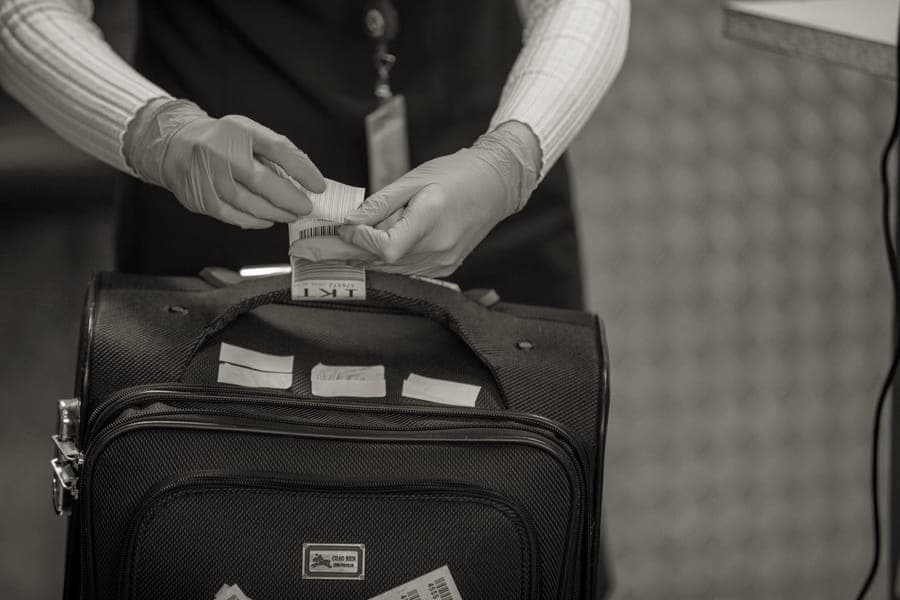 Travelambo Leather Luggage Tags Leather with a covered window, so your address is not face up on a carousel. | Most travelers | |
| 3 | 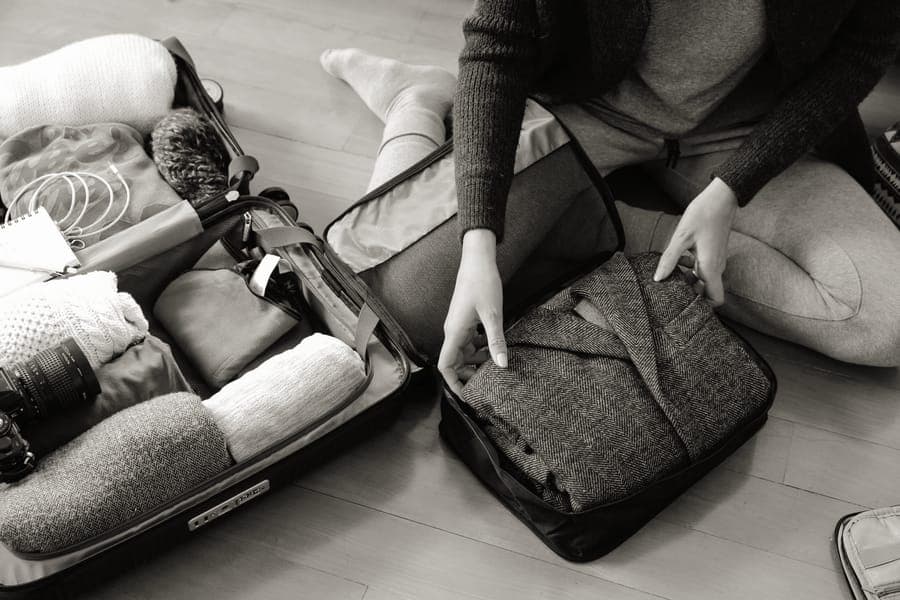 Eagle Creek Pack-It Reveal Cube Set Mesh-topped cubes - one of which is the overnight kit that stays with you. | Anyone who checks a bag |
The thing that lets you tell the airline where the bag is
Apple AirTag
A Bluetooth tracker is only as good as the density of compatible phones around your bag, and Apple's Find My network is the largest such network in the world by a very large margin. In an airport that means a location update within minutes rather than hours - and a timestamped screenshot of where your bag actually is changes a baggage-desk conversation completely.
The specs that decide it
- Network: Apple Find My - the largest detection network available
- Requires: An iPhone or iPad. It does not work with Android
- Where it goes: Inside the bag, not on the outside, so it cannot be removed
- On Android: Use a tracker built for Google's network instead - see best luggage trackers
Flaws but not dealbreakers
It is useless to Android users - there is no app and no functionality. There is also no loud speaker worth mentioning, so finding it inside a bag in a noisy baggage hall relies on the phone's direction-finding rather than sound. And it does not work at all in a cargo hold at altitude, where there are no phones.
The thing that tells whoever finds it where to send it
Travelambo Leather Luggage Tags
A tracker tells you where the bag is; a tag tells a stranger where it belongs. A covered window is the sensible compromise: a baggage agent reads your details by lifting a flap, and somebody standing next to your bag at a carousel cannot. Leather also survives being dragged along a conveyor better than the paper tags airlines issue, which is exactly the situation that separates a bag from its label.
The specs that decide it
- Privacy: Covered window - details readable on inspection, not at a glance
- Material: Leather, which abrades rather than snapping
- Attachment: Check the loop type - this is where tags fail
- Also do this: Put a card with the same details inside the bag
Flaws but not dealbreakers
The weak point on almost every tag in this class is the attachment strap rather than the tag body. If it ships with a thin leather or plastic loop, replace it with a steel cable before the first trip - the tag will outlast the loop several times over.
The change of clothes that travels in the cabin with you
Eagle Creek Pack-It Reveal Cube Set
The highest-value habit in travel is keeping one change of clothes in your carry-on, and the obstacle is usually that loose clothes in a cabin bag get in the way of everything else. A single small cube holding underwear, a shirt and socks takes almost no space, stays out of the way, and converts the worst day of a delayed-bag trip into an inconvenience.
The specs that decide it
- Use here: One small cube as the overnight kit in the cabin bag
- What they do: Organize and square the bag - they do not compress
- How many: Two or three sizes is what actually gets used
- Also pack in the cabin: Medication, documents, chargers and anything irreplaceable
Flaws but not dealbreakers
Cubes organize rather than create space, so they do not help a bag that will not close. They also add a little weight and bulk of their own - are packing cubes worth it? is the honest version.
Frequently asked questions
How much compensation do you get for lost luggage?
Do I get my checked bag fee back if the bag is delayed?
How long before an airline declares a bag lost?
What should I do first if my bag does not arrive?
Can I claim for clothes I had to buy while waiting?
Does a luggage tracker help get a bag back?
Sources
- US DOT final rule - domestic baggage liability limit raised from $3,800 to $4,700, effective 22 January 2025 (14 CFR Parts 250 and 254)
- US DOT final rule - Refunds and Other Consumer Protections, including the definition of a significantly delayed checked bag (12 / 15 / 30 hours)
- ICAO - Montreal Convention baggage liability limit raised from 1,288 to 1,519 SDR, effective 28 December 2024
- American Airlines - checked baggage policy
- Delta Air Lines - excess and overweight baggage
Read next
- Best luggage trackers
- Best luggage tags
- What not to pack in checked luggage
- Checked bag size and weight limits by airline
- Carry-on vs checked luggage
- Best checked luggage
More in Airline Rules, or see every roundup and comparison on the site.