Are packing cubes worth it?
Yes, but not for the reason they are sold. Cubes do not compress clothes. They square the bag, and squaring recovers real volume.
By Michael W. · Last updated October 3, 2026
We earn a commission when you buy through our links, at no extra cost to you. It never changes what we pick or how we rank it. How we’re funded.
Standard packing cubes are worth it - but not because they create space, which they do not. A cube with a single zip does nothing to compress the clothes inside it. What it does is turn loose clothing into stackable rectangles, and a suitcase packed with rectangles has far less dead air around the edges than one packed with a heap. That recovered air is real, and on a 40-liter carry-on it is a meaningful share of the bag.
If your bag will not close, cubes are not the fix. Fewer clothes is. The honest version of the pitch is this: cubes buy you organization, a bag that stays packed when you open it on a bed, and a modest volume gain from squaring off. They cost you a little weight, a little bulk of their own, and some money. For most people that is a good trade. For some people it genuinely is not.
Standard cubes and compression cubes are different products
A standard cube has one zip and organizes. A compression cube has a second zip that pulls the lid down and squeezes air out, which does save volume - but only on lofty items like fleeces, sweaters and towels, and it saves not one gram of weight.
What packing cubes actually do
Take the claims one at a time, because the category is marketed loosely and the gap between the claim and the reality is where people end up disappointed.
| The claim | Does it hold? | What is actually happening |
|---|---|---|
| They save space | Partly | Standard cubes do not compress. They square the bag, which recovers the dead air around a loose heap - a real but modest gain |
| They keep you organized | Yes | This is the genuine benefit. You find socks without unpacking the bag, and the bag stays packed when you open it |
| They stop wrinkles | No | A cube holds clothes in whatever state you folded them. It will not press a shirt, and a stuffed cube creases more, not less |
| They make packing faster | Yes, after the first trip | Packing by category rather than by day means a repeat trip is a matter of refilling the same three cubes |
The squaring effect is easy to underrate and easy to overstate. A carry-on packed as a loose heap has gaps at the corners and a domed top that stops the lid closing flat. The same clothes in three rectangles sit flat and reach the corners. You have not compressed anything - you have stopped wasting the shape of the bag.
Who should skip them
This is the section the category pages leave out. Cubes are not universally a good purchase, and there are four clear cases where they are the wrong answer.
- Anyone whose bag will not close. Cubes add fabric and weight for a modest volume gain. If you are over by a sweater, you are still over - take out the sweater.
- Anyone flying against a weighed cabin allowance. On a 7 kg international cabin limit, a six-piece cube set is weight spent on organization. Best lightweight luggage explains why that limit bites hardest.
- Anyone packing a very small bag. On a 20-liter weekend bag there is not enough volume for the squaring effect to pay for the cubes' own bulk. Two of them, maximum.
- Anyone who already packs in a system that works. Rolling, bundle-wrapping and stuff-sacking all solve the same problem. If your current method gets the lid shut, a new product will not improve on it.
- Anyone buying a six-piece set. You will use two or three. The other three become storage for things you do not travel with, which is a fine use of them and not what you paid for.
The counter-case is strong too. If you have ever hunted through a packed bag for one shirt, repacked a suitcase in a hotel room every morning, or shared a bag with somebody else, cubes solve a real daily irritation rather than a theoretical one.
When a compression cube is the right call
Compression is a different mechanism with a different answer. A second zip pulls the cube's lid down and forces air out of what is inside, and whether that helps depends entirely on how much air was in there to begin with.
| Item | Compress it? | Why |
|---|---|---|
| Sweaters, fleece, knitwear | Yes | Mostly trapped air; they lose real volume and recover shape within an hour |
| Towels and base layers | Yes | Same reason - loft is the volume |
| Down jackets and down insulation | No | Prolonged compression damages the fill, which is what you paid for |
| Shirts and tailored trousers | No | They crease in exactly the way compression causes, and they have no loft to lose |
| Jeans, shoes, hard items | No point | No air to remove. Compression does nothing |
Two limits worth stating plainly. Compression saves volume and not one gram of weight, so on a weighed allowance it buys you nothing. And the compression zip is pulled against tension every time it is used, which is far harder service than a normal cube zip - it is the component that fails first on cheap sets. Packing cubes vs compression bags compares the mechanisms in full, and how to pack for a week in a carry-on in winter is the trip where compression genuinely earns its place.
How to use them so they are worth it
- Buy two or three, not six. Pack by category - tops, bottoms, underwear and socks - and you will find the set size you actually use is three.
- Fill them to firm, not to bulging. A stuffed cube is a dome, and a dome defeats the squaring that was the entire reason to use one.
- Put the heavy cube at the wheel end. A bag with its mass low is easier to lift and less likely to tip when you let go.
- Leave the liquids out of the cubes. The quart pouch lives at the top of the bag because it has to come out at screening - TSA liquid rules has the detail.
- Use one cube as the dirty-laundry cube. An isolating cube keeps worn clothes away from clean ones without a separate bag, and it is the single most-used cube by day four.
- Keep shoes out of cubes entirely. They are dense, dirty and oddly shaped - best shoe bags for travel is the right tool.
The picks below are one standard set to try the idea cheaply, one to buy if you have decided you like it, and one compression set for the winter and knitwear case.
Quick picks
The short list. Tap any row for the full write-up, including what each one is bad at.
| # | Product | Best for | Price |
|---|---|---|---|
| 1 | 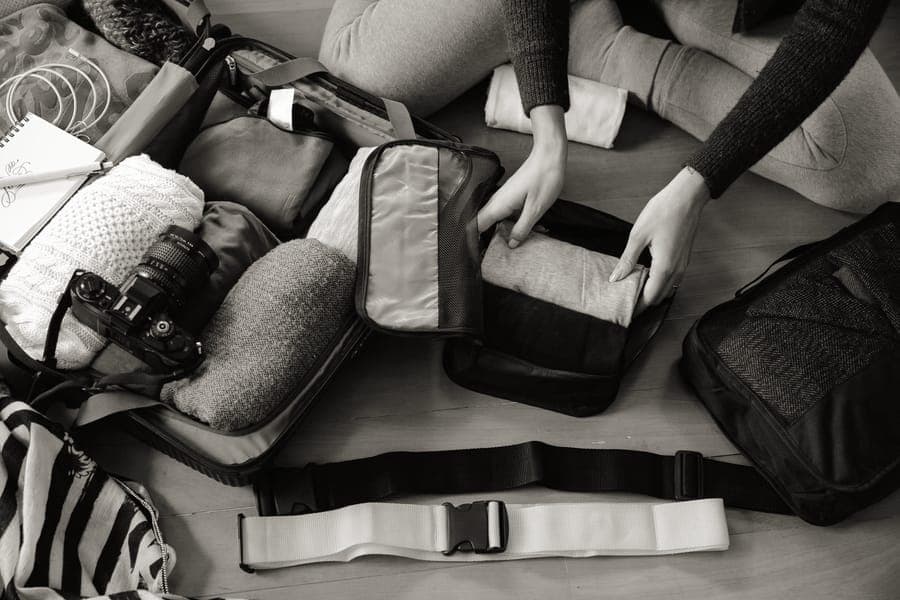 Bagail 6-Set Packing Cubes Generic, mesh-topped, and functionally very close to the expensive ones. | First-time cube buyers | |
| 2 | 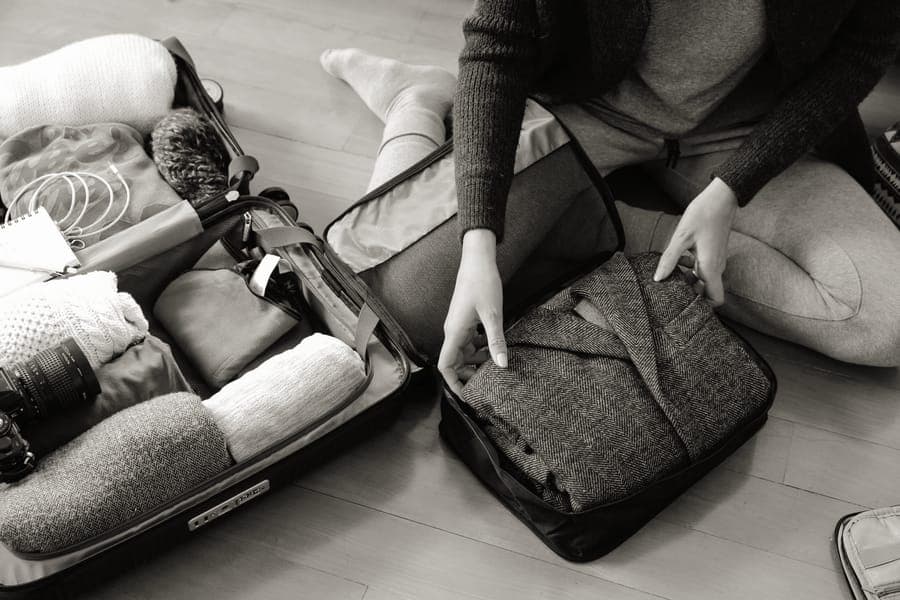 Eagle Creek Pack-It Reveal Cube Set Mesh-topped cubes that turn a suitcase into three findable rectangles. | Frequent travelers | |
| 3 | 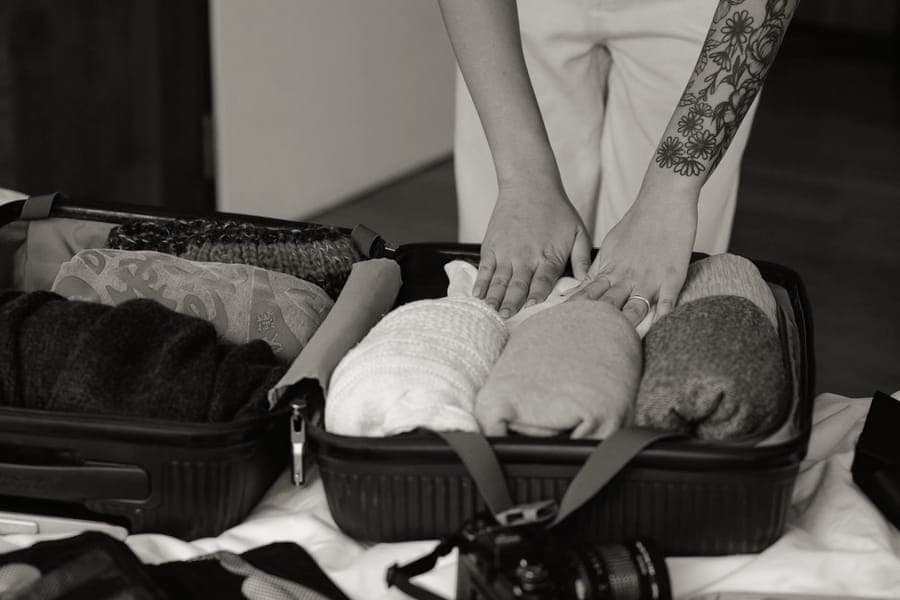 Eagle Creek Pack-It Compression Cube Set Cubes with a second zip that squeezes the air out after you have filled them. | Bulky soft layers and winter trips |
The cheap way to find out whether you are a cube person
Bagail 6-Set Packing Cubes
Cubes are a simple product and the budget versions are genuinely close to the premium ones in everyday use. If you have never used cubes and are not sure you will like them, spending a lot to find out is a poor bet. Buy these, use three of the six, and you will know within one trip whether the organization is worth the fabric.
The specs that decide it
- Contents: Six pieces - you will use two or three of them
- Visibility: Mesh tops, so you identify a cube without opening it
- Cost: A fraction of the premium sets for the same core function
- What they do: Organize and square the bag - they do not compress
Flaws but not dealbreakers
The zips are where budget cubes fail, and a cube with a broken zip is a bag with no closure. Thinner fabric also means a stuffed cube bulges more, which slightly undercuts the squaring benefit you bought them for.
The ones whose zips will still be working in five years
Eagle Creek Pack-It Reveal Cube Set
Once you know you use cubes on every trip, the thing worth paying for is the zip and the fabric weight - the cube itself is a solved problem. A focused set of two or three sizes in properly specified hardware is what gets used for years, where a cheap six-piece set tends to lose a zip and then a cube at a time.
The specs that decide it
- What they do: Organize and square the bag - they do not compress
- How many: Two or three sizes is what actually gets used
- Visibility: Mesh tops, so you identify a cube without opening it
- Why pay more: Zips and fabric weight, which is where cheap cubes fail
Flaws but not dealbreakers
Substantially more expensive than generic cubes doing the same job, and they still do not create space - a set given to somebody whose bag will not close solves nothing. They also add a little weight and bulk of their own.
The ones that get the air out of a week of sweaters
Eagle Creek Pack-It Compression Cube Set
This is the version that genuinely saves volume, on the one category where there is volume to save: knitwear, fleece and base layers are mostly trapped air. Fill loosely, close the main zip, then run the compression zip. The reason to buy a properly built set is that a compression zip works against tension on every single use, which is far harder service than a normal cube zip.
The specs that decide it
- What it does: Removes air from soft knits - the main winter volume problem
- Use it for: Sweaters, fleece, base layers, towels, socks
- Never use it for: Down insulation, shirts or tailored trousers
- Build: The reason to pay more - zips under tension are the failure point
Flaws but not dealbreakers
Compression saves volume and not one gram of weight, which is the limit that bites on a weighed international cabin allowance. Compressed knitwear also creases, and the compression zips are the component that fails first on cheaper sets.
Frequently asked questions
Do packing cubes actually save space?
Are packing cubes worth it for a carry-on?
Do packing cubes prevent wrinkles?
How many packing cubes do I need?
Should I buy compression cubes instead?
Can I wash packing cubes?
Read next
- Best packing cubes
- Packing cubes vs compression bags
- Best compression packing cubes
- How to pack a carry-on
- How to pack for a week in a carry-on in winter
- Best shoe bags for travel
More in Packing, or see every roundup and comparison on the site.