Packing cubes vs compression bags
They solve different problems, which is why arguing about which is better goes nowhere. Here is how to tell which problem you have.
By Michael W. · Last updated September 17, 2026
We earn a commission when you buy through our links, at no extra cost to you. It never changes what we pick or how we rank it. How we’re funded.
Packing cubes organize. Compression bags reduce volume. They are not competitors and the choice between them depends entirely on which problem you have. If your bag closes but you cannot find anything, you want cubes. If your bag will not close and the contents are bulky, you want compression.
The confusion exists because cubes are frequently marketed as space-savers, which they are not - a standard cube has no mechanism to reduce the volume of your clothes. It makes the bag pack squarer, recovering the gaps around a loose heap. That is a real benefit and a modest one, and it is not the same thing as compression.
Quick picks
The short list. Tap any row for the full write-up, including what each one is bad at.
| # | Product | Best for | Price |
|---|---|---|---|
| 1 | 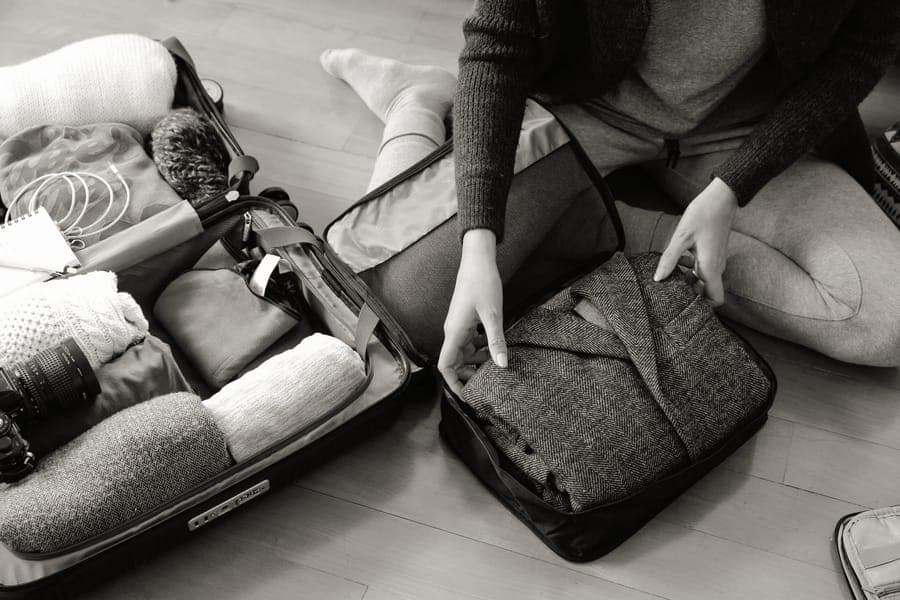 Eagle Creek Pack-It Reveal Cube Set Mesh-topped cubes that turn a suitcase into three findable rectangles. | Living out of the bag | |
| 2 |  Gonex Compression Packing Cubes A second zip that squeezes air out of fleeces and puffers. | Winter layers | |
| 3 |  Compression Bags for Travel (Roll-Up, No Vacuum Needed) The strongest compression available without a vacuum, and the worst creasing. | Desperate volume problems |
Buy cubes if you can close your bag but cannot find anything
Eagle Creek Pack-It Reveal Cube Set
The most common packing complaint is not capacity, it is that finding socks on day four means unpacking the bag. Cubes fix that completely, and a mesh top means you can identify the right one without opening any of them.
The specs that decide it
- Solves: Finding things, unpacking fast, keeping worn clothes separate
- Does not solve: A bag that will not close
- Space gain: Modest - from squaring the pack, not from compression
Flaws but not dealbreakers
Cubes add fabric and therefore weight to your bag for no capacity gain, and a half-empty cube is a soft lump that defeats the squaring benefit. Buy fewer and fill them properly.
Buy compression if your bag will not close and the contents are bulky
Gonex Compression Packing Cubes
This is the middle option and the sensible one for most people: a compression cube works as an ordinary cube when you do not use the second zip, so one purchase covers both jobs. Use the compression on sweaters and leave your shirts alone.
The specs that decide it
- Solves: Bulky lofty items taking too much room
- Does not solve: Too many t-shirts - they have no air to remove
- Bonus: Works as a standard cube when you skip the compression zip
Flaws but not dealbreakers
Compressed clothes crease, and the second zip is an extra failure point. Compression also makes the bag denser rather than lighter, which can push you over a weighed cabin allowance.
Buy these only if the bag genuinely will not close
Compression Bags for Travel (Roll-Up, No Vacuum Needed)
A last-resort tool, and a genuinely effective one. Rolling air out through a one-way valve removes more than any zip mechanism can. Keep one in the bag for the return leg, when you have acquired things and the packing that worked outbound no longer does.
The specs that decide it
- Solves: A bag that physically will not close
- Compression: Higher than any cube - this is the strongest non-vacuum option
- Usable anywhere: No vacuum cleaner required, so it works in a hotel room
Flaws but not dealbreakers
Severe creasing, worse than any cube. Plastic bags also puncture, and a punctured compression bag stops working entirely - there is no partial function.
Cubes vs compression, directly
| Packing cubes | Compression cubes | Compression bags | |
|---|---|---|---|
| Reduces volume | Barely | Yes, on lofty items | Yes, most of all |
| Organizes | Yes | Yes | No |
| Find things without unpacking | Yes, with mesh tops | Yes | No |
| Creases clothes | No | Somewhat | Badly |
| Works on t-shirts | Organizes them | No gain | Minimal gain |
| Works on a puffer jacket | Contains it | Large gain | Largest gain |
| Adds weight to the bag | A little | A little | Very little |
| Survives repeated use | Yes | Zip under tension | Punctures end them |
| Reusable mid-trip | Yes | Yes | Fiddly |
Which problem do you actually have?
Pack your bag the way you normally would, then answer one question: did it close?
- It closed, but finding things is a nightmare. You want cubes. This is the most common case by a wide margin.
- It did not close, and the bulk is sweaters and jackets. You want compression cubes. The air in those layers is exactly what compression removes.
- It did not close, and the bulk is shirts, jeans and shoes. Neither product will help - there is no air to remove and no gaps to recover. You are packing too much.
- It closed but it is over the weight limit. Neither helps at all. Compression makes a bag denser, not lighter. Take things out.
That last case is worth dwelling on, because it is the one people try to solve with gear. No packing product reduces weight. If the airline weighs your cabin bag at 7 kg, the only fixes are fewer items or a lighter bag.
Cubes vs rolling your clothes
These are not alternatives - cubes are containers, rolling is a technique, and you can roll clothes inside a cube. The question people are usually asking is whether rolling alone is enough, and often it is.
Rolling suits soft knits and t-shirts, packs tightly into odd gaps, and avoids hard crease lines. Folding suits structured items - shirts, trousers, anything tailored. The people who insist rolling is universally superior are generally not packing a blazer. Do both, matched to the garment.
What rolling does not do is keep categories separate or make unpacking fast, which is the main reason to add cubes on top of it.
Cubes vs no packing cubes: the skeptic's case
It is a fair position and worth taking seriously. Cubes add fabric and weight to your bag for a space gain that is real but small. If you pack light, stay in one place, and unpack into a wardrobe on arrival, cubes solve a problem you do not have.
Where the argument weakens is on multi-stop trips. If you are repacking every two days, the difference between three rectangles and a heap compounds fast - and the laundry cube alone justifies the purchase by about day four, because the alternative is worn clothes mixed in with clean ones.
Honest middle ground: buy one laundry cube and one medium cube. That covers most of the benefit at a fraction of the cost and weight of a six-piece set.
Compression bags vs vacuum bags
Vacuum bags compress harder because a vacuum cleaner removes more air than rolling does. They are also useless for half your trip, because the hotel room you are repacking in does not have a vacuum cleaner.
Roll-up valve bags are the only compression bags worth traveling with. Vacuum bags are a storage product that happens to be sold in the travel aisle. If you want the volume back on the outbound leg and have no plan for the return, you have bought half a solution.
The verdict
Most people should buy standard cubes - the problem is organization, not capacity, and best packing cubes covers which. Cold-weather travelers should buy compression cubes, which work as standard cubes the rest of the year: best compression packing cubes.
Keep one roll-up compression bag in the luggage as a return-leg contingency, and do not buy vacuum bags at all. And if the bag is over the weight limit rather than over-full, no product on this page will help - how to pack a carry-on has the version that does.
Frequently asked questions
Are packing cubes or compression bags better?
Do I need packing cubes at all?
Is rolling clothes better than packing cubes?
Do compression bags need a vacuum?
Will packing cubes help me fit more in my suitcase?
Read next
- Best packing cubes
- Best compression packing cubes
- How to pack a carry-on
- Best luggage for international travel
- Carry-on size by airline
More in Packing, or see every roundup and comparison on the site.