The best travel steamers
A travel steamer has one specification that matters more than wattage, tank size or price: whether it survives the outlet at the other end.
By Michael W. · Last updated October 24, 2026
We earn a commission when you buy through our links, at no extra cost to you. It never changes what we pick or how we rank it. How we’re funded.
Buy a dual-voltage travel steamer or do not buy one at all. The Nirrom 110-240V dual-voltage steamer is the pick here for exactly that reason: a 120V-only steamer plugged into a European outlet through a plug adapter is a burning smell and a dead appliance, and the majority of "travel" steamers sold are 120V only.
That is the whole trap in this category. Everything else - wattage, heat-up time, how big the tank is - is a secondary trade-off between how fast it works and how much room it takes in your bag. Voltage is binary. Get it wrong and the other specifications stop existing.
A plug adapter is not a voltage converter
The US runs at 120V, the UK, France, Italy and Australia at 230V, and Japan at 100V. A plug adapter only changes the shape of the pins - it passes the local voltage straight through. Feed 230V into a 120V-only steamer and you destroy it, usually on the first press of the trigger. A steamer's heating element draws far too much current for a travel converter to handle safely, so dual voltage in the appliance itself is the only workable answer.
The criteria, in order
1) Dual voltage, stated on the listing as a 110-240V or 100-240V range. 2) Tank size against pack size - a 300 ml tank is also a 300 ml object in your bag. 3) Heat-up time, because you are doing this fifteen minutes before leaving. 4) Does it have a heated plate, which is the difference between relaxing a wrinkle and pressing a collar. 5) Does it spit or leak when held at an angle, which is how you actually use a handheld.
Quick picks
The short list. Tap any row for the full write-up, including what each one is bad at.
| # | Product | Best for | Price |
|---|---|---|---|
| 1 | 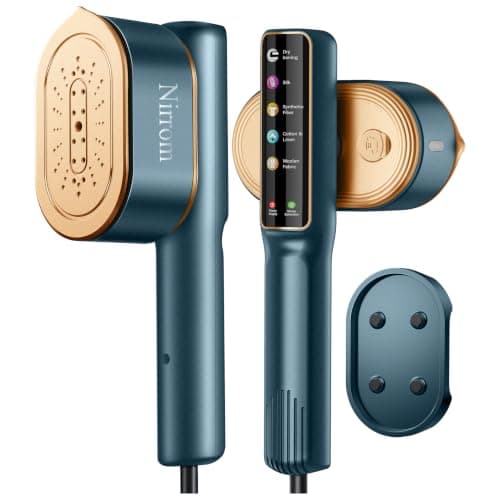 Nirrom Travel Steamer for Clothes, 110-240V Dual Voltage A 110-240V dual-voltage handheld rated 1200W, with a 140 ml tank, five fabric settings and a heated plate for pressing. | Anyone whose trips cross a voltage boundary | $30.59$35.9915% offView on Amazon #ad Price as of November 3, 2026. How we’re funded |
| 2 | 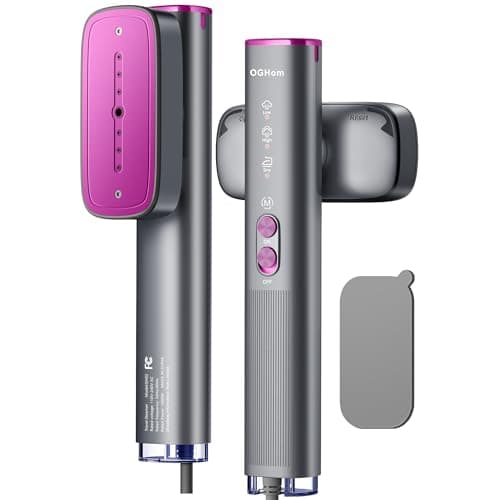 OGHom Travel Steamer and Iron 2 in 1, 110-240V Dual voltage at 1000W with a dry-plate mode plus two steam levels, so it works as a small iron as well as a steamer. | Shirts with collars and anything with a placket | $35.99$39.9910% offView on Amazon #ad Price as of November 3, 2026. How we’re funded |
| 3 | 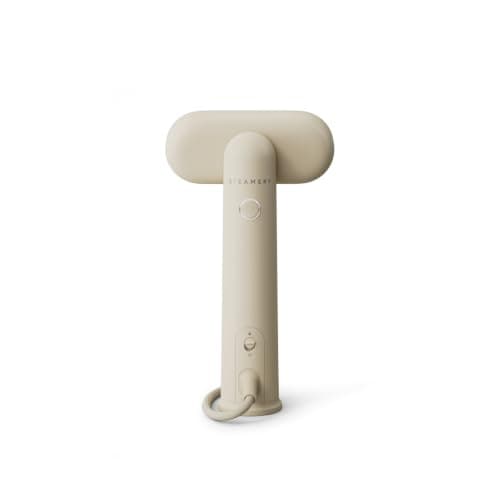 Steamery Travel Steamer Cirrus Lite 1200W with a stated 16 g/min steam output, an 18-second heat-up, a rotating head and dry-steam technology. | Buying once from a brand that will still exist | $140.00View on Amazon #ad Price as of November 3, 2026. How we’re funded |
| 4 | 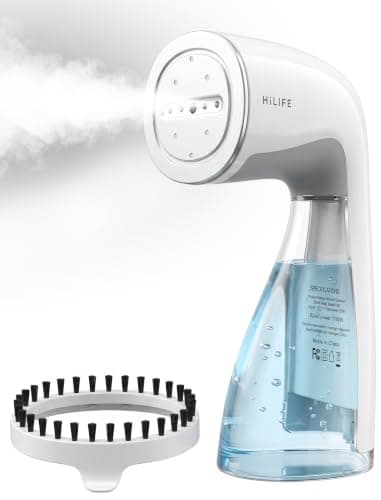 HiLIFE Steamer for Clothes, 1100W, 300 ml 1100W with a 300 ml tank, a 30-second heat-up and a leak-proof design, explicitly 120V only. | Road trips, long stays and family loads - in the US only | $28.99$33.9815% offView on Amazon #ad Price as of November 3, 2026. How we’re funded |
| 5 | 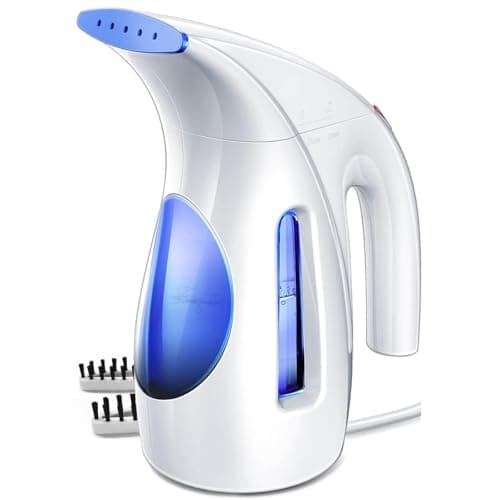 HiLIFE Portable Handheld Steamer, 700W, 240 ml The cheapest honest option here: 700W, a 240 ml tank and a fabric brush, 120V only. | Finding out whether you actually steam clothes | $24.99$36.9932% offView on Amazon #ad Price as of November 3, 2026. How we’re funded |
The one that works on both sides of the Atlantic
Nirrom Travel Steamer for Clothes, 110-240V Dual Voltage
This is the specification sheet a travel steamer is supposed to have. The listing states a 110-240V dual-voltage range, so the same unit works on US, UK, European and Australian mains with nothing but a plug adapter, and it is rated 1200W - the top of this group - with a stated 15-second heat-up. The 140 ml tank is small on purpose: it is roughly one shirt and a pair of trousers' worth of steam, which is the right trade for a bag you are carrying. It is a 2-in-1, meaning there is a heated plate you can press a collar or a placket against rather than only blowing steam at it.
The specs that decide it
- Voltage: 110-240V dual voltage - works abroad with a plug adapter
- Rated power: 1200W
- Tank: 140 ml
- Heat-up: 15 seconds, per the listing
- Plate: Yes - 2-in-1 steamer and iron
- Settings: 5 fabric settings
Flaws but not dealbreakers
A 140 ml tank is two or three refills if you are doing a whole suit, and at 1200W on a 120V circuit it can trip an older hotel bathroom outlet. Like almost everything in this category it is a marketplace brand rather than an appliance company, which means the warranty is whatever the seller says it is - keep the order confirmation, because that is your only recourse.
#ad Price as of November 3, 2026. How we’re funded
The one that can actually press, not just relax
OGHom Travel Steamer and Iron 2 in 1, 110-240V
Steam relaxes a wrinkle; it does not flatten a collar point or a shirt placket, which need contact and pressure. This one solves that with a genuine dry mode alongside two steam settings, so you can run it as a very small iron against a hotel towel on a desk. It is also dual voltage at 110-240V with a stated 30-second heat-up, so it travels on the same terms as the pick above. Buy it over the top pick if the clothes you are steaming are business shirts rather than dresses and knitwear.
The specs that decide it
- Voltage: 110-240V dual voltage
- Rated power: 1000W
- Heat-up: 30 seconds, per the listing
- Modes: Dry plate plus two steam levels
- Best at: Collars, plackets, trouser fronts
Flaws but not dealbreakers
1000W is the lowest wattage of the dual-voltage options here, and on heavy cotton that shows up as more passes for the same result. The dry-plate mode also needs a surface - a hotel room with no desk and a bed too soft to press against leaves you using it as an ordinary steamer, which is what the top pick does better.
#ad Price as of November 3, 2026. How we’re funded
The one from an actual appliance company
Steamery Travel Steamer Cirrus Lite
Everything else on this page is a marketplace listing. Steamery is a garment-care brand with a product line and a support channel, and the Cirrus Lite is its packable model: 1200W, a stated 16 grams per minute of steam - the only one here that publishes an output figure at all - and an 18-second heat-up. The rotating steam head is the detail you notice, because it lets you work a hanging garment from the side without twisting your wrist. Dry steam means less water deposited on the fabric, so a shirt is wearable immediately instead of damp.
The specs that decide it
- Rated power: 1200W
- Steam output: 16 g/min, per the listing - the only published figure here
- Heat-up: 18 seconds
- Head: Rotating
- Steam type: Dry steam - less water left in the fabric
Flaws but not dealbreakers
It costs several times what the dual-voltage picks above cost, and - the important part - the listing does not state a dual-voltage range. Treat it as a domestic steamer until the box in your hands says otherwise, and do not take it to Europe on an assumption. For a US-only traveler who wants one good one, it is the best object here; for an international traveler it is the wrong buy at any price.
#ad Price as of November 3, 2026. How we’re funded
The one for a whole wardrobe in one fill
HiLIFE Steamer for Clothes, 1100W, 300 ml
A 300 ml tank is more than twice what the top pick holds, which is the difference between steaming one outfit and steaming four without walking back to the bathroom tap. The listing claims a leak-proof design, which matters more on a handheld than the spec sheet suggests - these get held at every angle, and a steamer that spits hot water on a shirt has undone its own work. This is the one to pack for a driving trip or a two-week stay in one place, where volume beats grams.
The specs that decide it
- Voltage: 120V only - US and Canada, nowhere else
- Rated power: 1100W
- Tank: 300 ml - the largest here
- Heat-up: 30 seconds, per the listing
- Design note: Leak-proof, per the listing
Flaws but not dealbreakers
The listing says 120V only, in capitals, and it means it: this is a domestic steamer with travel marketing on it, and taking it abroad destroys it. The tank is also the reason it is here and the reason it is fourth - 300 ml of water plus the housing to hold it is the bulkiest option on this page, and a full tank in a bag is a leak risk whatever the design claims.
#ad Price as of November 3, 2026. How we’re funded
The one to buy if you are not sure you will use it
HiLIFE Portable Handheld Steamer, 700W, 240 ml
Plenty of people buy a travel steamer, use it twice and carry it for a year. At this price finding that out costs very little, and if you do use it every trip you have lost nothing by starting cheap. It comes with a brush attachment, which is genuinely useful on wool and anything that holds lint, and 240 ml is a sensible tank - more than the compact dual-voltage units, less bulk than the 300 ml model above.
The specs that decide it
- Voltage: 120V only - domestic use
- Rated power: 700W - the lowest here
- Tank: 240 ml
- Included: Fabric brush attachment
- Buy it as: A trial, not a final answer
Flaws but not dealbreakers
700W is slow, and slow on a travel steamer means a shirt takes four or five minutes instead of two, which is the whole reason people abandon them. It is also 120V only, so it is a domestic steamer you can throw in a car, not one you can take on a flight to Europe. If you already know you will use a steamer every trip, spend the extra and get dual voltage.
#ad Price as of November 3, 2026. How we’re funded
Voltage first, then everything else
| Steamer | Voltage | Power | Tank | Heat-up | Heated plate |
|---|---|---|---|---|---|
| Nirrom dual voltage | 110-240V | 1200W | 140 ml | 15 s | Yes |
| OGHom 2-in-1 | 110-240V | 1000W | Not stated | 30 s | Yes - dry mode |
| Steamery Cirrus Lite | Not stated - assume domestic | 1200W | Not stated | 18 s | No - rotating steam head |
| HiLIFE 1100W | 120V only | 1100W | 300 ml | 30 s | No |
| HiLIFE 700W | 120V only | 700W | 240 ml | Not stated | No |
What a steamer does, and what it cannot
Steam works by relaxing the hydrogen bonds in a fiber so the fabric's own weight pulls the wrinkle out. That tells you exactly where a steamer wins and where it is the wrong tool.
- It wins on hanging fabric with drape - dresses, knitwear, linen shirts, suit jackets, anything you would not want to put a hot plate on.
- It wins on volume. Four garments in five minutes with no board, no surface, no setup.
- It loses on creases. Steam cannot put a crease into trousers or flatten a collar point, because both need pressure as well as heat. That is the argument for a 2-in-1 with a plate.
- It loses on heavy cotton. A thick cotton oxford that has been compressed in a bag for twelve hours needs an iron, or needs to come out of the bag on a hanger much earlier.
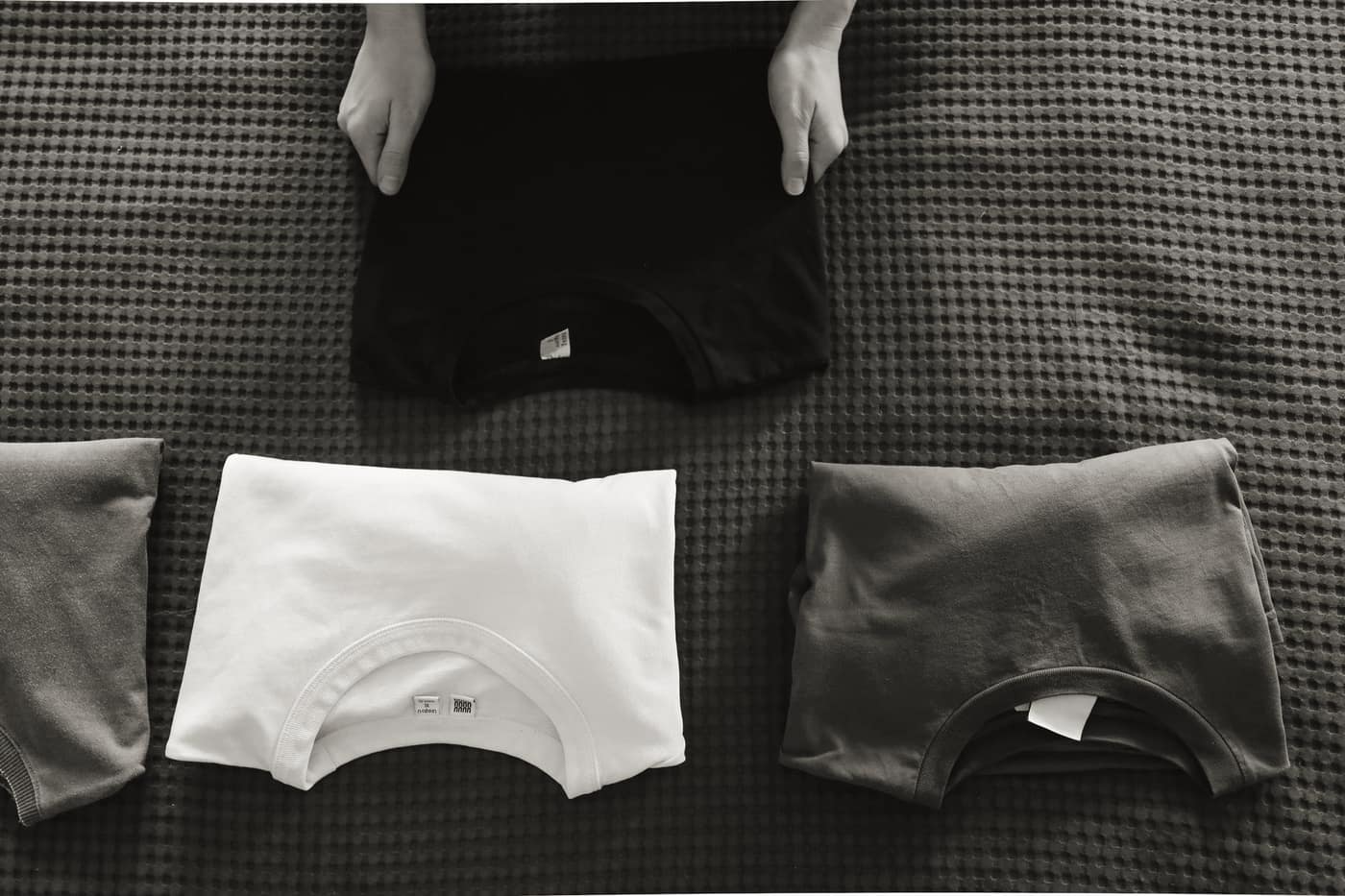
The honest conclusion is that a steamer is a packing tool, not an ironing replacement - and the better packing tool is the one that stops the wrinkle forming. How to pack a suitcase without wrinkles covers the folding and layering that does most of the work, and how to pack a suit in a carry-on covers the hardest case.
Voltage: the specification that decides everything
This is worth laboring because it is the single most common expensive mistake in this category, and the product listings do not help - "travel steamer" is a marketing phrase, not a voltage rating.
| Country | Voltage | Frequency | A 120V-only steamer here |
|---|---|---|---|
| United States | 120V | 60 Hz | Fine |
| United Kingdom | 230V | 50 Hz | Destroyed |
| France | 230V | 50 Hz | Destroyed |
| Italy | 230V | 50 Hz | Destroyed |
| Australia | 230V (often 240V in practice) | 50 Hz | Destroyed |
| Japan | 100V | 50/60 Hz by region | Works, but underpowered |
Two rules follow. First, look for a stated range - 110-240V or 100-240V - printed on the listing or the appliance body, not the words "dual voltage" in a title with no numbers. Second, do not try to solve it with a converter. Travel voltage converters are rated for tens of watts; a steamer's heating element draws a thousand or more, which is exactly the mismatch that overheats the converter rather than the steamer.
The adapter-versus-converter distinction trips up far more people than steamers alone - travel adapter vs voltage converter is the full version, and best travel adapters covers which plug adapters are worth carrying once your appliances are all dual voltage.
Tank size is pack size
The tank is the only part of a steamer that scales with how much you can do before refilling, and it is also the part that makes the thing bulky. Choose it against the trip, not against the spec sheet.
| Tank | Garments per fill | Packs like | Right for |
|---|---|---|---|
| ~140 ml | One to two | A large travel mug | Carry-on-only flights, one outfit at a time |
| ~240 ml | Two to three | A water bottle | A week in a hotel |
| ~300 ml | Three to four | A thermos | Road trips, family loads, long stays |
Refilling is a tap and thirty seconds, so a small tank is a far smaller penalty than the volume it saves. If you are packing carry-on only, the smallest dual-voltage unit is almost always the right answer - and the space you save is roughly a pair of shoes. Carry-on-only packing list is where a steamer competes for that space against everything else.
Empty the tank before you pack it
Two reasons. A sealed tank of water in a pressurized hold is a leak looking for a reason, and water in the tank at a security checkpoint turns an appliance question into a liquids question - anything you carry through has to fit the 3.4 ounce / 100 ml container limit. Pour it out, run the steamer dry for a second to clear the line, and let it cool before it goes in the bag. TSA liquid rules covers the limit itself.
How to get a shirt presentable in four minutes
- Hang the garment first and give it ten minutes. Half of a packing wrinkle falls out under the fabric's own weight. Doing this while the steamer heats costs nothing.
- Fill with the water you would drink. Hard tap water scales the element and eventually spits white deposits onto dark fabric. Bottled or filtered water if the local tap is hard.
- Work from the inside out and top down. Steam the inside of a shirt body, then the outside, then the sleeves, then the collar last. Gravity is doing the pulling, so always move downward.
- Pull the fabric taut with your free hand. This is the technique that separates a steamed shirt from a damp shirt. Unsupported fabric just absorbs steam.
- Hit collars and plackets with the plate, not the steam - if your unit has one. Press and hold for two seconds, do not drag.
- Leave it hanging for five minutes before wearing. It is slightly damp, and putting it on now reintroduces every crease you just removed.
Three things to try before buying one at all
A steamer is an object you carry on every trip to use on some of them. These cost nothing and solve most of the problem.
- The bathroom trick. Hang the garment in the bathroom, run the shower hot with the door shut, leave for fifteen minutes. It genuinely works on anything with drape, and it is free in every hotel room in the world.
- Ask at the front desk. A large share of hotels will lend an iron and board, or steam a shirt, and plenty keep a steamer behind the desk. Checking takes one phone call and saves a pound of luggage.
- Pack so it does not wrinkle. Rolling, folding along existing seams and putting a dress shirt in a garment folder removes the need entirely. Best garment bags for travel covers the folders, and best packing cubes covers keeping the folds you made.
Buy a steamer when you have tried those and still turn up creased - typically if you travel for work in shirts, or you pack dresses and linen, or you are going straight from an airport to something that matters.
What this has to do with the bag
Wrinkles are mostly a compression problem, and compression is mostly a bag-size problem: an overpacked carry-on crushes everything in it, and a steamer is you paying later for that. Sizing the bag to the trip is the upstream fix - how to choose luggage covers it, and durable luggage sets covers which pieces of a set you will actually use.
Frequently asked questions
Can you use a travel steamer in Europe?
Can you take a clothes steamer on a plane?
Is a travel steamer better than an iron?
How big a tank does a travel steamer need?
Will a travel steamer leak in my suitcase?
Sources
Read next
- How to pack a suitcase without wrinkles
- How to pack a suit in a carry-on
- Best garment bags for travel
- Travel adapter vs voltage converter
- Best travel adapters
- TSA liquid rules
- Carry-on-only packing list
- Durable luggage sets
More in Packing, or see every roundup and comparison on the site.