How to pack a suit in a carry-on
One controlled fold beats four accidental ones. The method, where in the bag it goes, and the ten minutes on arrival that finish the job.
By Michael W. · Last updated October 3, 2026

We earn a commission when you buy through our links, at no extra cost to you. It never changes what we pick or how we rank it. How we’re funded.
Turn one shoulder of the jacket inside out, tuck the other shoulder into it, fold the jacket once lengthwise and once across the middle, and lay it flat on top of everything else in the bag. That is the whole method. The inversion protects the outer face of the fabric, the single crossways fold puts the crease where a belt would sit, and packing it last means it comes out first.
Suits crease when fabric is compressed against itself in an uncontrolled way. You cannot avoid folding a jacket into a carry-on, so the goal is not zero folds - it is one fold you chose, in a place that hangs out, instead of four the suitcase chose for you.
Fabric decides how forgiving this is
Wool with some weave texture recovers from a flight almost completely. Flat worsted, linen and anything with a high synthetic content hold a crease much longer. If you have a choice of suit for the trip, that is the choice that matters most.
What decides whether this works
Four variables, in order of how much difference each one makes:
- The fabric. A wool with visible weave texture recovers from a folded flight almost entirely. Flat worsted shows every crease, linen shows them permanently, and high-synthetic blends hold them longest of all. This matters more than every technique on this page combined.
- Flatness underneath. A suit laid over an uneven surface takes the shape of whatever is under it. The whole bag has to be packed level before the suit goes in, which is the real argument for packing cubes - they square the bag off.
- Time in the bag. A suit folded for three hours is fine. The same fold over fourteen hours and a night in a closed case needs steam. Unpack on arrival, not in the morning.
- How tightly the bag is packed. Compression is the enemy here. A suit in a bag that has been squeezed shut has been pressed, which is a different and much more stubborn kind of crease.
Garment folder, convertible bag, or neither
There are three approaches and they rank clearly.
| Approach | Result | Costs you |
|---|---|---|
| Full-length garment bag carried flat | Best - no crossways fold at all | A second bag, and it is awkward in a bin |
| Convertible garment bag | One fold across the middle, in a controlled place | Nothing - it is your carry-on |
| Garment folder inside an ordinary carry-on | One controlled fold, over a stiffened board | A little bag space |
| The fold above, with no accessory | Works, with more variation by fabric | Nothing |
For most business travelers the convertible garment bag or the garment folder is the right answer, and which one depends on whether you want the suit to be the bag's main job. Best garment bags for travel covers the full category, and best carry-on luggage for business travel covers the bag it goes in.
Shirts, shoes and the rest of the outfit
- Shirts go in a garment folder or flat under the suit, never rolled. Rolling is right for t-shirts and wrong for anything with a collar and a placket - a rolled dress shirt arrives with a diagonal crease across the front.
- Button the top button and one in the middle before folding a shirt. It holds the placket straight, which is the part that shows.
- Dress shoes go in shoe bags at the bottom of the case, soles outward. They are the heaviest and dirtiest item and they must not sit on the suit - best shoe bags for travel covers the options.
- Roll the tie and put it inside a shoe, or in a jacket pocket once the jacket is hanging. A folded tie creases across the blade and there is no recovering it before a meeting.
- Belt coiled around the inside edge of the case, which uses space you were not using anyway and keeps it from kinking.
The ten minutes on arrival that matter most
Hang the suit the moment you reach the room, before you do anything else. Most of what a flight does to a suit comes out on its own within an hour on a hanger, and almost none of it comes out if the suit stays folded until the morning.
If creases remain, hang it in the bathroom and run the shower hot with the door closed for ten minutes. Steam relaxes wool fibres and the suit will be noticeably better by the time you are dressed. Do not use a hotel iron directly on suiting - the shine it leaves on wool is permanent and far more visible than the crease you were fixing.
A wide wooden or shaped hanger is worth carrying if you travel with a suit often, because a hotel's thin wire hanger puts a point into each shoulder. It weighs very little and it is the difference between a suit that recovers and one that develops a new problem overnight.
If the trip runs longer than the shirts you packed, a sink wash is faster than a hotel laundry and the detergent is solid, so it costs you nothing in the quart bag - see best travel laundry kit and how to pack a carry-on for a week.
What to pack it in
None of this needs equipment, but three things make it repeatable rather than a careful one-off:
Quick picks
The short list. Tap any row for the full write-up, including what each one is bad at.
| # | Product | Best for | Price |
|---|---|---|---|
| 1 |  Eagle Creek Pack-It Garment Folder A stiffened board you fold shirts and a jacket over, so the fold is deliberate. | Keeping the crease in one controlled place | |
| 2 |  Modoker Convertible Garment Bag Hangs flat for the suit, folds to carry-on shape, with room for the rest of the trip. | Business trips with one bag | |
| 3 | 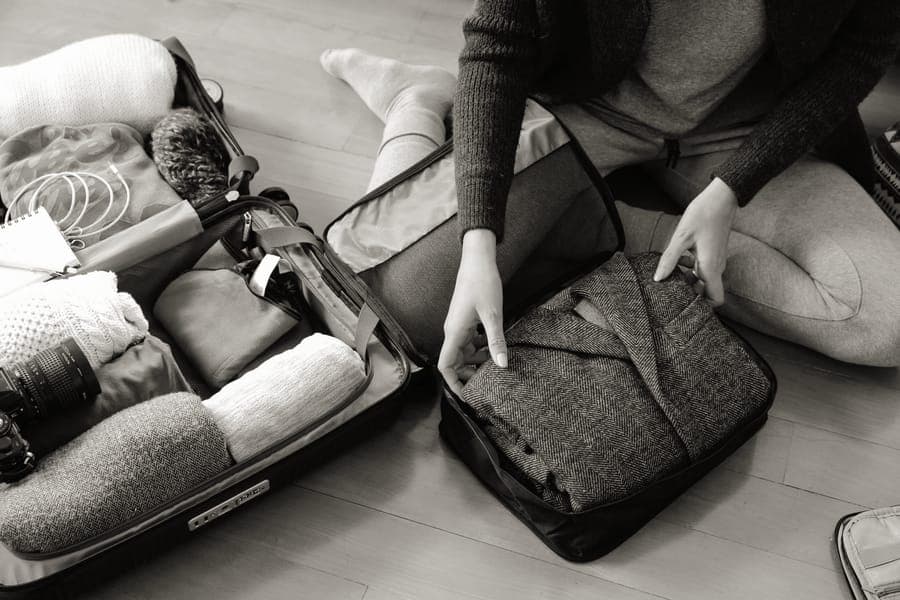 Eagle Creek Pack-It Reveal Cube Set Mesh-topped cubes that turn loose clothes into flat, even rectangles. | Squaring off the bag before the suit goes in |
The board that makes the fold the same every time
Eagle Creek Pack-It Garment Folder
The variable in hand-folding is you - the fold is slightly different each trip and so is the result. A folder puts a stiffened board at the fold line, so the crease is in the same controlled place every time and the stack stays flat under whatever happens to the bag. It also holds several shirts in the same unit.
The specs that decide it
- What it does: Puts the fold over a board rather than over itself
- Capacity: Several shirts plus a jacket, as one flat unit
- Where it goes: Top of the case, flat, nothing on top of it
Flaws but not dealbreakers
It is another item taking space in a carry-on, and it only helps if the rest of the bag is packed flat underneath it. Over-filling the folder defeats the point entirely - the stack has to stay flat to work.
The one that hangs for the suit and folds into a carry-on for the flight
Modoker Convertible Garment Bag
A traditional garment bag is a garment bag and nothing else, so you carry a second bag for everything that is not a suit. A convertible design folds into a carry-on shape with room for shirts, shoes and a washbag, which is the difference between one bag and two when you walk straight from the airport to an office.
The specs that decide it
- Converts: Hangs flat for the suit, folds to carry-on shape for the flight
- Capacity: Suit plus shirts, shoes and a washbag
- Check: Confirm the folded dimensions against your airline's carry-on limit
Flaws but not dealbreakers
Folded to carry-on size it still puts a fold across the middle of the suit - exactly the crease a garment bag exists to avoid. A longer garment bag carried flat gives a better result if you can manage the second bag.
The thing that makes the layer under the suit level
Eagle Creek Pack-It Reveal Cube Set
A suit takes the shape of whatever is underneath it, and loose clothing in a case is a landscape of ridges. Cubes square everything below into flat rectangles, which gives the suit a level surface to lie on. This is the least obvious item on the page and the one that makes the biggest difference to the result.
The specs that decide it
- What they do: Organize and square the bag - they do not compress
- How many: Two or three sizes is what actually gets used
- Why here: A level base is what stops the suit taking a ridge
Flaws but not dealbreakers
Cubes organize rather than create space, so a set given to somebody whose bag will not close solves nothing. They also add a little weight and a little bulk of their own - see best packing cubes for the honest version.
Frequently asked questions
How do you pack a suit in a carry-on without wrinkling it?
Should you fold or roll a suit jacket?
Do you need a garment bag to travel with a suit?
How do you get creases out of a suit in a hotel?
Where should the suit go in the suitcase?
Read next
- Best carry-on luggage for business travel
- Best garment bags for travel
- Best packing cubes
- Best shoe bags for travel
- How to pack a carry-on
- Best travel organizers
More in Packing, or see every roundup and comparison on the site.