The best travel pillows for side sleepers
A U-shape cushions the back of your neck, which is not where a side sleeper's head goes. These hold it instead.
By Michael W. · Last updated October 3, 2026
We earn a commission when you buy through our links, at no extra cost to you. It never changes what we pick or how we rank it. How we’re funded.
If your head falls sideways on a plane, the Trtl travel pillow is the pick - it is a support brace rather than a cushion, and it holds the head up instead of padding the gap behind it. The Cabeau Evolution S3 is the better choice if you want something that works in several positions, and the Ostrichpillow Go is the one for people who want dense support without a scarf around the neck.
The reason the drawer at home is full of unused U-shaped pillows is a shape problem, not a quality problem. A U-shape fills the space behind your neck, so it supports a head that falls backwards. A side sleeper's head falls sideways, towards a shoulder, and the open arms of a U are exactly where that happens. More foam does not fix it; a different geometry does.
Work out which way your head actually falls
Most people have not checked. On your next flight, notice where you wake up: chin on chest means forward, head on the window means sideways, head rolled back with your mouth open means backwards. Only the sideways case needs this page.
Quick picks
The short list. Tap any row for the full write-up, including what each one is bad at.
| # | Product | Best for | Price |
|---|---|---|---|
| 1 | 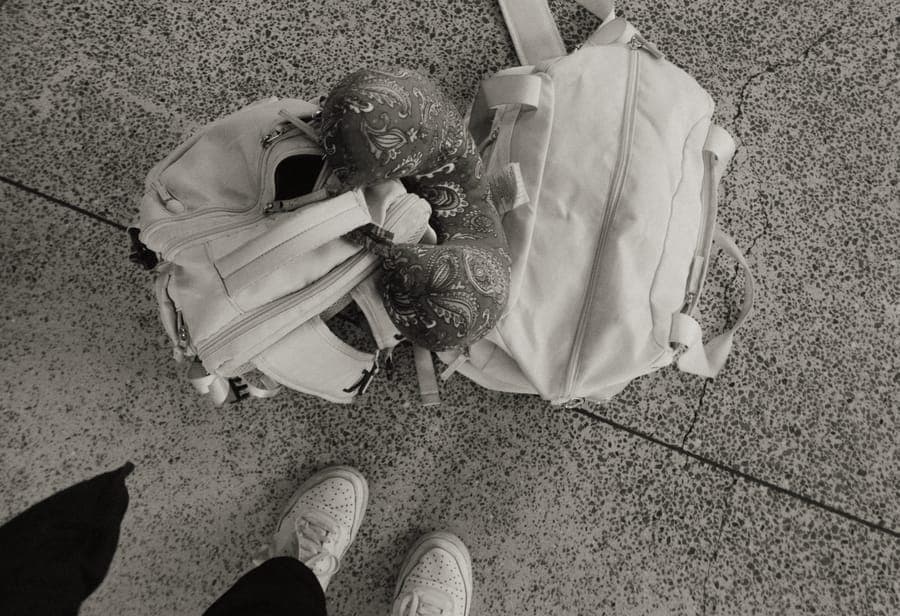 Trtl Travel Pillow A support brace wrapped in fleece - it stops the head dropping sideways. | Heads that fall to one side | |
| 2 |  Cabeau Evolution S3 Travel Pillow Dense memory foam with raised sides, and it compresses into its own case. | People who sleep differently on different flights | |
| 3 |  Ostrichpillow Go Travel Pillow Firm memory foam with a closed front, so the head cannot roll out of it. | Side leaners who dislike the Trtl | |
| 4 |  Inflatable Travel Neck Pillow Packs to nothing, and firmness is adjustable because you set the pressure. | Carry-on-only and personal-item-only trips |
The one that holds the head rather than cushioning behind it
Trtl Travel Pillow
This is the pillow that solves the side sleeper's actual problem, because it is not a pillow. A rigid internal support sits against the side of the neck and takes the weight of the head, with the fleece wrap holding it in place and hiding what it is. You choose which side it supports, which matters on an aisle seat where there is no window to lean on.
The specs that decide it
- What it is: A support brace, not a cushion - that is the whole point
- Side: You choose which side it holds, so it works in an aisle seat
- Packing: Wraps flat around a bag strap rather than clipping on as a lump
- Not for: People whose head falls forward onto the chest
Flaws but not dealbreakers
Warm around the neck in a hot cabin, and it takes a flight or two to get used to the sensation of something firm against your throat. It is also visibly a scarf, which some people dislike more than they expect.
The one that works whichever way your head goes tonight
Cabeau Evolution S3 Travel Pillow
Not everyone falls the same way every flight, and a brace that only supports one direction is frustrating when tonight is a forward night. Dense memory foam with high, firm side walls is the compromise: it supports sideways lean far better than a soft U-shape while still doing the conventional job behind the neck. It also packs down, which the Trtl does differently and the Ostrichpillow does not.
The specs that decide it
- Shape: U-shape with raised, firm side walls - the sides do the work
- Fill: Dense memory foam rather than soft fill
- Packing: Compresses into a carry case
- Seat fit: Flat back, so it does not push your head forward against the headrest
Flaws but not dealbreakers
Still a U-shape, so for a hard sideways sleeper it is a better U rather than a solution. It is also bulky even compressed, and a dense foam pillow is noticeably warm on a long flight.
The one for people who want structure without a wrap around the throat
Ostrichpillow Go Travel Pillow
A closed-front design stops the head rotating out sideways, which is the failure mode of an open U. The foam is firm enough to resist rather than compress, which is the difference between a pillow that holds for twenty minutes and one that holds for six hours. Choose this over the Trtl if you want support without anything against the front of your neck.
The specs that decide it
- Shape: Closed front - the head cannot roll out of the opening
- Fill: Firm memory foam that resists rather than compresses
- Adjustment: Fastens at the front, so the fit is yours rather than generic
- Best seat: Works in a middle seat where there is nothing to lean on
Flaws but not dealbreakers
Bulky and it does not compress meaningfully, so it travels clipped to the outside of a bag where it catches on things. A closed front is also warm, and some people find anything fastened at the throat claustrophobic on a long flight.
The one that takes up no space until you need it
Inflatable Travel Neck Pillow
If you are flying with a personal item only, a foam pillow is a third of the bag. An inflatable packs to the size of a phone, and the underrated advantage for a side sleeper is that you control the firmness - inflate it hard and it resists sideways lean far better than any soft foam. Deflate slightly on a short hop and it is a conventional cushion again.
The specs that decide it
- Packed size: Pocket-sized - the only pick here that costs you no bag space
- Firmness: Adjustable - inflate hard to resist a sideways head
- Cost: The cheapest category of travel pillow by a distance
- Hygiene: Wipes clean, unlike foam with a fabric cover
Flaws but not dealbreakers
Inflatables are less comfortable than foam against the skin, they can be noisy as the plastic flexes, and a slow leak turns a six-hour flight into repeated re-inflating. Build quality in this category varies enormously.
How they compare for a sideways head
| Pillow | How it holds the head | Packs down? | Warm? |
|---|---|---|---|
| Trtl | Rigid brace against one side of the neck | Wraps flat | Yes, around the throat |
| Cabeau Evolution S3 | High firm side walls on a U | Into a case | Yes - dense foam |
| Ostrichpillow Go | Closed front stops rotation | No | Yes |
| Inflatable | Firmness you set yourself | To pocket size | No |
Why U-shaped pillows fail side sleepers
A U-shaped pillow is a gap filler. It occupies the space between the back of your head and the headrest, which stops the head tipping backwards and keeps the airway open. For somebody who sleeps upright with their head back, it works exactly as intended.
A side sleeper's head does not go backwards. It rotates and falls towards a shoulder, and the open arms of the U are precisely the direction it falls in. Worse, a soft U compresses under the weight of a head almost immediately, so even the small amount of side support it offers disappears within a minute of falling asleep. That is the jolt that wakes you - not the aircraft, your own neck.
Two things fix it. Structure, so the support resists instead of compressing, and a closed or braced side, so the head has nowhere to rotate to. Every pick above does at least one of those. A softer, larger U-shape does neither, which is why buying a more expensive version of the same shape does not help.
The window-seat exception
A window gives a side sleeper a wall to lean on, and a wall beats every pillow on this page. If you reliably get a window seat, the honest advice is that you may not need a dedicated side-sleeper pillow at all - a soft U-shape plus the window does the job, and an inflatable wedged between your head and the fuselage does it for very little money.
The reason to buy one of these anyway is the flights where you do not get the window. A middle seat has nothing to lean on in either direction, and an aisle seat has a cabin to fall into. Both are where a braced or closed-front design earns its place, and both are where a U-shape fails hardest.
Whichever seat you end up in, the pillow has to live somewhere for the rest of the trip. A model that does not compress travels clipped to the outside of a bag, which is worth thinking about on a carry-on-only trip - best carry-on luggage and best travel organizers both cover where the soft bulk ends up.
Fit matters more than fill
- Neck length decides more than anything. A short neck in a tall pillow pushes the head forward; a long neck in a short pillow gets no support at all. Check whether the model is sold in sizes - several are.
- Flat-backed designs matter in modern cabins. A thick pillow behind the head pushes it forward off the headrest, which creates a new problem while solving the old one.
- Firm beats soft, every time, for this job. Softness feels better in a shop and fails within sixty seconds of real use.
- Think about where it lives when you are awake. A pillow that does not compress is a pillow clipped to the outside of your bag for the whole trip - see best personal item bags if space is already tight.
- An eye mask and earplugs do more than most pillow upgrades. Light and noise wake people more often than neck position - long-haul flight essentials covers the whole kit.
How we chose these
Every pillow here already appears on best travel pillows and was re-ranked against a single question: does the design resist a head rotating sideways, by structure or by geometry? Anything that works only by being a thicker U-shape was excluded, because thickness is not the variable that fails.
We do not run a sleep lab and we make no clinical claims - a travel pillow is a comfort product, not a medical device, and if you have a neck condition this page is not the right source. Our methodology sets out exactly what our recommendations rest on.
Frequently asked questions
What is the best travel pillow for side sleepers?
Why does my head still fall sideways with a neck pillow?
Are memory foam travel pillows better than inflatable ones?
Do I need a travel pillow if I always get a window seat?
Will a travel pillow help if my chin drops onto my chest?
Read next
- Best travel pillows
- Long-haul flight essentials
- Best compression socks for wide calves
- Best personal item bags
- Carry-on only packing list
More in Travel Essentials, or see every roundup and comparison on the site.