How many liters is a carry-on?
Around 45 liters, in theory. Airlines do not measure volume at all, which is why the number is useful for shopping and useless at a gate.
By Michael W. · Last updated October 5, 2026
We earn a commission when you buy through our links, at no extra cost to you. It never changes what we pick or how we rank it. How we’re funded.
A standard 22 x 14 x 9 inch carry-on encloses about 45 liters of outside volume, and a backpack sold as carry-on size is typically 35 to 45 liters. Multiply the three inch dimensions and divide by 61.02 and you get 45.4 liters - which is the arithmetic behind every number quoted in this category.
That figure is worth knowing and worth distrusting in equal measure. No airline publishes a volume limit; they publish dimensions, and sometimes weight. A 45-liter backpack can be perfectly legal or obviously oversized depending entirely on how you packed it, because a frameless bag changes shape as it fills. Volume is a shopping measure, not a compliance measure.
Where liters genuinely help is capacity planning: how many days of clothes a bag holds. That is a real question with a reasonably stable answer, and it is the second half of this page.
Common carry-on sizes, converted
| Bag | Dimensions | Enclosed volume | What it holds |
|---|---|---|---|
| US standard carry-on | 22 x 14 x 9 in | ~45 L | Five to seven days packed well |
| Smaller hardside carry-on | 20 x 14 x 9 in | ~41 L | Three to five days |
| Southwest / Frontier maximum | 24 x 16 x 10 in | ~63 L | A week or more |
| Common international limit | 55 x 40 x 23 cm | ~51 L | Five to seven days, if under the weight limit |
| Personal item (18 x 14 x 8) | 18 x 14 x 8 in | ~33 L | Two to three days, or a full day bag |
The conversion, and how to do it yourself
One liter is 61.02 cubic inches. To convert a bag's dimensions to liters, multiply the three figures in inches and divide by 61.02. For 22 x 14 x 9: 2,772 cubic inches divided by 61.02 is 45.4 liters.
In centimeters it is easier still - multiply the three figures and divide by 1,000. A 55 x 40 x 23 cm bag encloses 50,600 cubic centimeters, which is 50.6 liters.
Enclosed volume is not usable volume
That arithmetic gives the volume of the box the bag occupies. The interior is always smaller: shell thickness, wheel wells, handle tubes and lining eat into it. A wheeled carry-on typically offers meaningfully less usable space than a frameless bag of the same external size.
Why airlines do not use liters
Because a sizer is a physical frame, and volume cannot be checked by putting a bag into a frame. Dimensions can. An agent can look at a bag, or push it into a metal box, and get an answer in two seconds - and the answer is about shape, not about capacity.
This is why a 40-liter backpack is a genuinely ambiguous object. Packed to the carry-on envelope it clears the rule; packed until the side panels bow it does not, even though the stated capacity never changed. Hardside cases do not have this problem, which is their one real advantage in rule terms - they are always exactly the size they are. Cabin baggage size covers how the measurement is actually taken.
Liters to days: what each size actually holds
This is where the number earns its keep. For temperate-weather clothing, packed with cubes and without heavy outerwear:
- 20 to 25 liters - a long weekend, or a day bag and one change of clothes. Also the practical size of a personal item on carriers with tight under-seat rules.
- 30 to 35 liters - three to four days comfortably, a week if you are disciplined and the weather is warm.
- 40 liters - a week with one laundry stop. The most useful single size for carry-on-only travel.
- 45 liters and up - two weeks, or a week in winter, but increasingly hard to keep inside a carry-on envelope once it is full.
Winter roughly halves these figures, because a puffer and boots consume volume that no technique recovers. What size luggage do I need works through the same question for wheeled bags, and how to pack for a week in a carry-on in winter is the cold-weather version.
The limit you hit first is often weight, not volume
On most international and low-cost carriers the cabin allowance is 7 to 10 kg. Compression cubes make a load denser rather than lighter, so a disciplined packer with good cubes can arrive at the gate with a bag that looks modest and weighs too much.
If you fly carriers that weigh, plan in kilograms as well as liters. Weigh the packed bag at home with a luggage scale and know the number before the gate agent does.
Quick picks
The short list. Tap any row for the full write-up, including what each one is bad at.
| # | Product | Best for | Price |
|---|---|---|---|
| 1 | 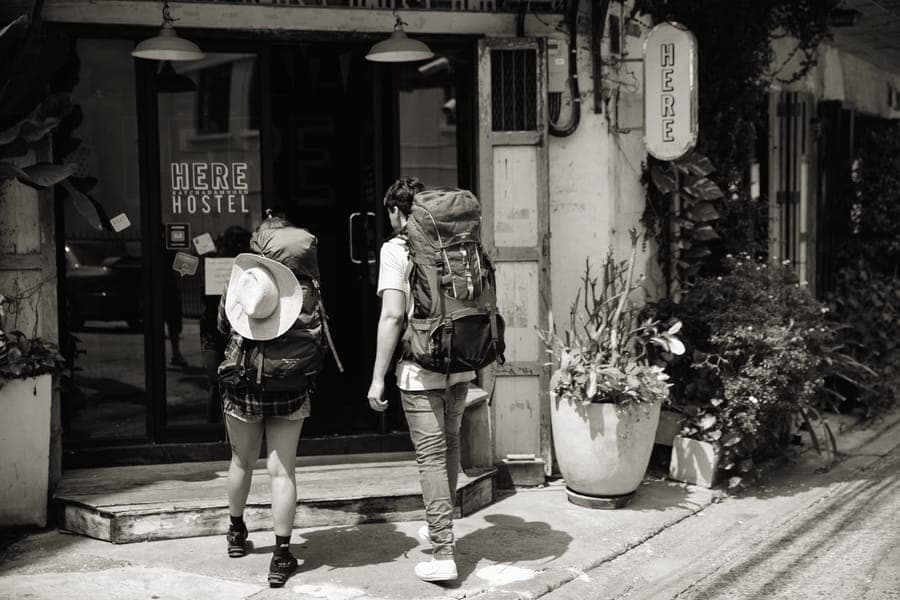 Osprey Farpoint 40 Travel Pack The reference point for carry-on-sized packs, and light with it. | A week with one laundry stop | |
| 2 | 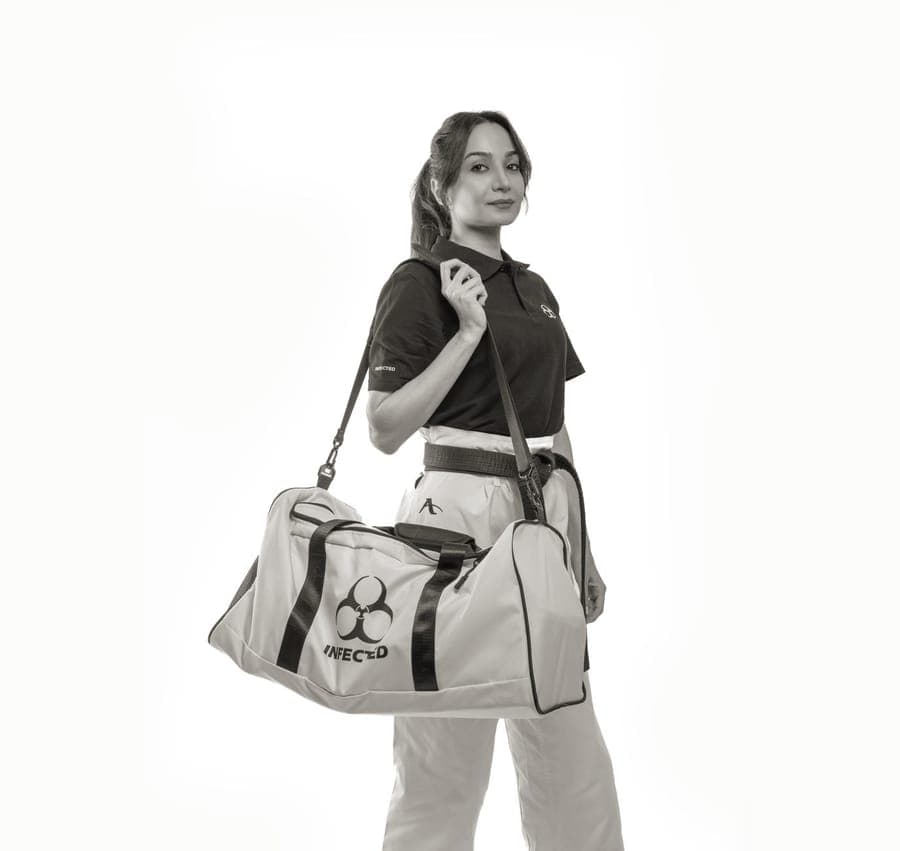 Patagonia Black Hole Duffel 40L A frameless 40 liters, which is why it compresses into a sizer. | Weekends and gear | |
| 3 | 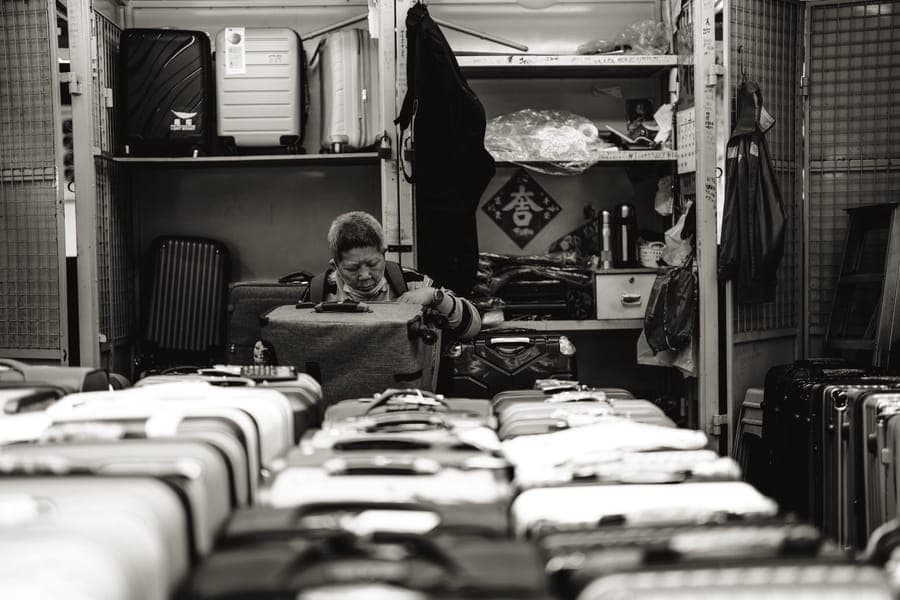 Travelpro Maxlite 5 Carry-On Spinner A standard carry-on footprint, with the wheel and handle penalty built in. | Airports and smooth floors |
What 40 liters looks like as a backpack
Osprey Farpoint 40 Travel Pack
Anyone trying to picture what 40 liters means in practice. Packed sensibly it is a week of clothes with one laundry stop, and it sits inside the carry-on envelope - provided you packed it to that size rather than stuffing it until the panels bulge.
The specs that decide it
- Capacity: 40 liters - a week or more with one laundry stop
- Weight: Light, which matters on a 7-10 kg cabin limit
- Harness: Stows away for check-in
Flaws but not dealbreakers
You carry it, which over a long flat terminal is genuinely tiring, and it is the wrong choice if you have back or shoulder problems - a wheeled bag puts that weight on the floor instead.
The same 40 liters with no shape of its own
Patagonia Black Hole Duffel 40L
The clearest illustration of why volume is not legality: the same stated capacity as the pack above, in a bag that can be squeezed into a smaller envelope or overpacked into a larger one. Volume is what it holds; dimensions are what the airline measures.
The specs that decide it
- Structure: Frameless - conforms to the space available
- Fabric: Coated and weather-resistant
- Capacity: 40 liters - a weekend with room for what you bring home
Flaws but not dealbreakers
A duffel with no internal structure is a sack. Everything settles to the bottom, finding one item means unpacking several, and there is no laptop protection at all unless you add a sleeve.
What the 45-liter envelope looks like with wheels in it
Travelpro Maxlite 5 Carry-On Spinner
Anyone comparing a wheeled case with a pack on capacity. A wheeled bag at the same external size holds less than a duffel, because wheels and handle housing occupy volume inside the envelope - the trade you make for not carrying the weight.
The specs that decide it
- Weight: Among the lightest wheeled carry-ons - matters on a 7 kg limit
- Footprint: Standard carry-on, which is what European train racks accept
- Construction: Softside, so it compresses at a strict gate
Flaws but not dealbreakers
Four-wheel spinners are the wrong configuration for cobbles - on rough stone you will drag it on two wheels, putting sideways load on housings not built for it. Lighter construction also wears faster than a heavier bag from the same brand.
Frequently asked questions
How many liters is a carry-on bag?
Is a 40L backpack carry-on size?
How many liters is a 22-inch suitcase?
Do airlines have a liter limit for carry-ons?
How many liters do I need for a week?
How do I convert bag dimensions to liters?
Sources
Read next
- What size luggage do I need?
- Carry-on size by airline
- Cabin baggage size
- Best travel backpacks
- Best carry-on luggage
- How to pack a carry-on
More in Airline Rules, or see every roundup and comparison on the site.