Best anti-theft travel wallets and money belts
An anti-theft wallet is not a tougher wallet. It is a wallet in a place a stranger's hand does not go. Here is what that costs, and what it costs you in convenience.
By Michael W. · Last updated November 14, 2026
We earn a commission when you buy through our links, at no extra cost to you. It never changes what we pick or how we rank it. How we’re funded.
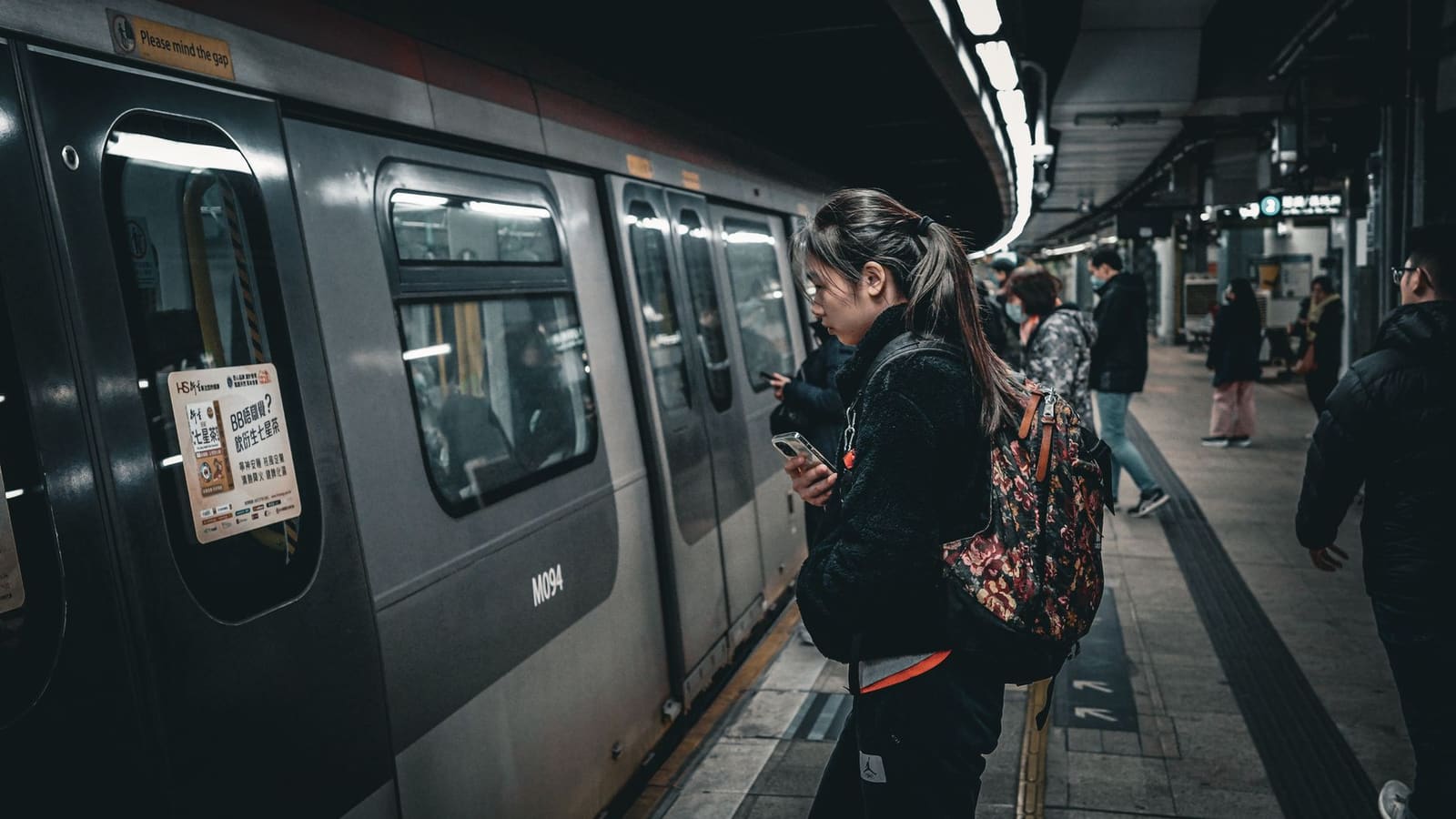
There is a useful distinction hiding behind the words "anti-theft wallet", and almost every listing blurs it. One kind of product is a normal wallet made harder to get into - RFID-lined, zipped, maybe on a chain. The other is a pouch designed to be invisible, worn under your clothes, that you are not supposed to open in public at all. Only the second one defeats the theft that actually happens to travelers, which is not a mugging. It is a hand in your outside pocket on a packed train while you are looking at your phone.
So this page ranks by carry position rather than by features, because position is the whole product. A pouch at your waist under a shirt, a pouch on a cord inside your collar, a wallet hanging inside your pants from a belt loop, a flat pocket worn against your chest - those are four genuinely different trade-offs between how hidden the thing is and how often you can reasonably get at it. Every pick below is a concealed carry; the drawback on each one is about access, because that is where they all hurt.
The criteria, in order
1) Where does it sit, and can a hand reach it without you noticing? 2) Can you get at it without undressing in public - and if not, does the design accept that and make you carry a separate day wallet? 3) Is the fabric against your skin for ten hours tolerable, or will it be wet by noon? 4) Does it hold a passport flat, or only cards and folded cash? 5) RFID blocking last, because it is cheap, universal, and solves a far rarer problem than the one you bought it for.
The decoy-wallet rule
A concealed pouch only works if you never open it in public. That means carrying a second, ordinary wallet with one card and a day's cash in it - the thing you reach for at a counter, and the thing somebody gets if they get anything. Every pick on this page assumes you are doing that. If you are going to pull a money belt out of your waistband at a market stall, you have bought a slow wallet and nothing else.
Quick picks
The short list. Tap any row for the full write-up, including what each one is bad at.
| # | Product | Best for | Price |
|---|---|---|---|
| 1 | 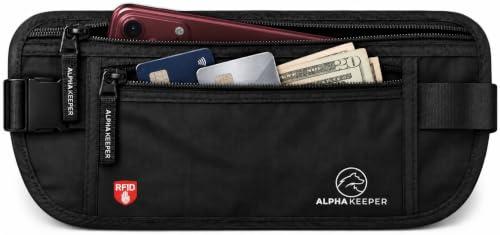 Alpha Keeper Hidden Money Belt for Travel A 210D ripstop nylon waist pouch with 360-degree RFID blocking that holds a passport and a phone flat under a shirt. | Transit days, border crossings and cruise ports | $18.95$24.9524% offView on Amazon #ad Price as of November 26, 2026. How we’re funded |
| 2 | 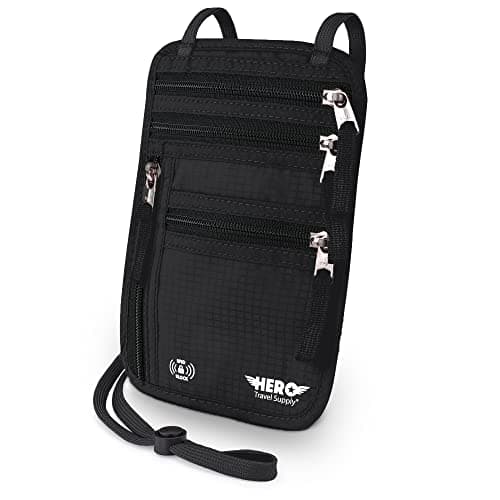 HERO Neck Wallet RFID Blocking Passport Holder An RFID-blocking pouch on a neck cord that sits flat inside a shirt and comes out in one movement at a desk. | Airports, long transit days and anyone who hates a waist pouch | $24.95View on Amazon #ad Price as of November 26, 2026. How we’re funded |
| 3 | 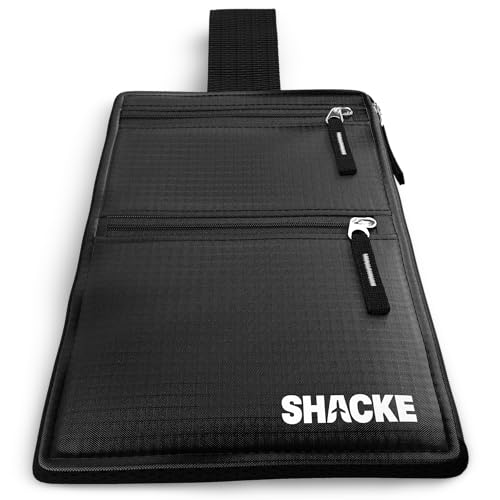 Shacke Hidden Belt Wallet, Passport Holder for Belt Loop An RFID wallet that hangs from a belt loop and tucks inside the waistband, with zip pouches rather than a single cavity. | Day trips in a busy city, when you need the wallet several times | $13.59$15.9915% offView on Amazon #ad Price as of November 26, 2026. How we’re funded |
| 4 | 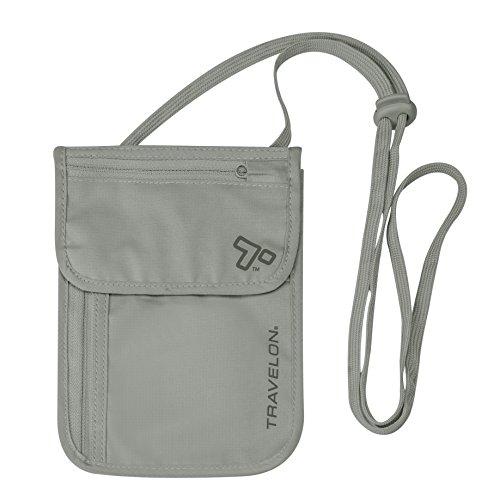 Travelon RFID Blocking Undergarment Neck Pouch Travel Wallet A flat RFID-blocking pouch worn against the chest under a shirt, from a brand that has made anti-theft travel gear for decades. | Night trains, overnight buses and hostel dorms | $10.84$20.9048% offView on Amazon #ad Price as of November 26, 2026. How we’re funded |
| 5 | 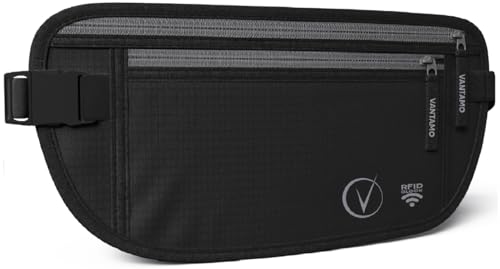 Vantamo Money Belt with RFID, 2 Compartment A two-compartment RFID waist pouch that separates spendable cash from the documents you should not be opening in public. | Markets, street food and places where cash comes out often | $16.99$29.9943% offView on Amazon #ad Price as of November 26, 2026. How we’re funded |
| 6 | 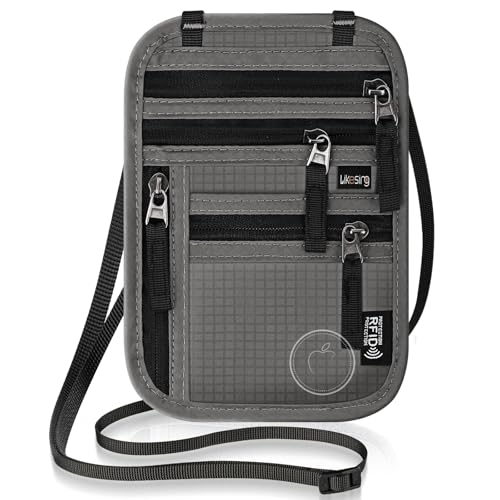 Likesing Travel Neck Wallet, RFID Passport Pouch A 5.5 by 7.9 inch RFID neck pouch at a fraction of everything else here, with no features beyond doing the job. | Families, a first trip, or a backup you can afford to lose | $7.99View on Amazon #ad Price as of November 26, 2026. How we’re funded |
The waist pouch that takes a passport and is not miserable to wear
Alpha Keeper Hidden Money Belt for Travel
The waist is the best place to hide a document on a travel day: it is under a layer, it is in front of you where you can feel it, and nothing about reaching into your own waistband looks normal to a stranger. This one is specified rather than just described - 210D ripstop nylon, water resistant, 360-degree RFID blocking - and it is sized to take a passport and a phone flat rather than folded, which is the difference between a pouch you can actually use on a transit day and one that only holds cash. For a trip with flights, ports or land borders in it, this is the pick.
The specs that decide it
- Carry position: Waist, under clothing
- Fabric: 210D ripstop nylon, water resistant
- RFID: 360-degree blocking
- Fits: Passport and phone, laid flat
- Price bracket: The mid bracket for this category
Flaws but not dealbreakers
Anything worn against your waist for ten hours in a warm climate gets damp, and water resistance works in the wrong direction here - it keeps your sweat in with your passport, not out. Take the documents out and air them at the end of a travel day or the passport cover will curl. It is also genuinely awkward to access: with a shirt tucked over it you are undoing a waistband to reach a boarding pass, which is why the decoy-wallet rule above matters more with this pick than with any other. And a loaded pouch makes a visible bulge under a fitted shirt, which somewhat defeats the point.
#ad Price as of November 26, 2026. How we’re funded
The one you can reach without a waistband involved
HERO Neck Wallet RFID Blocking Passport Holder
A neck wallet is the compromise pick, and for a lot of people it is the right one. It hangs inside your shirt where a casual hand does not go, but you can lift it out at a check-in desk in a single movement rather than excavating a waistband - which means you will actually use it rather than leaving it in the hotel safe by day three. It is also the only position that works if a waistband pouch is uncomfortable for you, which is more people than the category admits. This pick also appears on best passport holders for a different reason - there it is judged on holding documents, here on concealment.
The specs that decide it
- Carry position: Neck cord, inside the shirt
- RFID: Blocking
- Fits: Passport, cards and folded cash
- Access: One movement, no waistband
- Price bracket: The mid bracket for this category
Flaws but not dealbreakers
The cord is the weak point in two directions: it is visible at your collar if you are not careful about the neckline, and a cord around your neck is the one concealed-carry design that can be grabbed. It also swings. A loaded neck pouch under a t-shirt moves when you move and is more noticeable than a waist pouch of the same volume, especially under light summer clothing. And the cord chafes on a long hot day unless you run it under a collar rather than against skin.
#ad Price as of November 26, 2026. How we’re funded
The one that hides inside your pants and still opens fast
Shacke Hidden Belt Wallet, Passport Holder for Belt Loop
This is the best answer to the real complaint about concealed wallets, which is that you stop using them. It clips to a belt loop and drops inside your trousers, so it is out of sight and out of reach of a stranger's hand - but you get to it by lifting it out by its own strap rather than by unfastening anything. The separate RFID zip pouches also mean you can split a day's cash from the cards and the passport, so the thing you open in a shop is not the thing holding everything. For a city day with several purchases in it, this beats a waist pouch comfortably.
The specs that decide it
- Carry position: Belt loop, tucked inside the waistband
- Pockets: Separate RFID zip pouches
- Fits: Passport, cards, folded cash
- Access: Lift out by the strap - nothing to unfasten
- Price bracket: The lower-middle of this category
Flaws but not dealbreakers
It needs a belt loop, which rules out a lot of summer clothing, most athletic wear and anything with an elastic waist - check what you are actually packing before you buy. It also sits against your hip rather than flat against your front, so it prints more obviously through lighter trousers than a waist pouch does. And because it is designed to be opened in public, it is the least secure pick here in the one situation that matters: a pickpocket who has watched you use it now knows exactly where it is.
#ad Price as of November 26, 2026. How we’re funded
The flat one you can genuinely forget you are wearing
Travelon RFID Blocking Undergarment Neck Pouch Travel Wallet
The hardest version of this problem is sleeping somewhere you do not control - a night train, an overnight bus, a dorm bunk - because for eight hours you are not monitoring anything. A flat undergarment pouch is the answer: it lies against your chest under a shirt with no bulk to dig into you when you lie down, and it is the only format on this page that is genuinely comfortable to sleep in. Travelon has been making anti-theft travel gear for a long time, and it shows most in the details that only matter overnight - flat seams, a soft backing, nothing rigid.
The specs that decide it
- Carry position: Chest, under clothing
- RFID: Blocking
- Profile: Flat - designed to be slept in
- Fits: Passport, cards, folded cash
- Price bracket: The lower-middle of this category
Flaws but not dealbreakers
Flat means small: this holds documents and folded notes, and it will not take a phone or a thick stack of bills the way a waist pouch will. It is also the slowest pick here to get at in daylight - it is under a shirt against your chest, so reaching it in public is conspicuous and you will not do it casually. One size means it fits most people and is adjustable for nobody in particular. And the gray fabric shows through a thin white shirt, which is worth knowing before you pack one.
#ad Price as of November 26, 2026. How we’re funded
The one that keeps the day's money away from the passport
Vantamo Money Belt with RFID, 2 Compartment
The single biggest behavioral mistake with a money belt is opening it where someone can see what else is inside. Two compartments fixes that structurally rather than relying on discipline: one side holds the passport and the cards you are not touching today, the other holds the day's cash, and you only ever open the second one. For a trip with a lot of small cash transactions - markets, street food, taxis, anywhere card payment is not assumed - this is the more practical waist pouch, even though it is less specified than the top pick.
The specs that decide it
- Carry position: Waist, under clothing
- Compartments: 2 - documents and day cash separated
- RFID: Blocking
- Fits: Passport and cash
- Price bracket: The lower-middle of this category
Flaws but not dealbreakers
It is also sold as a fanny pack, and that is the problem: worn outside your clothes it is a visible bag on your waist and it is not concealing anything. If you buy this, commit to wearing it under a layer. The listing is also vaguer about fabric than the Alpha Keeper's is - no denier or ripstop claim - so treat it as ordinary nylon and expect it to be clammier in heat. Two compartments also means less usable room in each: a passport plus a phone is a squeeze rather than a fit.
#ad Price as of November 26, 2026. How we’re funded
The one to buy four of and hand round the family
Likesing Travel Neck Wallet, RFID Passport Pouch
There is no technology in a neck pouch - it is fabric, a zip, an RFID liner and a cord - which is why the budget end of this category works so much better than the budget end of, say, luggage. At 5.5 by 7.9 inches this takes a passport flat, it blocks RFID, and it costs little enough that kitting out a family of four is an afterthought rather than a decision. Buy this if you are not sure you will like wearing one, if you need several, or if you want a spare in the suitcase for the half of the trip where the good one is in the wash.
The specs that decide it
- Carry position: Neck cord, inside the shirt
- Size: 5.5 x 7.9 in - takes a passport flat
- RFID: Blocking
- Buy it as: A spare, or one each for a family
- Price bracket: The cheapest on the page by a distance
Flaws but not dealbreakers
Everything you would expect at the price: thinner fabric, a basic zip and a cord with no adjustment refinement, and it will not survive being worn every day for years the way the Travelon or the Alpha Keeper will. The fabric is also less breathable, which in heat is the difference between wearing it and giving up on it by day two. There is no compartment separation, so the decoy-wallet rule above is doing all the work - and no meaningful warranty, though at this price that is academic.
#ad Price as of November 26, 2026. How we’re funded
Ranked by where it sits, not by features
| Wallet | Carry position | Access in public | Takes a passport flat | Sleep in it? | Price bracket |
|---|---|---|---|---|---|
| Alpha Keeper money belt | Waist, under clothing | Poor - by design | Yes, plus a phone | Uncomfortable | Mid |
| HERO neck wallet | Neck cord, inside shirt | Good - one movement | Yes | Workable | Mid |
| Shacke belt-loop wallet | Inside the waistband, on a loop | Best here | Yes | No - needs a belt | Lower-middle |
| Travelon undergarment pouch | Chest, under clothing | Poor - by design | Yes, documents only | Yes - the only one | Lower-middle |
| Vantamo 2-compartment belt | Waist, under clothing | Fair - open the cash side only | Yes, a squeeze with a phone | Uncomfortable | Lower-middle |
| Likesing neck wallet | Neck cord, inside shirt | Good | Yes | Workable | Cheapest here |
What travel theft actually looks like, and what defeats it
Buying against the wrong threat is how people end up with an expensive wallet that does not help. The theft that happens to ordinary travelers is overwhelmingly one thing: an opportunistic hand in an accessible pocket or an open bag, in a place where being pressed against strangers is normal. Crowded metro carriages, station escalators, busy squares, bus boarding queues, restaurant chairs with a bag hanging off the back.
- It is a hand, not a knife. Slash-resistant fabric is a real feature and it addresses a far rarer attack than the one you are likely to meet. Concealment addresses the common one.
- It is silent and fast, and you find out later. Which is why "I would notice" is not a plan, and why a pouch you can feel against your body beats a bag you have to keep watching.
- It targets the accessible, not the valuable. A thief takes the outside pocket because it is reachable, not because they know what is in it. Making everything unreachable is the whole strategy.
- The bag set down is the other half. A huge share of losses are not theft off your body at all - it is a bag left on a chair, a platform or an overhead rack. A concealed wallet means the bag going missing is an inconvenience rather than a catastrophe.
That last point is the real reason to wear one of these. It is not that the pouch is impenetrable; it is that your passport, your main card and your emergency cash are no longer in the thing a thief can actually take. If the bag itself is the worry too, the best anti-theft travel backpacks covers locking zippers and anchor straps on the bag side of the same problem.
RFID blocking, honestly
Every pick here blocks RFID, and it is worth being straight about what that is and is not worth, because it is the feature these products are marketed on and it is the least important one.
- What it does. A metallic layer stops a reader held close to the pouch from waking your contactless card or your e-passport chip. That is real physics and it works.
- Why it matters less than the box implies. Contactless card theft at a distance is rare, the amounts are capped, and card fraud is reversible in a way a stolen passport is not. The chip in a passport is also encrypted and needs data printed inside the document to be read at all.
- Why you should still take it. Because it costs nothing. Every pouch in this category includes it, so there is no premium to pay and no reason to buy the one that does not.
- What it does not do. It does not stop a hand. The pouch defeats theft by being somewhere a hand does not go, and the RFID liner is a bonus riding along for free.
The thing actually worth doing
Photograph your passport's information page and your cards, and keep the images somewhere you can reach without the originals. Replacing a passport abroad is the genuinely expensive failure here, and five minutes before you leave turns it from a trip-ending problem into a bad afternoon at a consulate.
Which position suits which trip
None of these is better in the abstract. Pick by the days you are actually going to have.
| The trip | Best position | Why |
|---|---|---|
| Long transit day - flights, borders, ports | Waist pouch | Documents in front of you, under a layer, for hours at a time |
| City day with lots of small purchases | Belt-loop wallet | You can open it without undressing, so you will keep using it |
| Night train, bus or hostel dorm | Flat chest pouch | The only one comfortable to sleep in, and sleep is when you are least aware |
| Crowded metros and festivals | Waist or chest, under clothing | The hand-in-pocket scenario - nothing in an outside pocket at all |
| Beach or pool day | None of these | Take one card and some cash, leave the passport in the safe. A pouch you have to take off is not a plan |
| Business trip, mostly indoors | Neck wallet, or nothing | Low risk; a slim RFID passport holder organizes better and conceals less |
How to wear one so it actually works
Most of the failures in this category are behavioral rather than product failures, and all of them are avoidable.
- Carry a decoy. An ordinary wallet with one card and a day's cash, in a front pocket. That is what you open in public and what you lose if you lose anything.
- Never open the concealed one where you can be watched. A toilet cubicle, a hotel room or a bank vestibule. Restocking the decoy is a private, once-a-day job.
- Split across two places. Half the cash and the backup card in the pouch, the rest in your luggage. One event should not take everything.
- Wear it under one layer, not under three. A pouch you cannot reach in under a minute is a pouch you will stop wearing by day three, which is how people end up with the passport loose in a daypack.
- Take the documents out at night. Anything worn against skin all day is damp by evening, and a passport that lives damp curls and eventually gets questioned at a border.
- Check the strap before every trip. Clips and cords are where these fail, and they fail at the worst possible moment. It is a five-second check.
Worth saying plainly: for many trips none of this is necessary, and a pouch you resent wearing is worse than a sensible front pocket. If you are going somewhere with a low-key risk profile and you will mostly be indoors, a slim passport holder in a zipped inner pocket is a perfectly reasonable answer and much pleasanter to live with. These are for crowds, transit and the days where the bag is out of your hands.
The rest of the anti-theft kit
A concealed wallet protects the irreplaceable things. The bag is a separate question, and the answer depends on how the trip is shaped: the best anti-theft travel backpacks covers cut-resistant panels, locking zipper pulls and anchor straps for the pack itself, and the best travel backpacks under $100 covers the cheaper hidden-zipper daypacks that handle the hand-in-the-pocket problem without the slash-resistant hardware. For checked bags, best luggage locks is the equivalent page - and the honest conclusion there is the same as the one here, which is that the right answer is usually not keeping anything worth taking in the place that is easy to reach.
Frequently asked questions
Are money belts still worth it?
Money belt or neck wallet - which is better?
Do I really need RFID blocking in a travel wallet?
Can you sleep in a money belt?
What should go in a travel wallet and what should not?
Read next
- Best passport holders
- Travel essentials for women
- Travel essentials for men
- Best anti-theft travel backpacks
- Best travel backpacks under $100
- Best luggage locks
- Europe packing list
- If the airline loses your luggage
More in Travel Essentials, or see every roundup and comparison on the site.