Best passport holders: what to buy, and what to skip
Almost every holder on sale leads with RFID blocking. The US passport has carried anti-skimming material in its own cover since 2006 - so buy the wallet for the organizing, and judge it on whether it stays shut.
By Michael W. · Last updated October 31, 2026
We earn a commission when you buy through our links, at no extra cost to you. It never changes what we pick or how we rank it. How we’re funded.
Buy a passport holder to keep one booklet, two cards and a boarding pass in one place that closes. Do not buy it for the RFID shield, which is the headline on every listing and the least useful thing in the box. The US electronic passport has carried anti-skimming material in its front cover and spine since the rollout, and the chip is protected by Basic Access Control - a key taken from characters printed on the data page, which also encrypts the conversation between chip and reader. In other words, the shield in the wallet is guarding a document that already shields itself.
That is not an argument against buying one. It is an argument for judging it on different criteria. The thing that goes wrong at a border is not a skimmed chip; it is a passport that slid out of an open sleeve into the seat pocket, or a holder so stuffed with cards that the booklet no longer sits flat and the agent has to wrestle it out. Fit, closure and honest capacity are the whole product.
The criteria, in order
1) Does it fit the book? A passport is an ICAO TD3 document - 125 x 88 mm, about 4.9 x 3.5 inches - and a cover cut for a slimmer national booklet will gape. 2) Does it close, and does the closure survive a bag? 3) How many cards before the booklet stops lying flat - two or three is the honest number, not the eight on the spec sheet. 4) One passport or a household's worth? 5) Only then: material, tracker slot and the RFID claim.
Quick picks
The short list. Tap any row for the full write-up, including what each one is bad at.
| # | Product | Best for | Price |
|---|---|---|---|
| 1 | 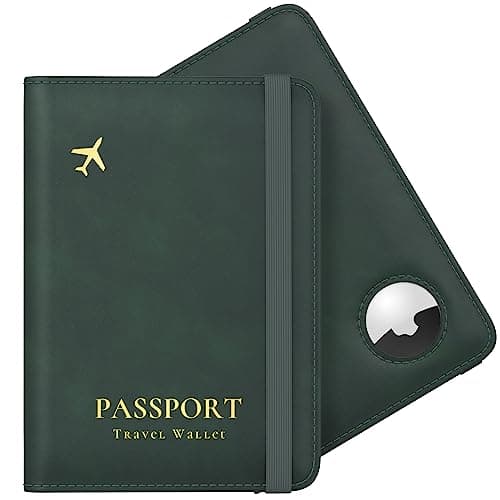 Stouchi Passport Holder with AirTag Slot An ultra-slim PU leather passport wallet with five card slots, a dedicated AirTag pocket and a water-resistant finish. | One traveler, one passport, a couple of cards | $11.49$15.9928% offView on Amazon #ad Price as of November 3, 2026. How we’re funded |
| 2 | 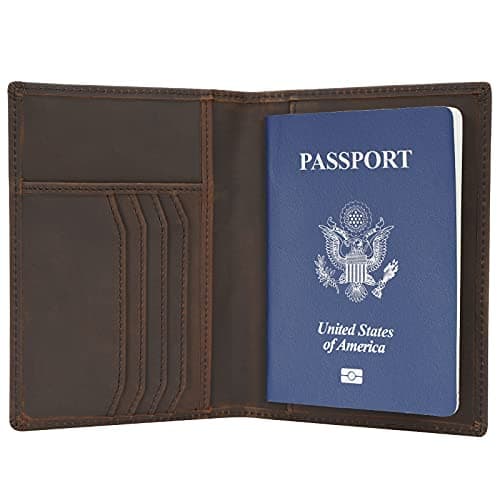 Polare Slim RFID Blocking Leather Passport Holder Travel Bifold Wallet A bifold passport wallet in genuine leather, slim-cut, with card slots and a note pocket. | Buying once and keeping it for a decade | $27.99View on Amazon #ad Price as of November 3, 2026. How we’re funded |
| 3 | 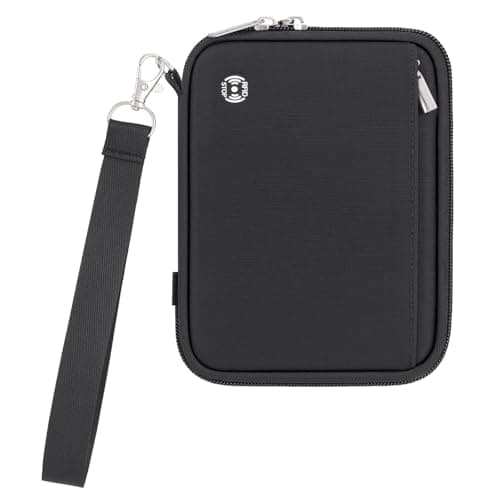 WALNEW Family Passport Holder for 4 A zippered travel wallet that holds up to four passports plus cards and boarding passes, with a wrist strap. | Two adults and two kids through one checkpoint | $22.99View on Amazon #ad Price as of November 3, 2026. How we’re funded |
| 4 | 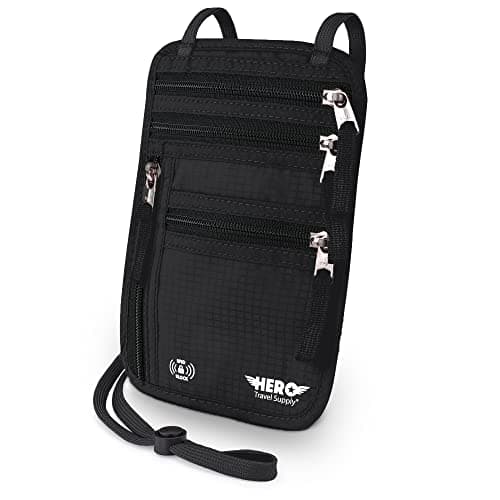 HERO Neck Wallet RFID Blocking Passport Holder A flat, concealable neck pouch sized for a passport, cards and folded notes, worn under clothing. | Crowded transit, night trains and first days in a new city | $24.95View on Amazon #ad Price as of November 3, 2026. How we’re funded |
| 5 | 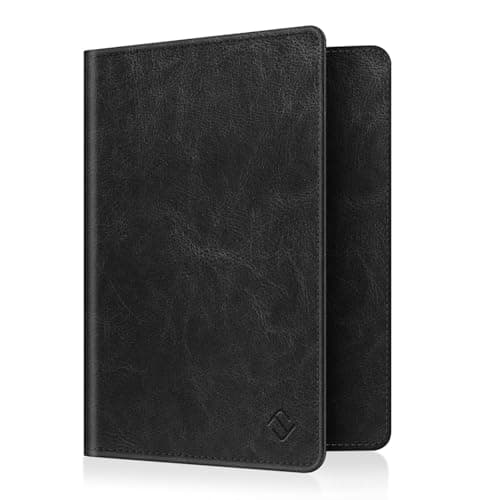 Fintie Passport Holder, Slim Travel Wallet RFID Blocking Card Case Cover A simple slim passport cover with credit card slots, in a synthetic finish, at the bottom of the price range. | A first holder, a spare, or a gift | $9.99View on Amazon #ad Price as of November 3, 2026. How we’re funded |
The slim one that closes and takes a tracker
Stouchi Passport Holder with AirTag Slot
This is the shape most people should buy: slim enough that it does not turn a jacket pocket into a brick, with a real closure rather than a loose sleeve, and five card slots so you can stop at the two or three you will actually use. The AirTag pocket is the genuinely modern feature - not because a tracker recovers a stolen passport, but because the single most common passport emergency is a wallet left in a hotel room or a seat pocket, and a tracker you can ping from your phone solves exactly that. The listing describes it as sized for US passports, which is the right thing to check first.
The specs that decide it
- Capacity: 1 passport, 5 card slots
- Tracker: Dedicated AirTag pocket (tracker not included)
- Material: Water-resistant PU leather
- Profile: Ultra-slim
- RFID: Blocking layer included - see the section below on whether that matters
Flaws but not dealbreakers
PU leather is a coated synthetic, not hide: it will not develop a patina and it is the layer that cracks first at a fold after a few years of being sat on. Five card slots is also an invitation rather than a target - fill all five and the slim profile is gone and the booklet stops sitting flat. And an AirTag is a Bluetooth-and-ultra-wideband tracker that depends on other Apple devices being nearby to report a location; it is excellent in an airport and useless in an empty field.
#ad Price as of November 3, 2026. How we’re funded
The one to buy if you want real hide
Polare Slim RFID Blocking Leather Passport Holder Travel Bifold Wallet
Genuine leather is the one material upgrade on this page that changes how long the thing lasts. A coated synthetic fails at the fold; hide softens there instead, and a leather bifold that has been in a jacket for five years looks intentional rather than tired. The bifold format is also the most border-friendly shape: it opens flat, the booklet comes out in one motion, and there is nothing elasticated to fight. Buy this if the holder is a thing you expect to still own after the current passport expires.
The specs that decide it
- Material: Genuine leather
- Format: Slim bifold
- Capacity: 1 passport, card slots, note pocket
- Why it lasts: Hide creases at the fold instead of cracking
- RFID: Blocking layer included
Flaws but not dealbreakers
It is the most expensive pick here by a multiple, and what you are buying with the extra money is longevity and feel, not function - the cheapest holder on this page performs the same job at an airport desk. Real leather is also heavier and thicker than the slim synthetic above, and it needs a few weeks of use before it stops springing back open. If you are buying for one trip, this is the wrong pick.
#ad Price as of November 3, 2026. How we’re funded
The one that carries the whole household's documents
WALNEW Family Passport Holder for 4
Four passports in four separate wallets is four things to lose. At a family checkpoint one person should be carrying every document, and this is the format that does it: a zip closure so nothing slides out when the bag tips, room for four booklets side by side, and card and ticket slots so the boarding passes travel with the passports rather than in a pocket. The wrist strap sounds trivial and is not - it is what stops the wallet being set down on a counter and walked away from.
The specs that decide it
- Capacity: Up to 4 passports, plus cards and tickets
- Closure: Zip, plus wrist strap
- Best use: One adult carries the whole family's documents
- Format: Travel document organizer
- RFID: Blocking layer included
Flaws but not dealbreakers
Putting every passport in one wallet concentrates the risk as neatly as it concentrates the convenience - lose this and you have lost the whole family's trip, not one booklet. It is also much bigger than a single-passport holder, too big for a jacket pocket, so it lives in a bag and that bag has to stay with you. For a solo traveler it is the wrong product; for two adults traveling together, consider one each and split the cash and cards between them.
#ad Price as of November 3, 2026. How we’re funded
The one that goes under your shirt
HERO Neck Wallet RFID Blocking Passport Holder
A neck wallet is not an everyday carry, it is a transit tool. The use case is narrow and real: moving between a station and a hotel with everything you own, in a crowd, in a place you do not know yet. Worn under a shirt it defeats the only attack that actually happens to travelers - a hand in an outside pocket - because there is no outside pocket involved. Use it for the arrival day and the departure day, then leave it in the room and carry a slim wallet for the rest of the trip.
The specs that decide it
- Format: Concealed neck pouch
- Capacity: Passport, cards, folded notes
- Worn: Under clothing, flat against the body
- Best use: Transit days, not every day
- RFID: Blocking layer included
Flaws but not dealbreakers
It is uncomfortable in heat, the strap is visible at the collar if you are not careful, and retrieving anything from it in public undoes the entire point - which is why it is a transit tool and not a wallet. Anything you need more than twice a day should not live in here. It is also the least elegant thing on this page by a distance; nobody has ever enjoyed wearing one.
#ad Price as of November 3, 2026. How we’re funded
The one that costs less than the airport sandwich
Fintie Passport Holder, Slim Travel Wallet RFID Blocking Card Case Cover
There is an honest case for spending almost nothing here. The job is to keep a booklet and two cards together in a cover that shuts, and that job does not cost much. Fintie's version does it in a slim case with card slots, and if you lose it on a trip - which is the realistic failure, not a material failure - you have lost pocket change rather than a leather good. Buy it as the floor it is, and buy two if you travel with someone.
The specs that decide it
- Capacity: 1 passport, credit card slots
- Material: Synthetic cover
- Profile: Slim
- Buy it as: The budget floor, or a spare
- RFID: Blocking layer included
Flaws but not dealbreakers
You can feel where the money was saved: the closure is the weakest on this page, the stitching is the first thing to go, and the synthetic finish scuffs within a trip or two. There is no tracker pocket. Treat it as a consumable that gets replaced every few years rather than a thing you keep, and do not trust it to stay shut at the bottom of a packed bag.
#ad Price as of November 3, 2026. How we’re funded
Five holders, five different jobs
| Holder | Passports | Closure | Tracker slot | Best job |
|---|---|---|---|---|
| Stouchi slim | 1 | Closes flat, slim | Yes - AirTag pocket | Everyday carry |
| Polare leather bifold | 1 | Bifold, genuine leather | No | Keeping it for a decade |
| WALNEW family | Up to 4 | Zip + wrist strap | No | A household at one checkpoint |
| HERO neck wallet | 1 | Worn under clothing | No | Transit days in a crowd |
| Fintie slim cover | 1 | Light cover | No | A spare, or a gift |
The RFID claim, honestly
Every holder on this page advertises RFID blocking, which means it cannot possibly be a reason to choose between them. It is worth understanding what it is and is not doing, because the marketing has outrun the facts by about twenty years.
- The passport already shields itself. When the US introduced the electronic passport, the published rule described anti-skimming material in the front cover and spine, specifically to mitigate skimming. A closed e-passport is substantially harder to read than an open one by design - that protection is in the document, not in your wallet.
- The chip is not readable without the printed page. US e-passports use Basic Access Control, which works like a PIN taken from characters printed on the data page, and which also encrypts the communication between the chip and the reader. Someone who has not physically opened and photographed your passport does not have the key.
- The read range is a few inches. The chip is designed to be read with the document within roughly 10 centimeters of a reader. "Walking past you in a crowd" is not the threat model the technology supports.
- Where the shield does earn its place: contactless cards. The thing in your travel wallet that genuinely broadcasts at short range is a tap-to-pay card, not the passport. If you keep cards in the holder, a blocking layer is a small, free piece of belt-and-braces - which is exactly how you should value it.
What to actually worry about
Not skimming. Losing the booklet, having it taken out of an open sleeve, or soaking it. A holder that closes, is a shade you will spot in a dark bag, and lives in the same pocket every single time beats any amount of shielding. Keep a photo of the data page in your phone and a paper copy somewhere else in your luggage.
Fit and closure: the two things that actually fail
A passport book is a standardized object. ICAO Doc 9303 sets the TD3 travel document at 125 x 88 mm - about 4.9 x 3.5 inches - which is why a cover cut for one country's booklet mostly fits another's. "Mostly" is the problem. A sleeve a couple of millimeters short will gape at the corner and the booklet will work itself loose over a long day of standing up and sitting down.
- Check the listing says US passport, if you hold one. Several popular covers are cut snug for EU booklets and advertise the fact. A snug cover that needs force is worse than a loose one, because forcing the cover is what bends the chip page.
- Prefer a closure to a sleeve. A snap, a zip or a genuine bifold tension all keep the book in. An open slip-in sleeve relies on friction, and friction loses to a bag being swung onto a train luggage rack.
- Count the cards you will really carry. Two or three. A card behind the booklet lifts it off flat and makes it harder for an agent to scan, which is the most common cause of being asked to take the passport out of the cover entirely.
- Do not laminate or over-stiffen. Anything that adds rigidity over the data page risks the machine-readable zone and the chip. The holder's job is to carry the booklet, not to armor it.
One more practical point: your passport does not count as a liquid, but the things that ruin it travel next to the things that do. Keep the document wallet out of the same packing cube as anything that can leak, and keep your liquids where you can reach them - the TSA liquid rules explain why that bag has to come out anyway.
Is an AirTag slot worth it?
Yes, for one specific reason, and no for the reason the listings imply. A tracker will not recover a stolen passport - a thief who wants the booklet will discard the wallet, and following a stolen document to an address is not a thing you should ever do. What a tracker is genuinely good at is the far more likely failure: you left the wallet somewhere. A seat pocket, a hotel safe, a restaurant table, the tray at security.
In a populated place - which is where airports and hotels are - a Bluetooth tracker reports its position through other people's phones with useful accuracy, and the "left behind" alert is the feature that actually saves the trip. In an empty place it reports nothing. That is the honest shape of the benefit, and it is worth a dollar or two of extra cost in a holder, not a premium.
If you are buying trackers anyway, the same logic and the same hardware apply to the bag the wallet is in - the best luggage trackers covers which ones work on which phone, and are luggage trackers worth it is the honest version of the question.
Where the holder should live, on the day
The best holder used badly loses a passport; a cheap holder used consistently does not. Three rules worth more than any product on this page.
- One pocket, every time. Pick the pocket before you leave the house and never improvise. Most lost passports are not stolen, they are set down.
- Never in the overhead bin. The passport travels on your body or in the bag at your feet. A bin bag can be moved by a stranger, gate-checked, or left behind in a scramble.
- Split the risk. Passport and primary card in the holder; a backup card and some cash somewhere else entirely. If you are carrying everything in one wallet, one loss ends the trip - which is the single argument against the family holder above, and worth weighing before you buy it.
If the document wallet is the last gap in your kit, the rest of it is in long-haul flight essentials and travel essentials for women - and the bag it all goes in is in best personal item bags.
If the worst happens: losing a passport abroad
Worth reading once before you need it, because the order of operations is not obvious and the first step is the one people skip.
- Report it lost or stolen. The report is made on Form DS-64, and the important consequence is immediate: once reported, that passport is invalid forever. Even if it turns up in a jacket the next day you cannot travel on it again. Report it anyway - an unreported booklet in circulation is the actual identity risk.
- Contact the nearest US embassy or consulate and ask for the consular section. They have after-hours duty officers for genuine emergencies. The Embassies and Consulates tool on travel.state.gov gives you the address, phone number and hours for the country you are standing in.
- File a local police report if you can. Guidance varies on whether it is required, but it costs you an hour and it documents the loss for the consulate, your insurer and any onward carrier.
- Apply for the replacement with both forms. Replacing a passport from abroad takes a DS-64 and a DS-11 together, plus photos and whatever proof of citizenship and identity you can assemble - which is why a photo of the data page on your phone and a paper copy in your luggage are worth the two minutes they take.
- Ask about an emergency limited-validity passport if you are flying soon. A consulate can issue one for urgent travel, valid for a year or less, which you exchange for a full-validity book once you are home.
The two-minute insurance policy
Before every trip: photograph the data page, email it to yourself, and put a printed copy in a different bag from the passport. That single habit turns a lost-passport emergency from a multi-day problem into an afternoon at a consulate, and it costs nothing.
The bag it travels in
A document wallet is the cheapest thing in your luggage and the one you will miss first. The most expensive thing is the bag, and the brand that sells the most of it in the $100-$160 bracket is worth understanding before you buy - the SwissGear luggage review covers which of its models are worth it, and SwissGear vs Samsonite settles the head-to-head.
Frequently asked questions
Do I really need an RFID blocking passport holder?
What size is a passport holder supposed to be?
Is a passport holder with an AirTag slot worth buying?
Should a family share one passport holder?
Leather or synthetic for a passport wallet?
Sources
- US Federal Register, 70 FR 61553 (2005) - final rule on electronic passports: anti-skimming material in the front cover and spine, Basic Access Control, approximately 10 cm read range
- ICAO Doc 9303 Part 4 - Specifications for Machine Readable Passports: TD3 size, 125 x 88 mm
- USA.gov - Lost or stolen passports: reporting with Form DS-64 and replacing a passport from abroad
- OSAC - Replacing Missing Passports While Abroad (consular section contact, DS-64 + DS-11, emergency limited-validity passport)
Read next
- SwissGear luggage review
- Long-haul flight essentials
- Travel essentials for women
- Travel essentials for men
- Best luggage trackers
- Are luggage trackers worth it
- TSA liquid rules
- Best personal item bags
- Best travel gadgets
More in Travel Essentials, or see every roundup and comparison on the site.