The best packing cubes for backpacking
In a backpack the cubes are the structure. That is a different job from squaring up a suitcase, and it changes which ones to buy.
By Michael W. · Last updated October 5, 2026
We earn a commission when you buy through our links, at no extra cost to you. It never changes what we pick or how we rank it. How we’re funded.
For a travel backpack, the Peak Design cubes are the ones to buy - they hold their shape, which is exactly what a frameless pack cannot do for itself, and they expand or compress depending on what you have put in them.
Cubes in a suitcase and cubes in a backpack are not the same product decision. A hardside case already has walls; the cubes just divide the space. A 40-liter pack has no walls at all, so the cubes become the structure - they stop the load slumping into the base, they keep the pack's shape against your spine, and they make a top-loading or clamshell bag behave like something with drawers.
All four picks are already assessed on this site. They are ranked here for pack geometry, and there is a section below on the compression trap, which bites harder on a backpack than on anything with wheels.
Quick picks
The short list. Tap any row for the full write-up, including what each one is bad at.
| # | Product | Best for | Price |
|---|---|---|---|
| 1 |  Peak Design Packing Cubes Structured enough to stop the load slumping, which is the job in a pack. | Travel backpacks and duffels | |
| 2 | 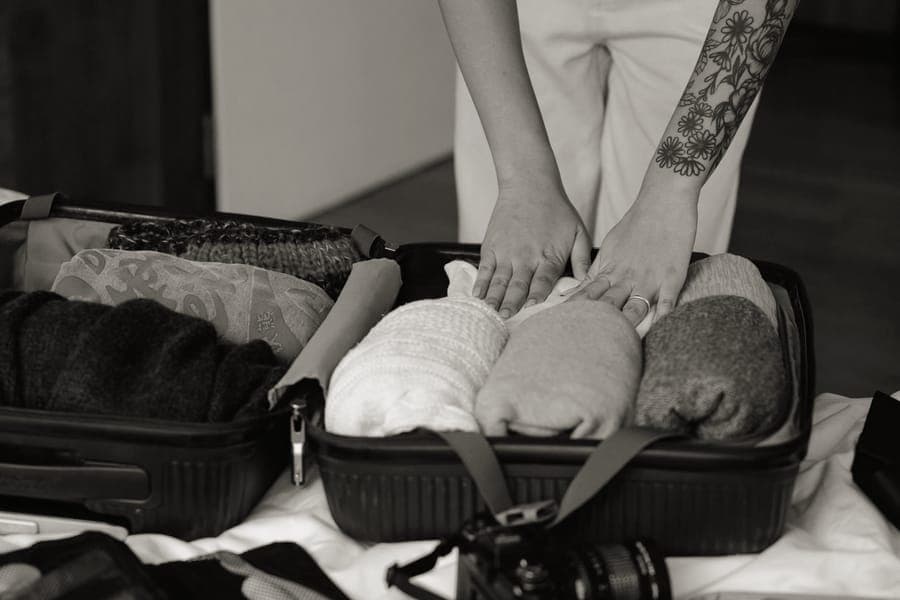 Eagle Creek Pack-It Compression Cube Set A compression zip with hardware specified for the tension it carries. | Cold-weather packing | |
| 3 |  Gonex Compression Packing Cubes Use the second zip where it helps, ignore it where it does not. | Mixed loads | |
| 4 | 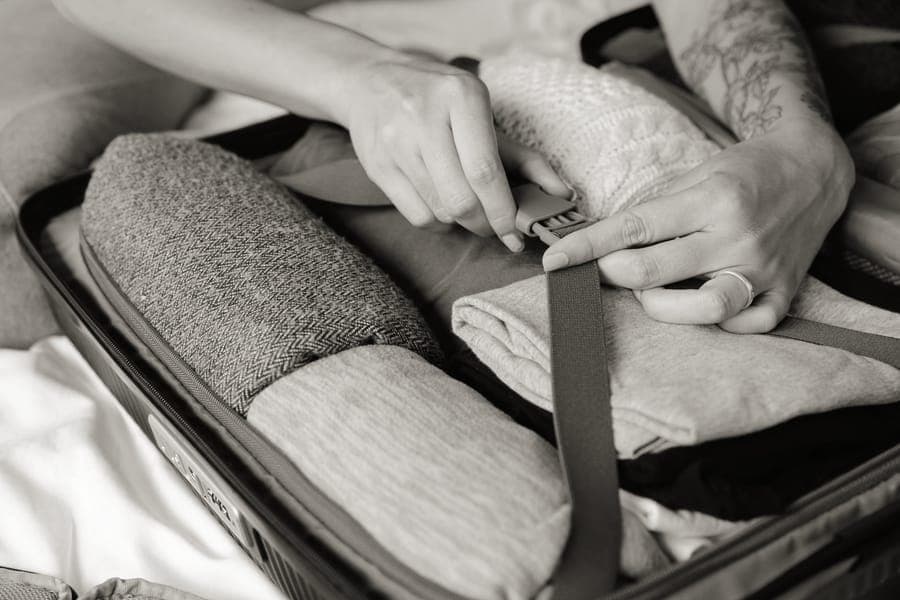 Bagail Compression Packing Cubes Cheap enough that the pieces you do not use are not a waste. | First-time cube buyers |
The one that gives a frameless pack a shape
Peak Design Packing Cubes
Anyone packing a 35 to 45 liter travel pack. Structure is what stops everything collecting in the bottom third of the bag and pulling the load away from your back, and it is what makes a clamshell pack unload like a drawer unit instead of a sack.
The specs that decide it
- Structure: Holds shape - which is the point in a frameless pack
- Feature: Expands or compresses depending on what you have packed
- Suits: Travel backpacks and duffels rather than hardside cases
Flaws but not dealbreakers
Structure means material, and material means weight - these are heavier than plain cubes for the same capacity. They are also expensive enough that the cost of a full set is a noticeable fraction of the pack's price.
The one for a trip with a puffer and a fleece in it
Eagle Creek Pack-It Compression Cube Set
Shoulder-season and winter trips, where the volume problem is insulation rather than quantity. Compression genuinely works on loft - fleeces, puffers, sweaters - and the reason to pay more here is the zip, which is the part that fails on cheaper sets precisely when it is under load.
The specs that decide it
- Mechanism: Compression zip, with hardware rated for the tension it carries
- Sizes: Focused set rather than an eight-piece collection
- Build: The reason to pay more - zips under tension are the failure point
Flaws but not dealbreakers
Substantially more expensive than generic compression cubes with the same mechanism, and the same creasing and density penalties apply. You are paying for the zip, not the function.
The one that works with or without the compression
Gonex Compression Packing Cubes
Packs carrying a mix of bulky and dense items. Compressing a fleece is worth it; compressing jeans achieves nothing except creases. A cube that works both ways lets you make that choice item by item rather than at the moment of purchase.
The specs that decide it
- Works on: Fleeces, puffers, sweaters - the things that make a pack bulky
- Does nothing for: Shirts, jeans, anything already dense
- Bonus: Works as an ordinary cube when you skip the compression zip
Flaws but not dealbreakers
Compressed clothes crease, and a compressed bag is denser rather than lighter - so on a weighed cabin allowance you can compress your way into being overweight without the bag looking any fuller.
The one to find out whether you like the format
Bagail Compression Packing Cubes
Anyone unconvinced that cubes are worth it, which is a reasonable position until you have tried them. At this price you can discover which two sizes you actually use before spending money on better versions of those two.
The specs that decide it
- Flexibility: Use the compression zip only where it helps
- Contents: A multi-piece set - you will use two or three
- Cost: Low enough that the unused pieces are not a waste
Flaws but not dealbreakers
Budget compression cubes are where the extra zip is most likely to fail, because the hardware is not specified for the tension. Thinner fabric also bulges when the cube is packed full, undercutting the squaring benefit.
The four picks compared
| Pick | Type | Holds shape | Compression | Best for |
|---|---|---|---|---|
| Peak Design Packing Cubes | Structured | Yes - the point of them | Expand or compress | Frameless travel packs |
| Eagle Creek Pack-It Compression Set | Compression | Partly | Zip, well-specified hardware | Bulky cold-weather layers |
| Gonex Compression Cubes | Compression | Partly | Zip, works as a plain cube too | Flexible use |
| Bagail Compression Cubes | Compression | Less | Zip, budget hardware | Trying the format cheaply |
Why a backpack needs different cubes from a suitcase
A suitcase is a box. Put anything in it and it stays a box, so cubes in a case are purely organizational - they separate clean from dirty, and they stop the contents shifting in transit.
A travel pack is a bag with a harness. Loaded loose, the contents settle downward and outward, the load drifts away from your spine, and the pack gets heavier to carry without gaining a gram. Structured cubes fix that by giving the bag an internal skeleton: the weight stays where you put it, high and close to your back, and the pack keeps the shape its harness was designed around.
- Load the heavy cube high and against the back panel. That is the position that costs you the least effort over distance.
- Use two or three cubes, not six. Every cube is fabric and a zip, and a six-piece set in a 40-liter pack is mostly a weight penalty.
- Match cube footprint to the pack's cross-section. Cubes that do not tessellate leave air gaps, which is volume you paid for and cannot use.
The compression trap, and why it is worse in a pack
Compression removes air. It does not remove weight. A compressed load is the same mass in less volume - which is useful when space is your limit and actively dangerous when weight is.
Backpack travellers hit the weight limit more often than the volume limit, because international and low-cost carriers weigh cabin bags at 7 to 10 kg. Compress hard enough and you will arrive at the gate with a pack that looks modest and weighs too much, which is the one failure mode you cannot talk your way out of. Weigh the loaded pack at home - a luggage scale costs very little and settles it in seconds.
Creasing is the other cost
Compressed clothes come out creased, and a backpack has nowhere to hang anything. If a shirt has to look pressed on arrival, keep it out of the compression cube and fold it over the top of the packed load instead.
What belongs in which cube
A workable three-cube system for a 40-liter pack, which also happens to be the fastest to unpack in a hostel or a train compartment:
- Cube one - tops and underwear. The cube you open daily, packed at the top of the load.
- Cube two - bottoms and the bulky layer. Heavier, packed high and against the back panel, compressed if it holds loft.
- Cube three - laundry. Starts empty and fills as the trip goes on, which is why a dedicated one beats a plastic bag. See best travel laundry kit if you plan to wash as you go.
Shoes do not belong in a cube - they belong in a shoe bag, at the bottom of the pack, where their weight is doing the least harm and their soles are not touching clothes. Toiletries belong in their own bag for the same reason.
How we chose these picks
Shape-holding first, because that is what a frameless pack needs and a suitcase does not. Compression hardware second, because the zip is the part that fails. Weight third, counted honestly - structure costs grams and we have said so in every entry.
All four are products already assessed on this site. We do not print prices; every buy link opens the current Amazon listing.
What we passed over
- Eight-piece sets. You will use three. The rest is fabric in a drawer at home.
- Vacuum bags needing a pump. No pump on the road, no compression on the way back - and they are the easiest way to overload a weighed cabin bag.
- Ultralight mesh cubes. Almost weightless and almost structureless, which defeats the point in a pack.
- Cubes without a top handle. You pull cubes out of a pack vertically. A grab handle is not a luxury here.
Frequently asked questions
Are packing cubes worth it in a backpack?
How many packing cubes do I need for a 40-liter pack?
Should I use compression cubes for backpacking?
Do packing cubes save space?
Where should the heaviest cube go in a backpack?
Read next
- Best packing cubes
- Best compression packing cubes
- Are packing cubes worth it?
- Best travel backpacks
- Packing cubes vs compression bags
- Best shoe bags for travel
More in Packing, or see every roundup and comparison on the site.