Rolling duffel bag sizes
Duffels are sold in liters and airlines measure inches. Here is where the two meet, and the size at which they stop agreeing.
By Michael W. · Last updated October 5, 2026
We earn a commission when you buy through our links, at no extra cost to you. It never changes what we pick or how we rank it. How we’re funded.
Rolling duffels are sold by volume, and the sizes that matter are 40 liters (cabin-ish), 60 to 70 liters (a checked bag inside most limits) and 90 liters and up (oversize on most carriers). The useful rule: 70 liters is about the largest rolling duffel that reliably stays within the 62 linear inch checked limit, and anything near 90 liters should be assumed to be oversize until you have measured it.
The reason this needs a page is that duffels and suitcases are sold in different units. A suitcase is advertised as a 25-inch or 28-inch bag, which maps directly onto the airline rule. A duffel is advertised at 45L, 70L or 90L, which maps onto nothing an airline publishes - and because duffels are soft, the loaded dimensions are not fixed either.
What follows is the translation, the two airline limits that govern it, and an honest note on what the wheels cost you.
Rolling duffel sizes in airline terms
| Capacity | Typical use | Against airline limits | Watch for |
|---|---|---|---|
| 25-30 L | Personal item, day bag | Fits under-seat space on most carriers | No wheels at this size, normally |
| 40-45 L | Weekend, cabin bag | Can clear 22 x 14 x 9 if packed to it | A soft bag grows as you fill it |
| 60-70 L | One checked bag, a week or more | Normally inside 62 linear inches | Measure after packing, not before |
| 90 L and up | Sports and expedition gear | Usually oversize on most carriers | Oversize fee on every flight, plus the 50 lb limit |
The two numbers that govern a rolling duffel
Checked baggage on most US carriers is governed by 62 linear inches - length plus width plus height added together - and 50 lb in economy. Neither is expressed in liters, which is why the capacity on the label is only a starting point.
For a rigid suitcase the conversion is reliable, because the bag is always the size it is. For a duffel it is not: pack a 70-liter duffel loosely and it measures smaller than its rated volume suggests, overpack it and the sides bow outward until the linear total climbs past 62. The bag's rating never changed; your packing did. Checked bag size and weight limits has the published figures by carrier.
Oversize costs more than overweight
On most carriers the oversize fee for exceeding 62 linear inches is steeper than the overweight fee, and a 90-liter duffel incurs it on every single flight. If you are buying that size, buy it knowing the recurring cost.
Converting liters to inches, and why it only half works
One liter is 61.02 cubic inches, so a 70-liter bag encloses about 4,270 cubic inches. That tells you the volume but not the shape, and the airline rule is about shape. A long, narrow 70-liter duffel and a short, fat one have very different linear totals.
The practical method is to skip the arithmetic and measure the object:
- Pack the duffel as you intend to travel with it. A duffel's dimensions are a function of its contents.
- Stand it as it will sit on the belt and measure length, width and height at the widest points - including wheels and haul handles.
- Add the three figures. Under 62 inches and you are inside the standard checked limit.
- Weigh it. Fifty pounds arrives faster in a duffel than in a suitcase, because there is no internal structure stopping you filling every corner.
What the wheels cost you
A wheeled duffel is a compromise and it is worth being clear about which way it cuts. Wheels and a handle assembly add weight to a bag category whose appeal is capacity per pound, and they occupy interior volume - a 70-liter wheeled duffel holds less usable space than a 70-liter frameless one.
In exchange, you stop carrying the load. For a 60 to 70 liter bag that is usually the right trade, because a loaded duffel of that size is a genuinely heavy two-handed lift. Below about 45 liters it often is not, and the frameless version is the better bag - see best carry-on duffel bags for that end of the range and best rolling duffel bags for the full wheeled shortlist.
Which size to buy
- One checked bag for trips of a week or more: 60 to 70 liters. The largest size that stays inside the standard limit without thought.
- A cabin bag: 40 to 45 liters, and generally without wheels, because wheels at that size cost more than they return.
- Sports or expedition gear: 90 liters and up, accepting the oversize fee as a cost of the activity.
- A second bag for the way home: packable, at whatever volume folds smallest.
If you are choosing between a duffel and a suitcase in the first place rather than between duffel sizes, luggage vs duffel bag is the comparison, and best checked luggage is the wheeled-case shortlist.
Quick picks
The short list. Tap any row for the full write-up, including what each one is bad at.
| # | Product | Best for | Price |
|---|---|---|---|
| 1 | 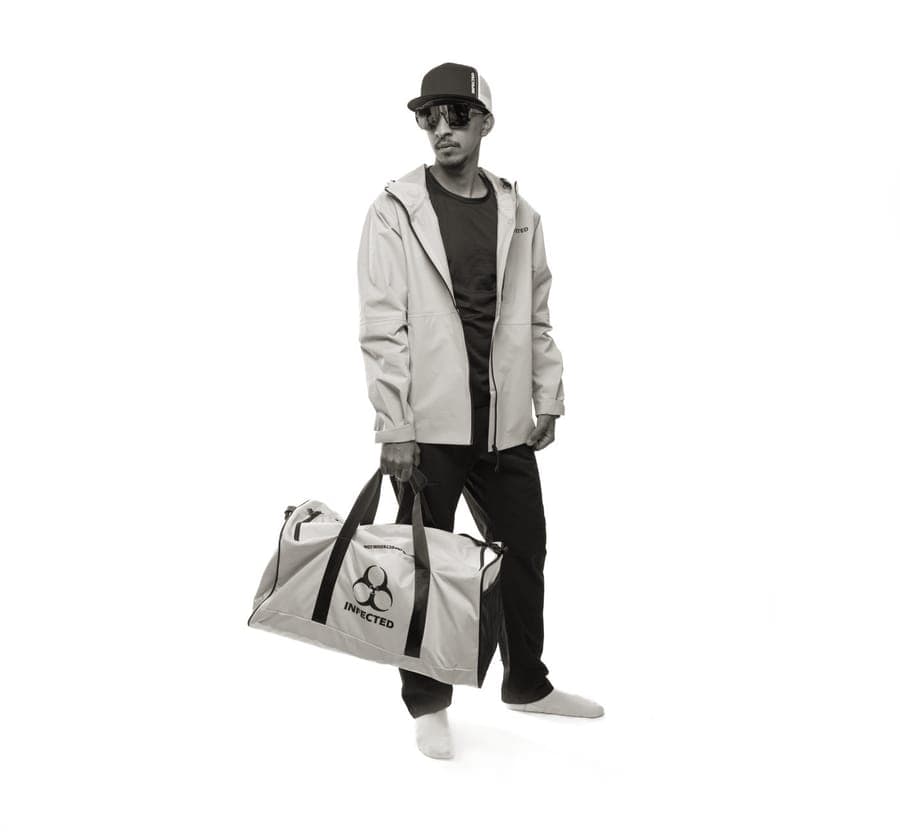 Patagonia Black Hole Wheeled Duffel 70L Coated fabric, flexible shape, and wheels for the parking-lot part. | Gear trips and rough handling | |
| 2 | 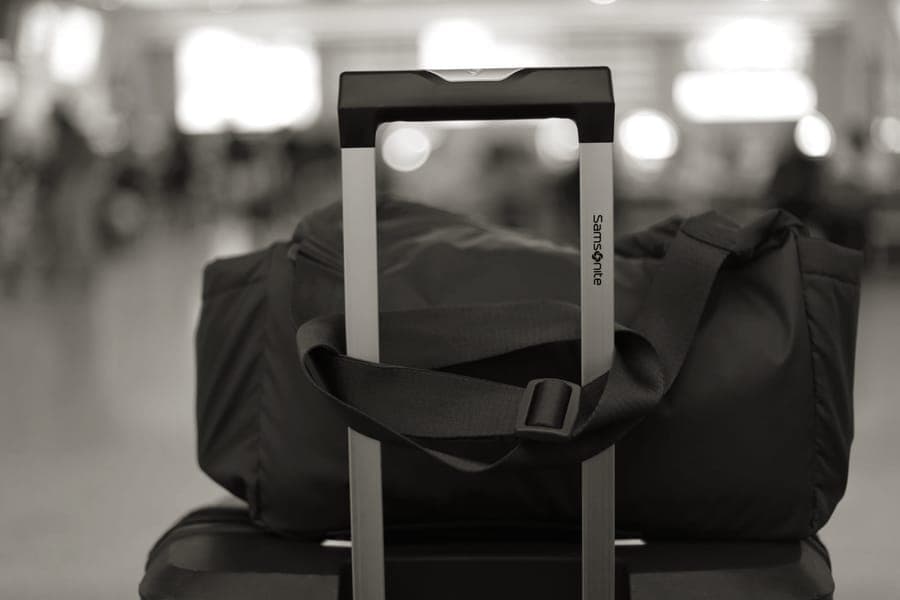 Osprey Transporter Wheeled Duffel 90L A wide mouth and a lot of volume, for things that will not fit a suitcase. | Bulky, awkward loads | |
| 3 | 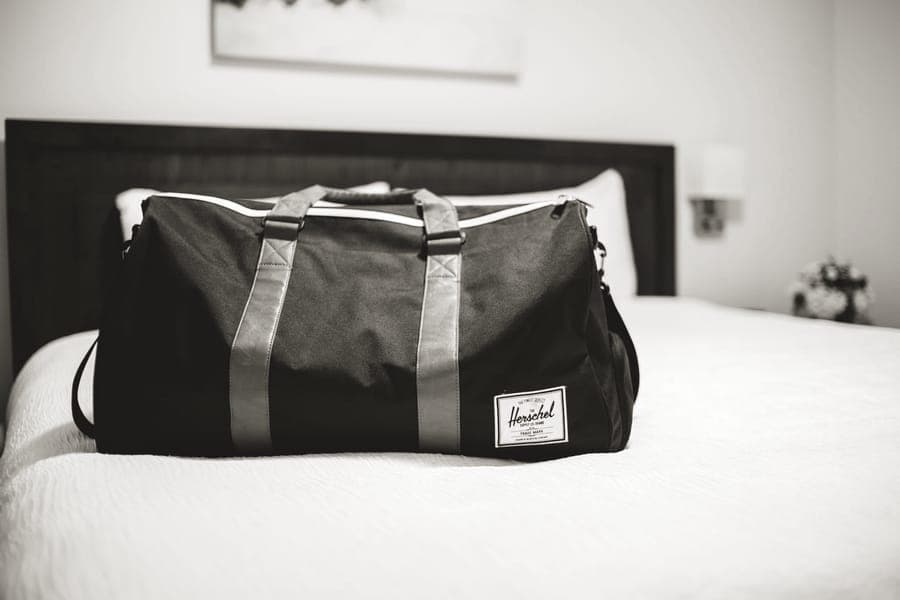 Narwey Foldable Travel Duffel Bag Folds flat outbound, becomes a second bag inbound. | Overflow and the way home |
The size that stays legal and still holds a long trip
Patagonia Black Hole Wheeled Duffel 70L
Trips where the bag's life includes a wet dock, a truck bed, a gravel path or a car trunk it has to be squashed into. Coated fabric handles weather properly rather than just resisting a drizzle, and the flexible body means the bag takes the shape of the space rather than demanding one.
The specs that decide it
- Capacity: 70 liters - a long trip or a lot of bulky gear
- Fabric: Coated and weather-resistant
- Shape: Flexible - fits trunks and racks that reject rigid cases
- Airline check: Measure packed - 70 L is normally inside 62 linear inches
Flaws but not dealbreakers
Wheels and the handle add weight and steal interior volume from a bag whose whole appeal is capacity, and there is still essentially no internal organization. A fully loaded 70-liter duffel is also awkward on stairs, wheels or not.
The size to buy only when you accept the fee
Osprey Transporter Wheeled Duffel 90L
Some loads are not clothes: sports equipment, camping gear, work kit, a folded stroller. Those things do not lie flat and they do not fit a suitcase's split-case geometry. A wide-mouth wheeled duffel takes them because it has no internal architecture to work around.
The specs that decide it
- Capacity: 90 liters - will exceed 62 linear inches, so check before flying
- Opening: Wide mouth for bulky, non-folding items
- Carry: Wheels plus haul handles for lifting into vehicles
Flaws but not dealbreakers
At 90 liters this is almost certainly oversize as checked baggage on most carriers, which means an oversize fee on every flight. Fully loaded it is also heavy enough to exceed the 50 lb weight limit easily.
The duffel that has no size until you fill it
Narwey Foldable Travel Duffel Bag
Anyone whose main bag is already at the limit. A packable duffel costs almost no volume on the way out and gives you somewhere to put what you bought - which is cheaper than paying for a second checked bag in one direction.
The specs that decide it
- Clears: Soft-sided - compresses into any carrier's under-seat space
- Storage: Folds flat when empty
- Cost: The cheapest solution to the personal item allowance
Flaws but not dealbreakers
Thin fabric, no structure, no padding. It will not survive being used as an everyday bag, and a full one is uncomfortable because the webbing handles dig into your hand.
Frequently asked questions
What size rolling duffel is carry-on size?
What is the largest rolling duffel you can check without a fee?
Is a 90L duffel too big to check?
How many liters is a 30-inch duffel bag?
Do rolling duffels count as checked baggage?
Sources
Read next
- Best rolling duffel bags
- Best carry-on duffel bags
- Luggage vs duffel bag
- Checked bag size and weight limits
- Best checked luggage
- Best luggage scales
More in Luggage, or see every roundup and comparison on the site.